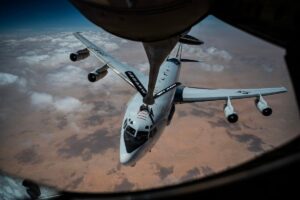
The alarming rise in military aviation accidents has prompted a closer examination of the underlying causes. Recent data reveals a significant spike in major accidents involving military aircraft, raising concerns about flight safety and operational protocols.
In the 2024 fiscal year, the military experienced a 55% increase in severe accidents per 100,000 flight hours compared to four years prior. Of particular concern is the Marine Corps, which witnessed its accident rate nearly triple over the same period. These figures, sourced from internal Pentagon data shared with Congress and reviewed by The Associated Press, highlight Class A mishaps—accidents that result in death or permanent full disability.
An aviation expert suggests that these troubling trends are not due to a singular cause but rather a combination of multiple factors contributing to an unsafe culture. Among these factors are increased operational demands, the use of riskier aircraft like the V-22 Osprey, and disruptions such as the COVID-19 pandemic that curtailed flying time across the military. Consequently, members of Congress are seeking answers to address these growing concerns.
The data, requested by Sen. Elizabeth Warren, a Massachusetts Democrat, after a series of deadly V-22 Osprey incidents, covers budget years 2020-2023 and the first 10 months of 2024, up to July 31. During these 10 months, 25 service members and Defense Department civilian employees lost their lives, and 14 aircraft were destroyed. “These accident rates are incredibly troubling and demand action,” Warren stated in an email to the AP, emphasizing the need for legislative changes to improve access to accident reports.
Aircraft with Higher Crash Rates
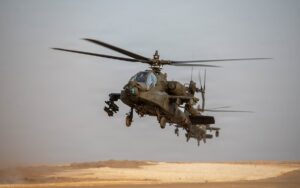
The Osprey, recognized for its dual capability to fly like a plane and land like a helicopter, has been identified as one of the most hazardous aircraft, as extensively reported by the AP here. Additionally, new Defense Department data reveals the Apache helicopter’s rate of Class A accidents was approximately 4.5 times higher in 2024 compared to four years earlier. The C-130 transport plane also nearly doubled its rate in the same timeframe, despite experiencing safer years intermittently.
Although the Pentagon has yet to respond to these emerging trends, the Navy’s data indicates a significant increase in aviation mishaps, with the Naval Safety Command reporting a rise from eight Class A mishaps in 2024 to 14 in 2025.
Aviation expert John Nance attributes the growing number of mishaps to increasing demands on military pilots. “Whether we’re talking about the end of Afghanistan, deployments to Djibouti, or operations in Saudi Arabia, the pace of military operations correlates with the rise in mishaps,” Nance explained.
Recent Accidents Highlight Safety Concerns
Although the data does not extend into 2025, the year has witnessed several high-profile aviation incidents. These include accidents on aircraft carriers at sea and a collision between an Army helicopter and a passenger jet over Washington, D.C., in January, resulting in 67 fatalities. Investigations found issues like a broken altimeter in the Black Hawk helicopter and problems with the pilot’s night vision goggles, along with the FAA’s failure to address helicopter-related dangers near the Washington airport.
Unlike civilian pilots, military aviators operate with less predictability and routine. “Aircraft commanders make decisions with limited information, facing uncertainty and unpredictability beyond what commercial airlines experience,” Nance noted.
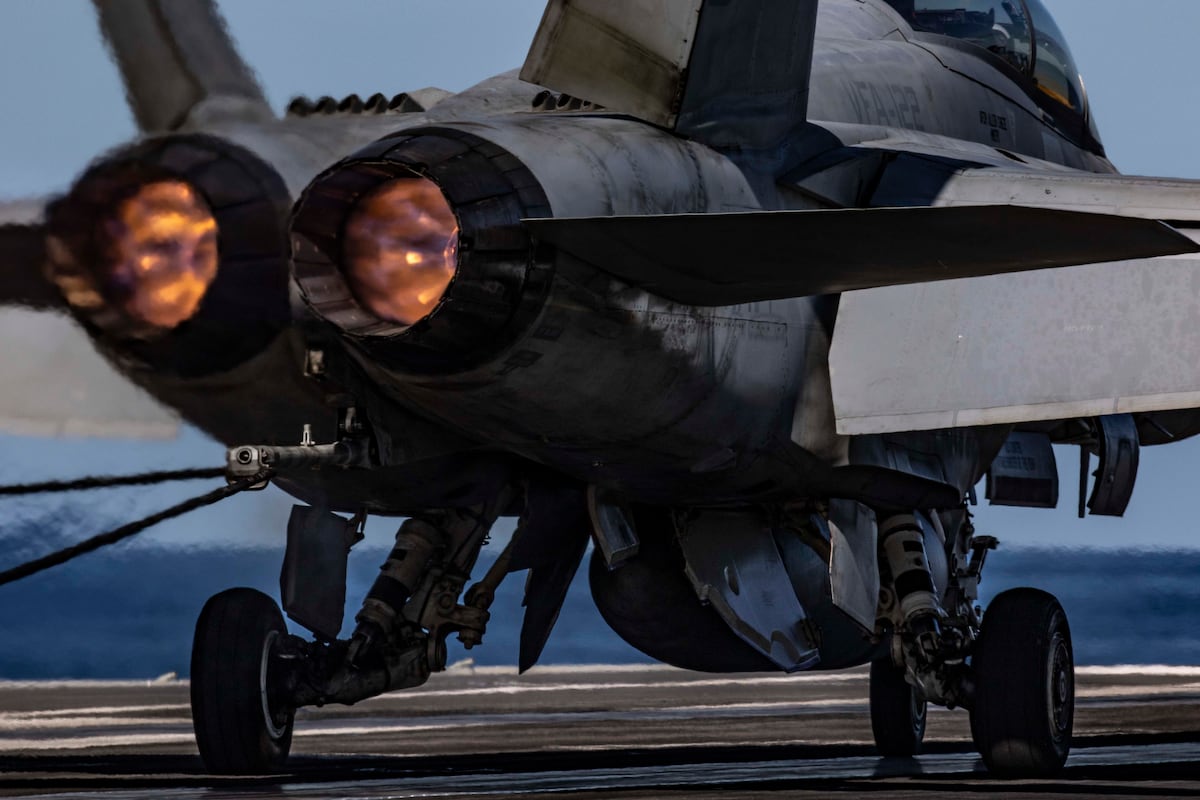
In the spring, the Navy’s USS Harry S. Truman aircraft carrier lost two F/A-18 Super Hornet jets within weeks—one due to a bad landing and another that fell into the sea. In December 2024, the guided-missile cruiser USS Gettysburg mistakenly shot down an F/A-18 from the carrier. Fortunately, no aviators were killed in these incidents.
More recently, four U.S. Army soldiers from an elite team conducting nighttime missions died when their Black Hawk helicopter crashed near a military base in Washington state during a September training mission. In October, a fighter jet and a helicopter from the USS Nimitz crashed into the South China Sea within 30 minutes of each other, though no lives were lost.
Nance suggests that the pandemic’s impact on flying time may contribute to the recent rise in mishaps. “The safety buffer is affected by numerous factors,” he noted, adding that the pandemic had a “major impact on operational capabilities.”
Sen. Warren’s office has requested additional data from the Pentagon, seeking more detailed figures on aviation mishaps from 2019 to 2025, including less serious Class B and C incidents. The request also probes the military’s aircrew and maintenance training practices.