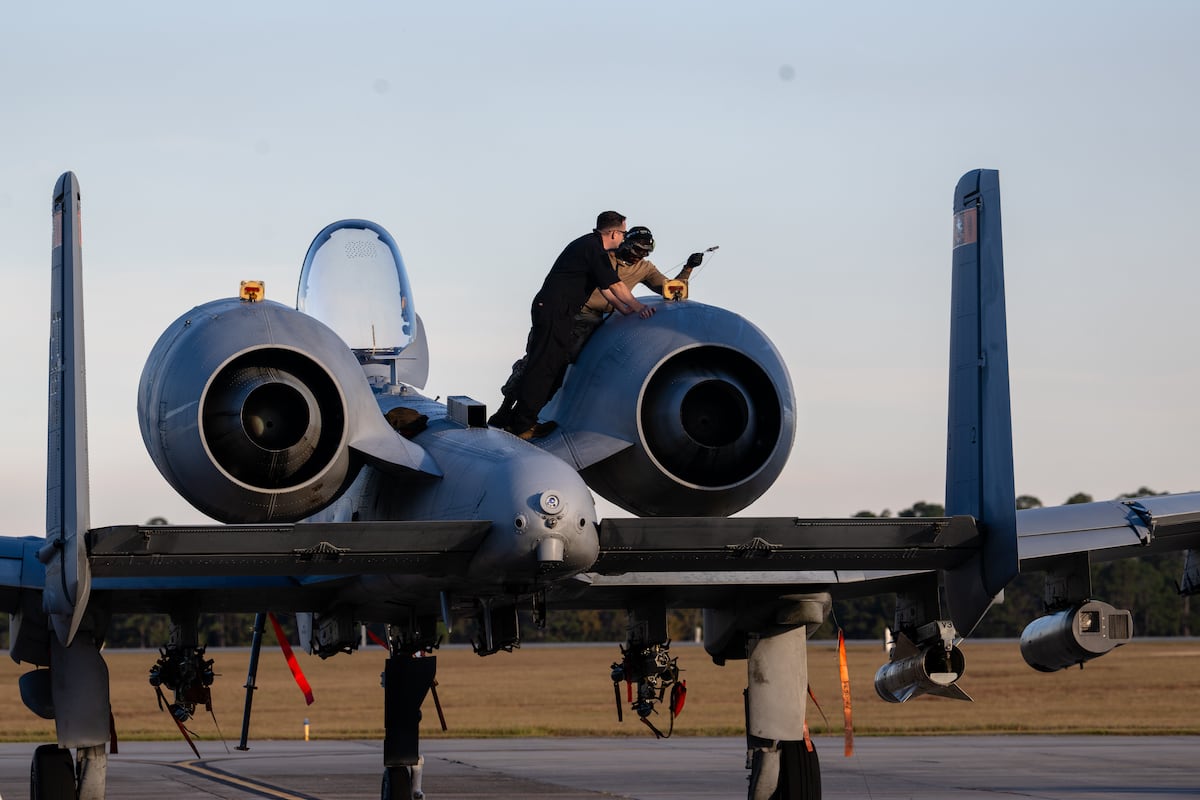
In the face of potential confrontations with formidable opponents like China, the U.S. Air Force is honing its ability to operate independently and sustain combat operations over extended periods without external support. Recently, the 23rd Wing at Moody Air Force Base, Georgia, executed a comprehensive exercise to validate this capability.
Exercise Mosaic Tiger 26-1: Preparing for Autonomous Operations
From November 12 to 21, Exercise Mosaic Tiger 26-1 took place across locations in Florida and Georgia. This initiative aimed to demonstrate the 23rd Wing’s readiness for high-stakes conflicts. The exercise is a crucial part of the Air Force’s Agile Combat Employment (ACE) strategy, designed to ensure that air units can continue operations from dispersed, less equipped airfields if traditional bases are compromised.
The ACE strategy, highlighted in a statement from Moody Air Force Base, focuses on maintaining airpower even when large bases come under attack. The strategy equips units to function from smaller, scattered bases, ensuring resilience in contested environments with limited supplies and reinforcements.
A diverse array of airmen and units, including attack, rescue, and support teams, participated in the exercise. They tested their ability to operate under simulated combat conditions. This involved setting up forward operating sites, executing integrated combat turns for rapid rearming and refueling, and maintaining operations from makeshift bases.
Building Versatile Capabilities
A critical aspect of the exercise was activating the 23rd Combat Air Base Squadron. This unit was tasked with establishing and defending new operational bases, managing logistics, and ensuring communication capabilities. The exercise embraced the multi-capable airman concept, where personnel might be required to perform duties beyond their regular roles, such as aircraft maintenance or base security.
Lt. Col. Justin May, squadron commander, noted, “Every airmen in the squadron is tackling tasks that normally wouldn’t fall in their wheelhouse.” The exercise emphasized adaptability, with maintenance airmen from the 74th and 75th Fighter Generation Squadrons operating under diverse conditions and managing resources efficiently without knowing when resupplies would arrive.
The Air Force underscored the need for judicious use of supplies: “Whatever those airmen brought with them, they need to use judiciously until a future resupply.” This approach fostered innovation, encouraging airmen to maximize existing resources, such as reusing parts to keep aircraft like the A-10 Warthogs operational.
Staff Sgt. William Flores, a crew chief with the 75th, stated, “Being responsible for what supplies we do have on site all leads back to ensuring that we stay accountable and utilize all resources available.”
Maintaining Operations Amidst Communication Challenges
Another focus was ensuring the continued generation of combat sorties, even with limited or severed communication links. Airmen were given air tasking orders specifying missions for three days. If communication outages extended beyond this, units would follow broader mission directives and coordinate with nearby units based on previous commander intentions.
Lt. Col. Nathan Frey, director of operations for the 74th, explained the protocol, while Lt. Col. David Pool, commander of the 74th Mission Generation Force Element, added, “If [communication] degradation lasts past 72 hours, we would shift to military-type orders that provide broad intent and allow us to coordinate with adjacent units without the detailed integration from the.” This approach ensures continuity in mission planning and execution.
The exercise demonstrated the Air Force’s commitment to developing versatile and resilient operational capabilities, ready to meet the challenges of future conflicts.