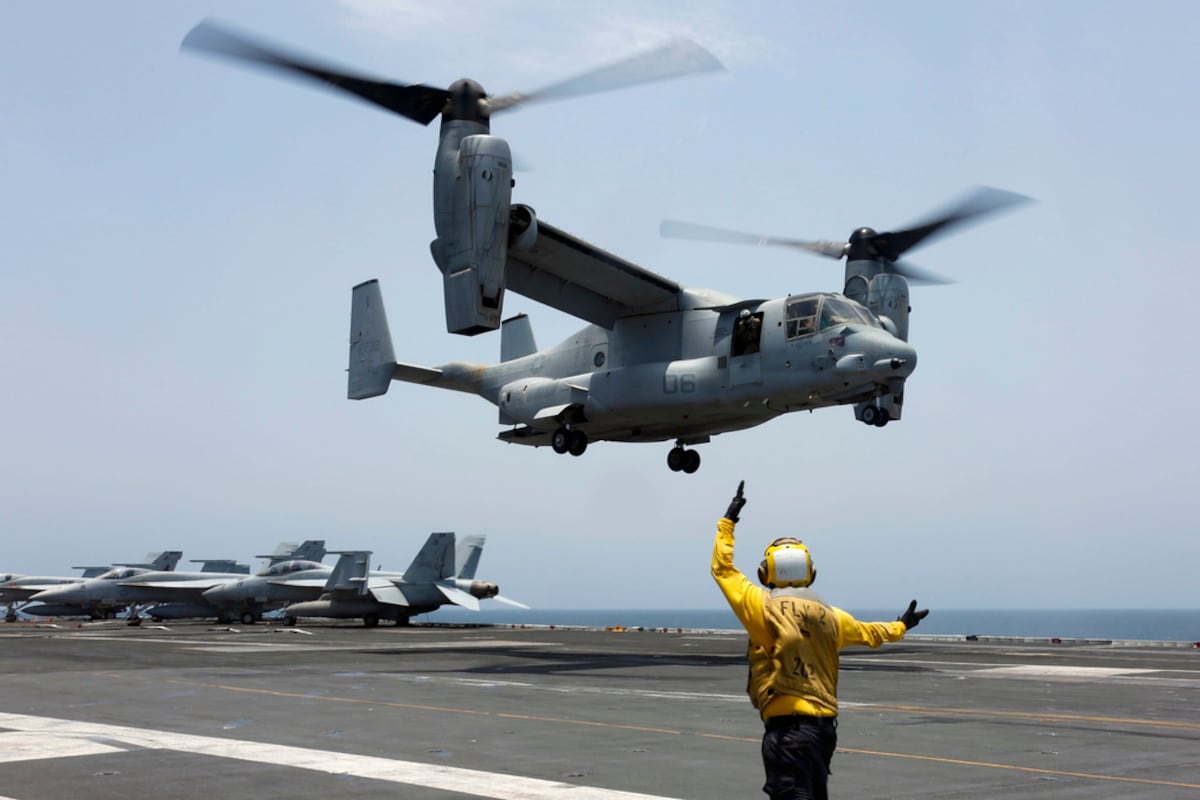
The V-22 Osprey aircraft, a crucial asset for the U.S. military, is under scrutiny due to safety concerns. The Government Accountability Office (GAO) has highlighted the need for improved information sharing among the Defense Department’s various services and offices to enhance the aircraft’s safety and mitigate risks of accidents.
According to the GAO report titled “Osprey Aircraft: Additional Oversight and Information Sharing Would Improve Safety Efforts,” stakeholders in the Osprey program, including the Joint Program Office and the services operating the aircraft, often fail to share critical data regarding hazards, accidents, aircraft procedures, and maintenance. This lack of communication has led to longstanding issues, some persisting for over a decade, remaining unaddressed.
With more than 400 Ospreys deployed by the Marine Corps, Air Force, and Navy, the aircraft’s unique capabilities allow it to operate from aircraft carriers and transport special forces to remote locations. Despite these advantages, the Osprey’s accident rates have been notably high. The GAO reported that the Marine Corps and Air Force have experienced higher serious accident rates with the Osprey compared to other aircraft types.
Since 2022, there have been four fatal accidents involving the Osprey, resulting in the loss of 20 service members. The report mentions that serious accidents, classified as class A and B mishaps, have seen an uptick in 2023 and 2024 for both the Marine Corps and Air Force Osprey variants. These mishaps include death, permanent disability, significant property damage, or aircraft destruction.
Serious accidents between 2015 and 2024 were predominantly due to airframe or engine component failures and human errors. Notably, the proprotor gearbox clutches have been problematic, leading to dangerous “hard clutch engagements.” These issues, combined with engine power fluctuations during reduced visibility landings, have been linked to catastrophic incidents.
One significant incident occurred in May 2015 when a Marine Corps Osprey crashed in Hawaii during a training flight after sand was ingested into an engine, causing a stall. This crash resulted in two fatalities and 20 injuries.
The GAO criticized the stakeholders responsible for the Osprey program for not fully identifying or addressing these issues. At the time of the GAO’s review, 45 risk assessments had been closed, but 34 remained open, with some classified as serious and unresolved for up to a decade.
The GAO recommends that the defense secretary ensure collaboration between the Navy and Air Force secretaries and top military officials to enhance the safety procedures of the joint Osprey program. This includes establishing clear roles and responsibilities and conducting routine reviews of safety measures.
Furthermore, a regular multiservice conference is suggested to facilitate information sharing on operational procedures and safety issues. The GAO also advises revising maintenance guidelines and inspection procedures to ensure a systematic tracking of aircraft components.
The Pentagon has agreed to implement the GAO’s recommendations, indicating a commitment to integrating these strategies into its policies and procedures for the Osprey program.