Infiltration Attempt: North Korean Commandos Target South Korean President
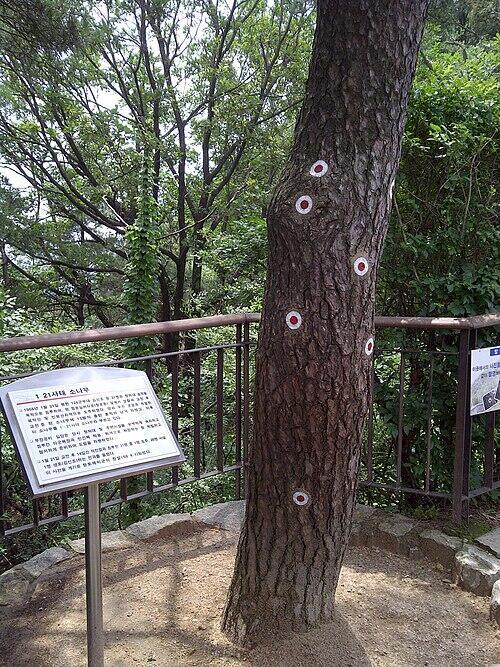
On a chilly January night in 1968, 31 North Korean commandos infiltrated the heavily fortified Demilitarized Zone (DMZ) between North and South Korea. Their audacious mission: to assassinate South Korean President Park Chung-hee. Disguised as South Korean soldiers and armed beneath civilian trench coats, the commandos made it to within 100 meters of the Blue House, the presidential residence in Seoul, before a police chief’s suspicions led to a violent confrontation.
The ensuing firefight left a trail of casualties, including four American soldiers, 26 South Koreans, and 29 North Korean operatives, marking a significant episode in the tense landscape of the Korean DMZ Conflict.
Decades of Tension: A Cold War Era on the Korean Peninsula
South Korea’s President Park Chung-hee, who took power through a 1961 military coup, was a transformative yet authoritarian figure. A former officer in the Japanese Imperial Army, he rapidly industrialized South Korea with close ties to the United States. However, his oppressive regime, characterized by mass arrests and the suppression of dissent, made him a prime target for North Korean leader Kim Il Sung, who saw Park as the key barrier to Korean unification.
In July 1967, Kim handpicked 31 elite officers from Unit 124 to carry out the assassination, hoping to spark political turmoil in the South and pave the way for North Korean dominance.
The DMZ: A Violent Flashpoint
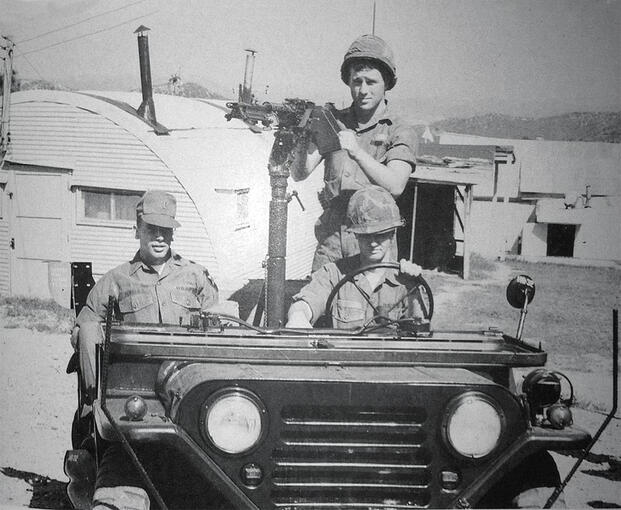
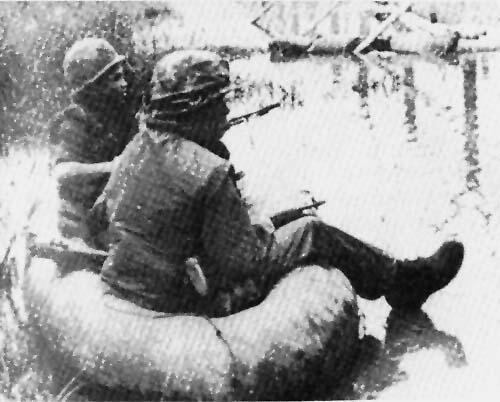
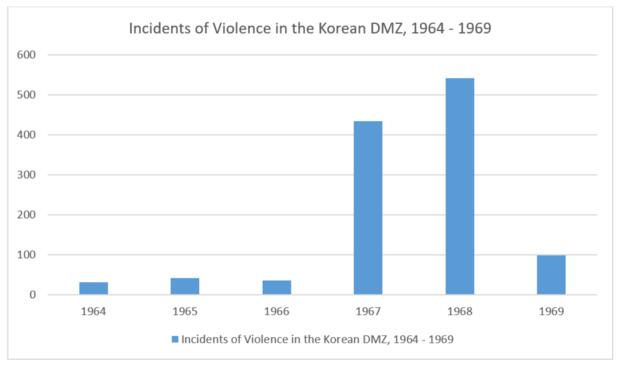
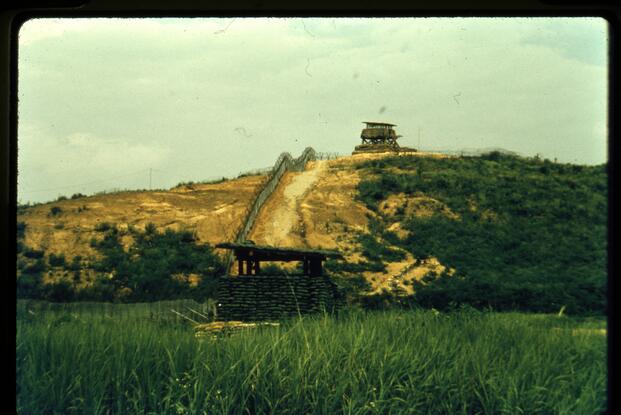
Kim Il Sung’s strategy was to exploit the U.S. military’s heavy engagement in Vietnam, which by 1967 involved over 485,000 American troops. Between 1966 and 1969, the Korean DMZ Conflict saw North Korean forces launch hundreds of attacks on American and South Korean troops, leading to what some called the Second Korean War.
In 1967 alone, the 2nd Infantry Division’s sector experienced 150 incidents, including ambushes and firefights. The violence led to the deaths of 16 American soldiers and 115 South Korean troops. In response, the U.S. classified northern South Korea as a hostile fire zone, allowing for combat pay and recognition.
North Korea’s Ambitious Plan and its Aftermath
Unit 124’s meticulously trained commandos spent two years preparing for their mission, rehearsing on a full-scale replica of the Blue House. Each carried Soviet submachine guns, grenades, and other equipment. Entering South Korea on January 17, 1968, they were nearly undetected until a chance encounter with four South Korean woodcutters exposed their presence.
The commandos decided against killing the woodcutters, opting instead for a lecture on communism and a warning to remain silent. Nevertheless, the woodcutters reported their encounter, prompting a heightened security alert in Seoul.
The Raid’s Impact and Global Tensions
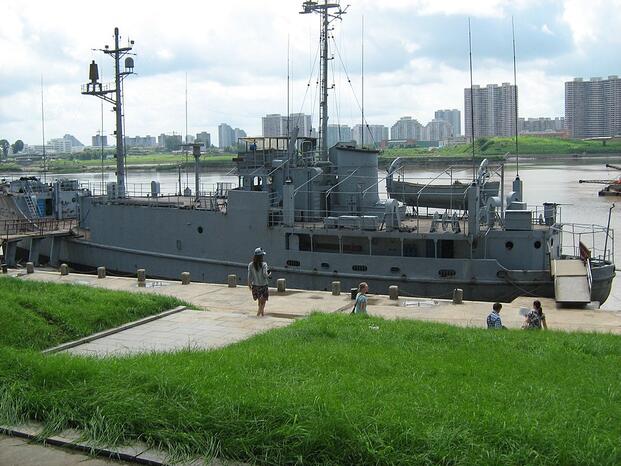
The failed assassination attempt on January 21, 1968, coincided with other major international crises, including the Siege of Khe Sanh in Vietnam and the capture of the USS Pueblo by North Korea. President Lyndon B. Johnson, wary of escalating tensions into a global conflict, refrained from military retaliation against North Korea.
In the aftermath, South Korea’s response included the formation of Unit 684, a group of commandos tasked with assassinating Kim Il Sung—a mission that was ultimately aborted amid changing political dynamics.
Legacy of the Korean DMZ Conflict
The Korean DMZ Conflict highlighted the ongoing volatility on the Korean Peninsula. While the number of incidents decreased after 1969, hostilities have never fully ceased. Notably, the sinking of the South Korean corvette Cheonan in 2010 and other provocations underscore the persistent threat.
Despite the lack of a formal peace treaty, the presence of over 28,000 U.S. troops in South Korea and the establishment of the Korean Defense Service Medal serve as reminders of the enduring tensions and the historical significance of events like the Blue House Raid.