Air Force Advances AI Capabilities with X-62 VISTA Upgrades
The Air Force is significantly enhancing its experimental X-62 VISTA aircraft, a move set to bolster its capacity for testing sophisticated artificial intelligence technologies. The upgrades focus on integrating new radar and mission systems to tackle more complex testing scenarios.
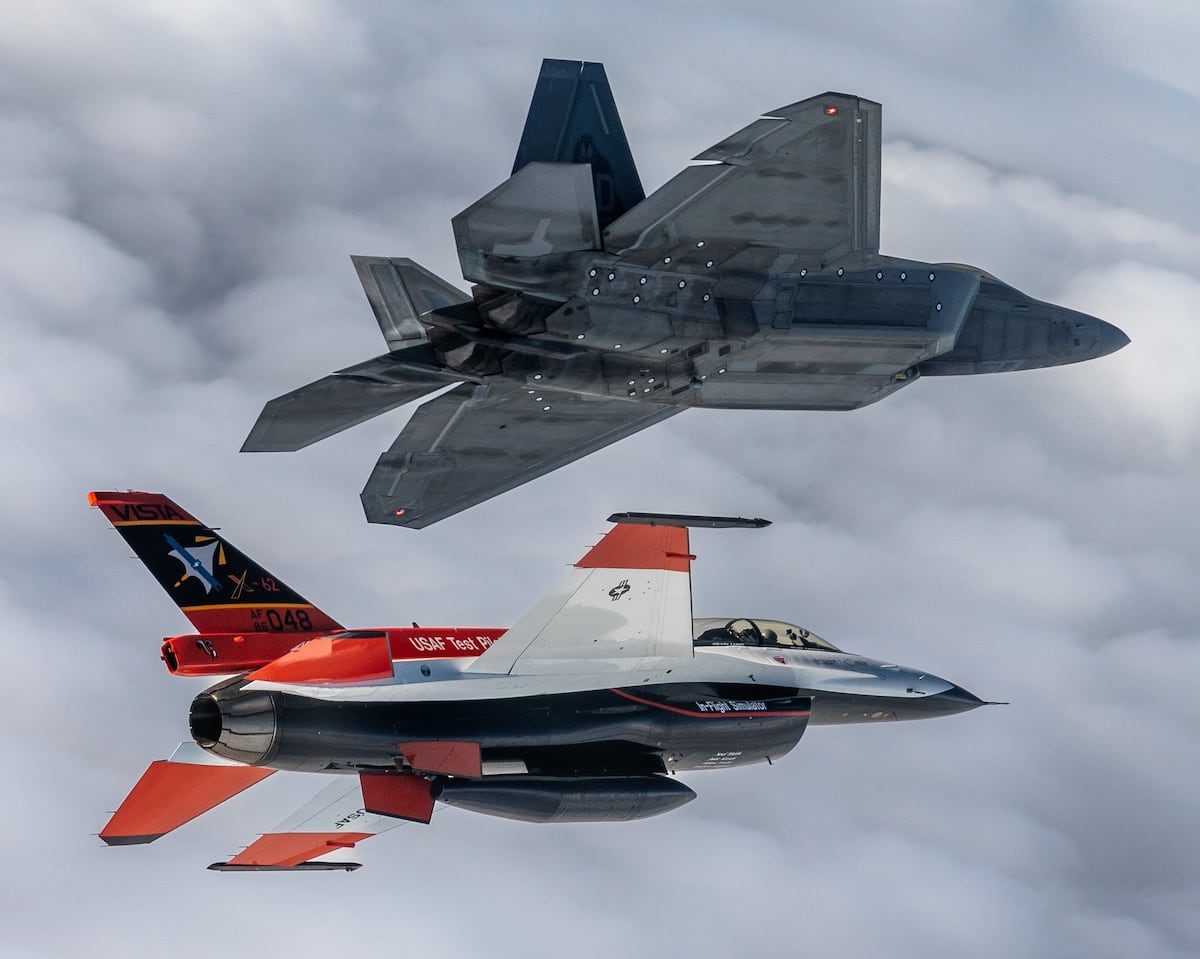
Currently undergoing a comprehensive update at Edwards Air Force Base in California, the X-62 — short for Variable Stability In-flight Simulator Test Aircraft — is a modified F-16D model. This aircraft has been adapted with advanced avionics, serving as a platform for cutting-edge aerospace technology experimentation, particularly in autonomous flight.
The upgrades being installed by the U.S. Air Force Test Pilot School of Edwards’ 412th Test Wing will enable the X-62 to incorporate advanced radar and sensor technologies. These enhancements aim to facilitate AI systems’ real-time integration, collaboration, and decision-making in progressively complex scenarios.
Col. Maryann Karlen, Commandant of the Air Force Test Pilot School, emphasized the importance of these developments: “As the Air Force expands its exploration of integrating autonomy into air and space operations, the X-62 is the bridge between the historical human-centered approach and tomorrow’s integration of uncrewed combat aviation.” She further noted that the mission systems upgrade is crucial for pioneering breakthroughs in AI and autonomy.
The initiative is backed by funding from the Pentagon’s Test Resource Management Center, highlighting the strategic importance of these advancements.
A pivotal aspect of the upgrade is the integration of Raytheon’s PhantomStrike radar into the X-62. Raytheon, a subsidiary of RTX, described PhantomStrike as a compact, air-cooled fire-control radar that is both smaller and lighter than current AESA radars, requiring less power.
Raytheon also pointed out that PhantomStrike offers superior radar capabilities at nearly half the cost of conventional fire control radars and can be integrated into various platforms, including uncrewed aerial vehicles and light attack aircraft.
The autonomous capabilities of the X-62 align with other Air Force initiatives, such as the Viper Experimentation and Next-Generation Operations Model, or VENOM, experiments.
In a notable development, the Air Force, in collaboration with the Defense Advanced Research Projects Agency (DARPA), conducted the first-ever dogfights between a human pilot and an AI-controlled jet, specifically utilizing the X-62, in September 2023. The data from these experiments, as noted by Air Force and DARPA officials in April 2024, could inform the development of collaborative combat aircraft, which are drone wingmen designed to accompany manned fighters in various missions, including air-to-air combat.
Further affirming the X-62’s capabilities, former Air Force Secretary Frank Kendall, in April 2024, expressed confidence in the aircraft’s autonomous flight abilities and subsequently experienced a flight as a passenger in the AI-piloted jet at Edwards.