The Swedish Air Force: Modernization and Future Prospects
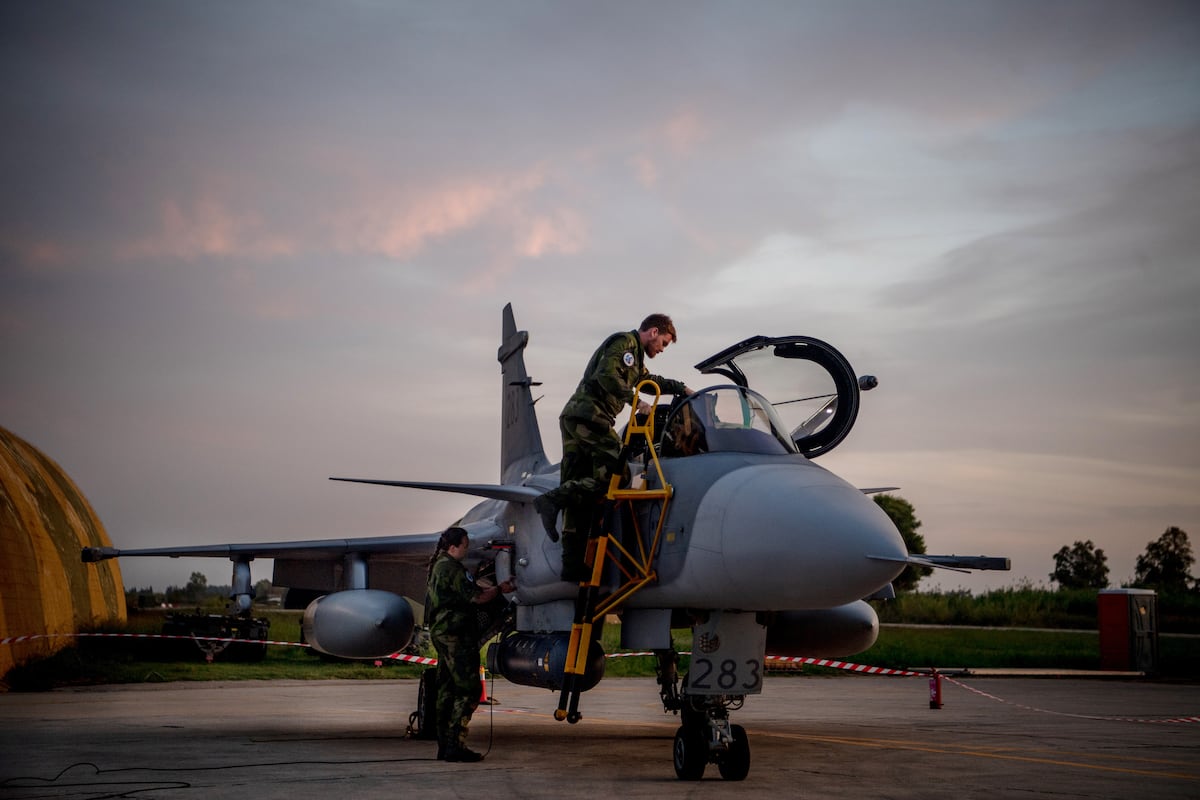
As Sweden navigates its new role within NATO, the Swedish Air Force, under the leadership of Maj. Gen. Jonas Wikman, is undergoing significant transformations. Central to these changes is an ambitious modernization program aimed at enhancing combat capabilities and expanding the fleet of Gripen fighter jets. The target is to operate 120 jets, combining older C/D models with the advanced E variants. In line with this goal, Sweden plans to boost its defense budget by $2.9 billion in 2026, marking an 18% increase over the previous year.
In a recent interview, Maj. Gen. Wikman discussed several key topics, including the status of Sweden’s future fighter program, the latest developments in electronic warfare capabilities on the Gripen E, and the overarching security threats facing Sweden. The conversation also touched on international interests, such as Canada’s consideration of the Gripen aircraft.
The Future of Swedish Fighter Development
Sweden continues to deliberate on the direction of its next-generation fighter platform. “We are still investing in the knowledge and flexibility to choose which option suits us best,” Maj. Gen. Wikman stated. As Sweden explores options like unmanned assets and new technologies, the nation is poised to present a comprehensive viewpoint at the political level soon. The exploration includes integrating new advancements into existing capabilities without delay, ensuring that even older models benefit from cutting-edge developments.
Strategic Choices for Aircraft Development
When asked to rank the feasibility of developing a national fighter, joining international joint ventures, or licensing existing designs, Maj. Gen. Wikman emphasized a multifaceted approach. “The result will likely be some kind of cooperation, some kind of national project that would combine different elements of each,” he explained, highlighting the importance of considering all options to ensure robust defense capabilities.
Enhancing Electronic Warfare Capabilities
The Gripen E’s enhanced electronic warfare suite is a focal point of excitement for the Swedish Air Force. The integration of multiple sensors and the ability to share information across networks is expected to significantly bolster operational effectiveness. These advancements allow the Gripen E to engage in offensive operations while maintaining a low detection profile, a capability Maj. Gen. Wikman believes is underestimated by many.
Addressing Security Threats
Maj. Gen. Wikman identified Russia as the primary threat to Swedish security, highlighting the ongoing tension between the collective West and Russia. This geopolitical landscape influences Sweden’s defense strategies and priorities.
Challenges and Priorities
The Swedish Air Force is tasked with balancing national capability development with NATO commitments. As Sweden aims to increase its defense spending to 3.5% of GDP by 2030, maintaining high operational levels is crucial. This includes international deployments, such as operations in Poland and upcoming missions in Latvia, to reinforce Sweden’s role as a net contributor to NATO.
Operational Adaptations
During recent NATO air policing missions in Poland, the Gripen aircraft demonstrated its ability to identify and engage low and slow targets, such as Shahed drones. This capability required rapid verification and adaptation, underscoring the need for continuous training and technological upgrades.
Potential for International Cooperation
Regarding Canada’s interest in the Gripen, Maj. Gen. Wikman maintained a neutral stance, acknowledging the decision lies with Canada. However, he noted opportunities for increased collaboration between Sweden and Canada, particularly in light of Sweden’s NATO membership and shared strategic interests.