Turning the Tide: The Battle of Chipyong-ni
In the frigid February of 1951, a battle unfolded in the Korean peninsula that would mark a significant turning point in the Korean War. The Eighth Army, under the command of Lieutenant General Matthew Ridgway, found itself at a crucial juncture. As Chinese forces gathered strength near Chipyong-ni, Ridgway saw not just a threat but an opportunity to halt their advance.
A Critical Decision
On February 13, 1951, Colonel Paul Freeman’s regiment, exhausted and exposed, was ordered by Lieutenant General Edward Almond to withdraw 15 miles south. However, this order was overruled by Ridgway after discussing with General Douglas MacArthur the urgent need to stop the communist advance. Ridgway’s strategy was to hold the line at all costs, seeing that the Chinese had overextended their supply lines, which he believed provided a chance to deliver a decisive blow.
The Strategic Importance of Chipyong-ni
The village of Chipyong-ni, located 40 miles east of Seoul, was a key point on the map, with roads through the Han River Valley that were vital for military movements. Freeman’s 23rd RCT, at 75% strength, reached the village after a hard-fought victory at the Twin Tunnels. The unit was composed of 4,500 men, including infantry, artillery, and other support units. Among the forces was the French Battalion led by Lieutenant Colonel Ralph Monclar, a seasoned veteran who had voluntarily demoted himself to lead the troops in Korea.
The Defensive Strategy
With the village surrounded by eight hills, Freeman’s men were unable to cover the entire 12-mile ridgeline. Instead, they concentrated their defense on the low ground, exploiting the Chinese lack of air superiority and long-range artillery. Ridgway’s intent was to use Chipyong-ni as a “killing ground,” drawing in Chinese forces to inflict maximum casualties with artillery and air support.
Battle Commences
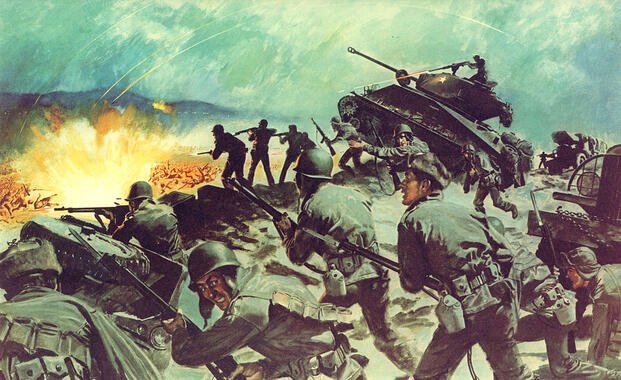
On the afternoon of February 13, Chinese forces cut off main roads, isolating the 23rd RCT. Freeman rallied his commanders, declaring, “We are going to stay here and fight it out.” That night, the Chinese launched their assault, targeting different battalions. The French Battalion’s counterattack, characterized by their use of sirens and bugles to mimic Chinese signals, stunned the enemy and became a legendary moment in the battle.
The Turning Point
With temperatures dropping and ammunition running low, Freeman’s forces faced relentless assaults. However, the skies cleared on February 15, allowing air support to deliver devastating strikes on Chinese positions. This crucial support, coupled with a relief column that broke through the encirclement, forced Chinese forces to withdraw.
Legacy of the Battle
The Battle of Chipyong-ni was a significant defeat for Chinese forces, with heavy casualties. It marked the first clear tactical defeat for them in the war and shifted the strategic initiative back to UN forces. Ridgway’s decision to hold the line proved pivotal, leading to a series of successful UN offensives, including the recapture of Seoul.
Lieutenant Colonel John Chiles, who took command after Freeman was evacuated, praised the French for their bravery, summarizing the battle’s significance and the shift in momentum it represented for UN forces in the Korean War.