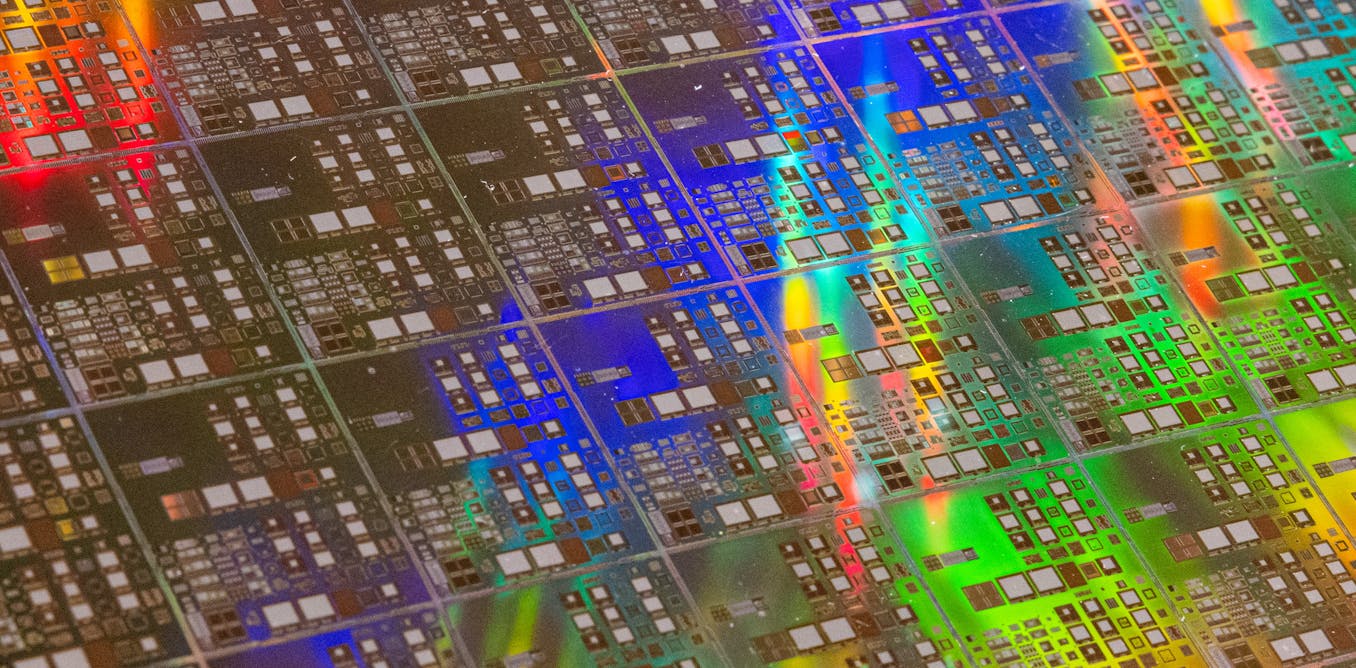
The high demand for data centers is significantly impacting the availability of critical components like processor and memory chips. This surge is causing challenges for consumer device manufacturers, who are struggling to secure enough chips to meet their production needs.
Despite the apparent divide in chip types used by data centers and consumer electronics, the distinctive requirements for each sector illuminate the issue. While smartphones and PCs prioritize low power consumption and thermal efficiency, data centers focus on maximizing compute power and memory bandwidth, especially for AI applications such as large language models (LLMs). This results in a reliance on different chip architectures: consumer devices often use systems-on-a-chip with DRAM and NAND, whereas AI servers depend on GPUs combined with high-bandwidth memory.
As an expert in global supply chains, the current strain on consumer electronics can be attributed to the concentrated nature of the chip market and its response to economic cycles.
Industry Dynamics: Oligopoly in Chip Manufacturing
The chip manufacturing market resembles a layered oligopoly rather than a competitive commodity market. Leading firms, such as NVIDIA, which commands an 85% market share in graphics processors, rely on foundries like TSMC, which holds over 70% of the market, to produce chips using cutting-edge technologies provided by monopolies like ASML.
In the memory chip sector, a few major players, including Samsung, Micron, and SK Hynix, dominate due to the industry’s high fixed costs and long development cycles. The cyclical nature of the market has seen phases of overcapacity and tight supply, underlining the reluctance of chipmakers to expand capacity despite surging demand from AI-related applications.
Data Center Demands Reshape Capacity Allocation
The exponential growth in AI data centers has shifted chip demand towards high-bandwidth memory products. In this evolving landscape, companies like Micron have adjusted their focus, as evidenced by their recent capital adjustments and rising sales of memory tailored for AI.
The slow response of the memory supply market to these changes is due to the lead time required for establishing new fabrication facilities. As a result, existing manufacturers are hesitant to invest heavily in expanding capacity, opting instead to focus on technological advancements and high-margin products.
Consumer Electronics’ Strategic Adaptation
Consumer electronics have potential pathways to navigate these challenges, such as integrating AI capabilities directly into devices. This approach, expected by analysts, involves leveraging smaller AI models to enhance device functionality without relying on extensive data center infrastructure.
However, external factors like geopolitical tensions and associated tariffs further complicate the cost landscape. Companies like Apple have shifted production from China to India to mitigate tariff impacts, yet the cost benefits are marginal due to established supply chain efficiencies in China.
The rise in geopolitical strains and export controls on critical materials has increased production costs for consumer electronics, pressuring manufacturers to absorb these costs or pass them on to consumers, potentially leading to higher prices and fewer choices.
Implications for the Economy
The AI and data center surge is reshaping the economic landscape, concentrating resources and market power. Industries like medical technology, which comprise a small fraction of the chip market, face vulnerability during supply shortages. Conversely, sectors linked to digital infrastructure might gain from increased demand for cloud services and electrification.
For the consumer electronics sector, the task is to innovate with energy-efficient AI solutions on devices while managing supply chain risks. For consumers, the repercussions include anticipated price hikes and potential delays in new product releases.