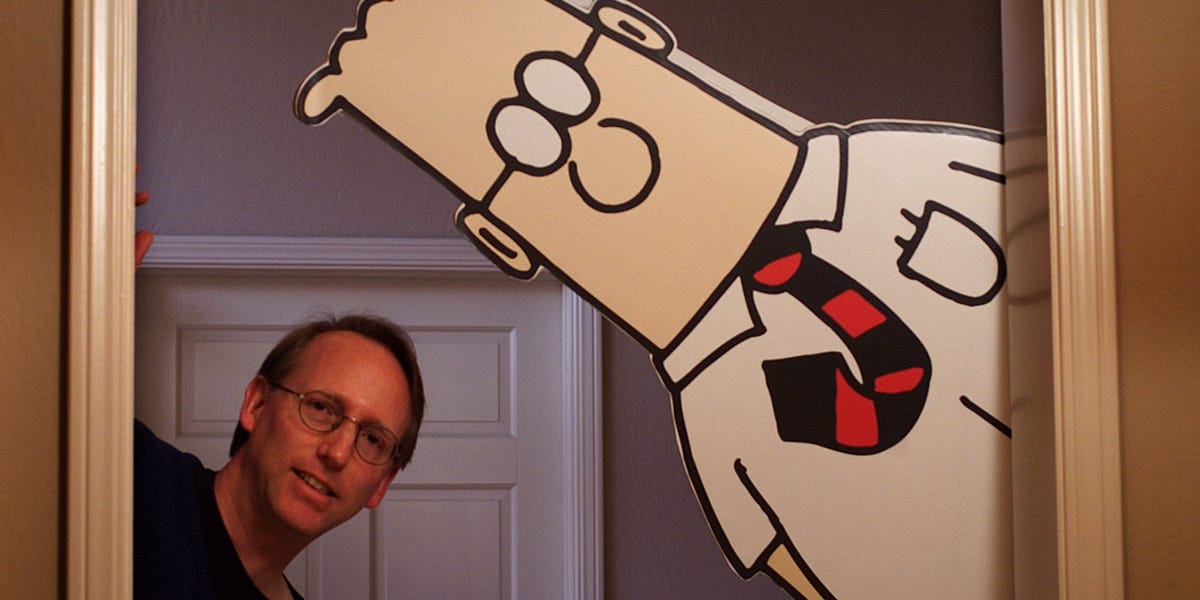
As technology continues to evolve, the concept of a “digital afterlife” grows increasingly complex. The recent unauthorized AI version of “Dilbert” creator Scott Adams has raised significant ethical and legal questions about posthumous digital replicas.
Prior to his death, Scott Adams had discussed the possibility of an AI-based continuation of his persona. In a 2021 podcast, Adams expressed that he was open to an AI version speaking on his behalf after his death, provided it aligned with his known views. He even mentioned his extensive online presence as a reason he would be suitable for such a transformation.
However, following Adams’ death from metastatic prostate cancer at the age of 68, an AI-generated version of him surfaced online, sharing thoughts on current affairs and philosophy. This development has been met with distress from Adams’ family, who argue that this AI incarnation is unauthorized and contrary to Adams’ wishes.
Adams’ brother, Dave Adams, clarified on social media that the cartoonist “never intended, never would have approved an AI version of him that wasn’t authorized by himself or his estate.” Despite these assertions, the creator of the AI Scott Adams insists that this digital version is a direct fulfillment of the cartoonist’s previously stated desires.
John Arrow, the AI venture capitalist behind the digital Adams, defended his creation by referencing Adams’ past remarks and argued that there was no indication Adams revoked his permission. Arrow emphasized that his intention was to preserve Adams’ intellect rather than commercialize the AI version.
Deepfakes and Ethical Concerns
Experts like Karen North, a digital media professor, have criticized the AI Adams, categorizing it as a “deepfake” rather than a harmless avatar. North highlighted the emotional impact such digital recreations could have on grieving families and warned of the ease with which personal data could be used to create unauthorized replicas.
Betsy Rosenblatt, an intellectual property lawyer, noted the ethical complexities of creating posthumous AI personas without explicit approval from the individual or their estate. She pointed out the “right of publicity” as a key legal concept protecting a person’s likeness, although it often focuses more on economic implications than on respecting the deceased’s memory.
Rosenblatt explained that if the AI isn’t used for commercial purposes, it might fall under First Amendment protection. Arrow stated that his objective was not to profit but to ensure that Adams’ “teachings” continue to influence future discussions.
Consent and Legacy
The controversy brings into focus the difference between offhand consent and legally binding agreements. North cautioned against treating casual comments about technology as formal permission, especially when they could place loved ones in challenging positions to protect legacies.
While some states have started passing laws requiring consent from estates for digital replicas, broader federal regulation is lacking. The debate over Adams’ digital likeness illustrates the ongoing ethical dilemma about who controls a person’s image after death.
The AI version of Scott Adams has sparked a public debate on the boundaries of digital personas after death, highlighting the gap between rapid technological advancements and the laws designed to govern such innovations.