
How does the Federal Reserve’s monetary policy affect everyday Americans? While it might seem distant from daily life, monetary policy is crucial, influencing borrowing costs for homes and cars. Behind the scenes, the Federal Reserve’s approach is driven by objectives set by Congress.
The Federal Reserve’s primary focus is known as its dual mandate: promoting maximum employment and ensuring price stability. These goals frequently appear in the Federal Reserve’s communications, particularly after its Federal Open Market Committee meetings.
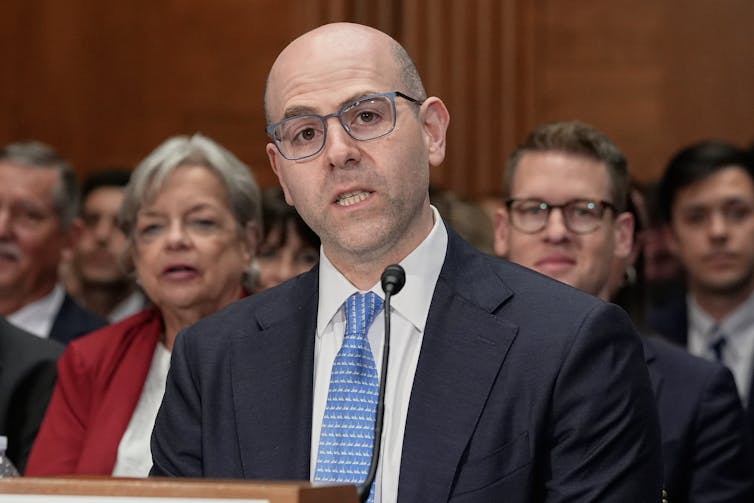
However, there’s a lesser-known task: maintaining moderate long-term interest rates. This aspect gained attention in September 2025 when Stephen Miran, a Trump administration appointee to the Federal Reserve, discussed it during his Senate Banking Committee testimony. His comments indicated a potential shift in focus towards this third mandate, raising eyebrows in financial markets.
Historically, the Federal Reserve’s objectives have evolved. Initially established by the Federal Reserve Act of 1913, the central bank aimed to provide elasticity in the currency supply and oversee the banking system. Its core mission was to curb frequent banking crises that disrupted the economy.
The Evolution of the Federal Reserve’s Goals
The Great Depression prompted significant changes in 1946 through the Employment Act, which emphasized maximum employment and purchasing power, laying the groundwork for the dual mandate. The turbulent economic climate of the 1970s led to the Federal Reserve Reform Act of 1977. This act formalized the current mandates, including moderate long-term interest rates, alongside promoting maximum employment and stable prices.
AP Photo/Mariam Zuhaib
The Role of Long-Term Interest Rates
Why doesn’t the Fed emphasize the third mandate? Mainly because moderate long-term interest rates often arise naturally when the other two mandates are effectively managed. Through the Federal Funds rate, the Fed influences short-term rates, which indirectly shape longer-term rates like those for mortgages and corporate bonds. These longer-term rates are typically set by market expectations of future short-term rates.
The Fed’s commitment to keeping inflation in check can reassure markets, resulting in stable long-term rates. Conversely, if inflation is perceived as out of control, long-term rates might rise in anticipation of future rate hikes. Similarly, high unemployment could lead to lower long-term rates as markets expect the Fed to lower short-term rates to stimulate growth.
Occasional Direct Influence
While uncommon, the Federal Reserve has directly influenced long-term rates. During the aftermath of the Great Recession of 2007-2009, the Fed’s quantitative easing programs aimed to reduce long-term borrowing costs to stimulate economic recovery. Such measures align with the dual mandate, particularly when inflation is low, and the focus shifts towards boosting employment.
Ultimately, the Fed strives for economic stability, recognizing that misaligned long-term rates can destabilize the economy. By addressing the dual mandate, the Fed indirectly ensures long-term rates contribute to a stable economic environment.