On his 66th birthday, Andrew Mountbatten-Windsor, previously known as Prince Andrew, faced arrest and subsequent release, marking a significant event in British royal history.
The Thames Valley Police confirmed that a man in his sixties from Norfolk was apprehended on suspicion of misconduct in public office. Due to national guidelines, the police refrained from disclosing his identity, but the individual was later released under investigation.
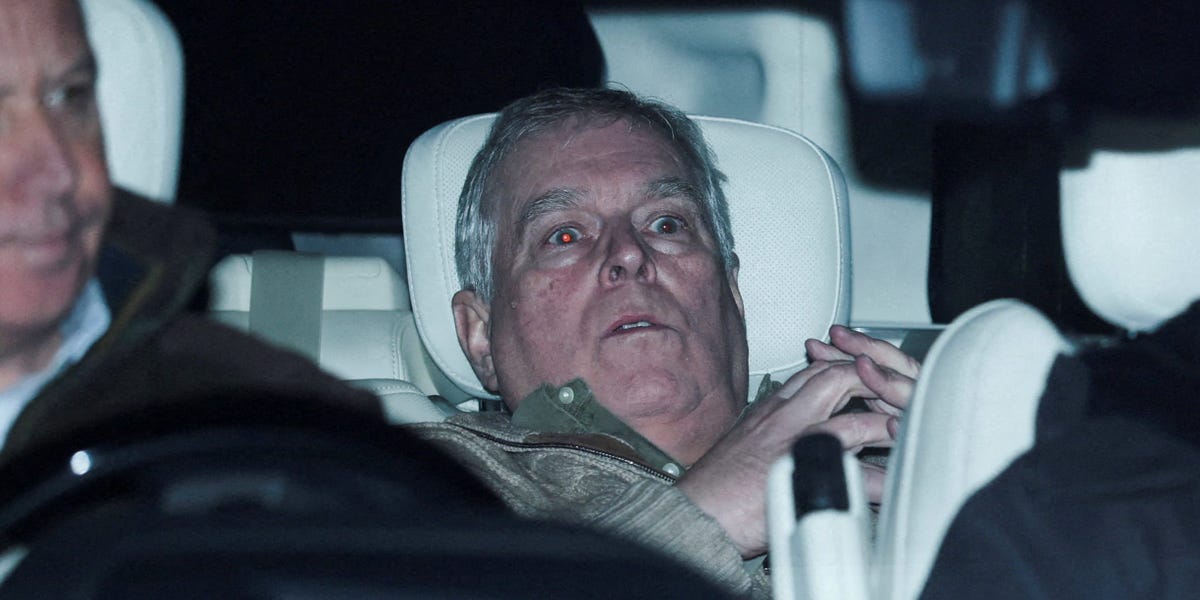
Images captured Mountbatten-Windsor leaving the police station in the evening, seated in the back of a vehicle. The incident prompted King Charles to issue a statement just hours after the arrest was publicized, asserting that “The law must take its course.”
“I have learned with the deepest concern the news about Andrew Mountbatten-Windsor and suspicion of misconduct in public office,” King Charles stated. He emphasized the importance of a “full, fair, and proper process” in the investigation, assuring full cooperation from the royal family.
Peter Nicholls/Getty Images
The police presence at the Sandringham estate in Norfolk, where Mountbatten-Windsor resides, was documented earlier that day. Searches were conducted at locations in both Berkshire and Norfolk, concluding by the evening.
Mountbatten-Windsor, who was stripped of his royal titles last year due to his controversial relationship with Jeffrey Epstein, faces renewed scrutiny. Virginia Roberts Giuffre’s family, who accused Epstein of trafficking her to the former prince, expressed a sense of justice, stating, “Today, our broken hearts have been lifted by the news that no one is above the law, not even royalty.”
Andrew Mountbatten-Windsor’s Epstein ties
Newly released Epstein files reveal further communications between Mountbatten-Windsor and the convicted sex offender. During his tenure as a UK trade envoy in 2010 and 2011, he reportedly forwarded official documents regarding trade visits to Epstein.
Oliver Wright, assistant chief constable with the Thames Valley Police, confirmed that an investigation has been launched into the misconduct allegations. He stressed the need to “protect the integrity and objectivity” of the investigation.
Prior to the arrest, UK Prime Minister Keir Starmer emphasized the principle of equality before the law, stating, “Nobody is above the law.” He reiterated that the police would conduct their own independent investigations.
The last notable instance of a royal family member facing legal action was in 2002, when Princess Anne was charged under the Dangerous Dogs Act after her dog attacked two children.