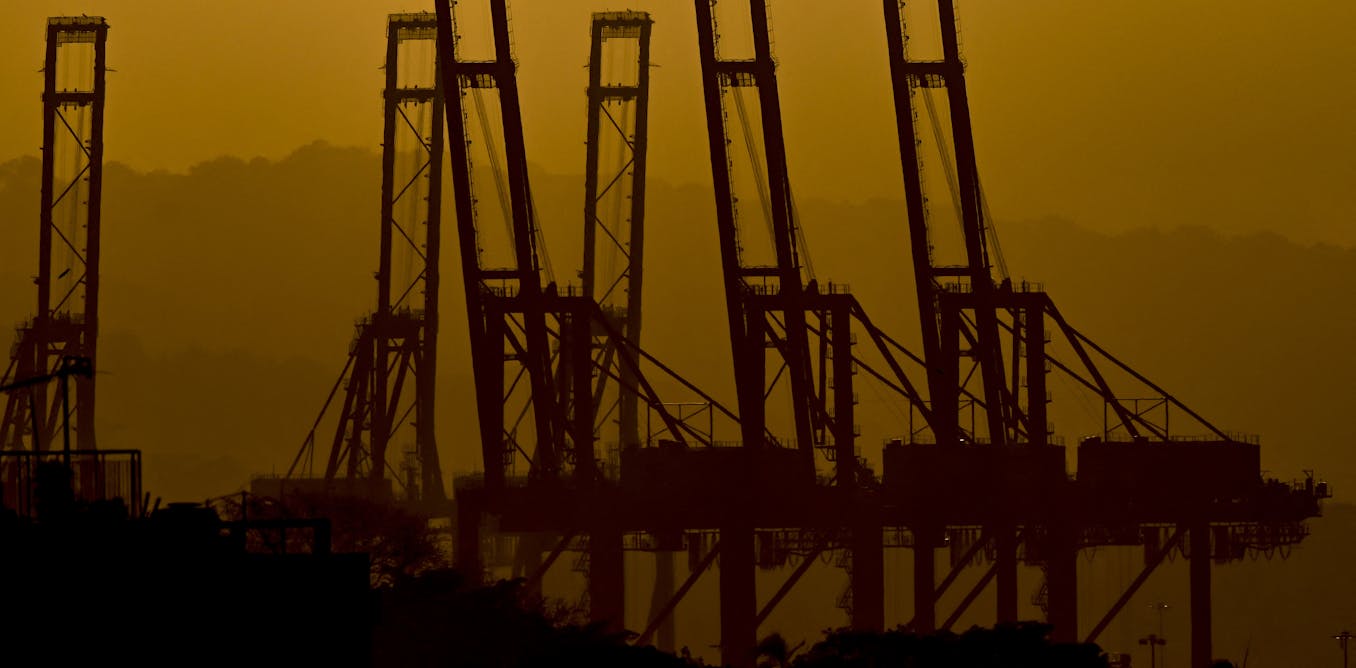
Amid simmering international tensions, Panama’s recent decision to reclaim control over two significant ports in the Panama Canal from a Hong Kong company has set the stage for a broader geopolitical chess match. This move, rooted in a legal ruling by Panama’s high court, underscores the intensified competition between global superpowers, particularly the U.S. and China, over strategic maritime corridors.
The Panama Canal has long been a focal point of international trade, and Chinese companies have increasingly expanded their footprint across global ports, operating in over 90 locations worldwide. This expansive network includes key locations in Africa, Europe, the Middle East, and Asia, with a growing presence in South America, sparking debates about China’s intentions behind these investments.
Observers question whether China’s port acquisitions are purely commercial ventures or if they serve broader strategic purposes. Analysts argue that understanding the geographical distribution of these ports is crucial, as disruptions in these areas could have widespread economic repercussions.
The Strategic Significance of Maritime Chokepoints
Recent research highlights that China’s port investments are strategically positioned near vital maritime chokepoints, such as the Suez Canal and the Strait of Hormuz. These narrow passages are critical arteries for global trade and energy shipments. The study found that countries near these chokepoints, like Panama and France, are more likely to host Chinese-affiliated ports, indicating a deliberate strategy.
The rationale for this focus on chokepoints is clear: these locations are pivotal for China’s economic growth, offering long-term access to essential shipping routes. Despite concerns from Western nations, not all Chinese-owned ports serve military purposes. However, the strategic value of commercial terminals should not be underestimated, as they can influence economic and security dynamics.
Piracy, Resources, and Port Investments
China’s port investments also appear concentrated in areas prone to piracy and maritime insecurity. This correlation does not imply causation but suggests that these investments occur in high-risk maritime environments. Interestingly, Chinese-affiliated ports are often found in regions with elevated piracy levels, reflecting a strategic interest in protecting valuable trade routes.
Additionally, the study examined the natural resource wealth of host nations, finding a modest link between resource abundance and the presence of Chinese-affiliated ports. However, broader economic indicators, such as business climate and governance, did not consistently predict port investment, highlighting the importance of geographic and maritime risk factors.
Implications and Global Responses
The strategic implications of China’s port investments extend beyond trade, influencing global supply chains and geopolitical relations. The U.S. has responded by strengthening its maritime infrastructure and scrutinizing foreign involvement in key facilities. This reflects a shift in Washington’s perspective, viewing control over maritime infrastructure as a national security concern.
China’s calculated investments along critical trade routes underscore a broader strategic agenda, emphasizing the need for continued monitoring and analysis of global maritime developments.
Read more:
China is losing ground in Latin America
Recent U.S. policy responses reflect these growing concerns. In early 2026, the White House outlined a plan to strengthen the U.S. shipping industry and reduce reliance on foreign-controlled maritime infrastructure. The administration has also taken a closer look at foreign involvement in key facilities in the Western Hemisphere, including ports linked to the Panama Canal.
Such moves suggest that control over maritime infrastructure is no longer viewed in Washington as just a commercial issue but increasingly as a matter of economic and national security.
And as the map of countries with Chinese-affiliated ports suggests, Beijing’s investments are following the world’s most consequential trade routes not by accident, but by design.