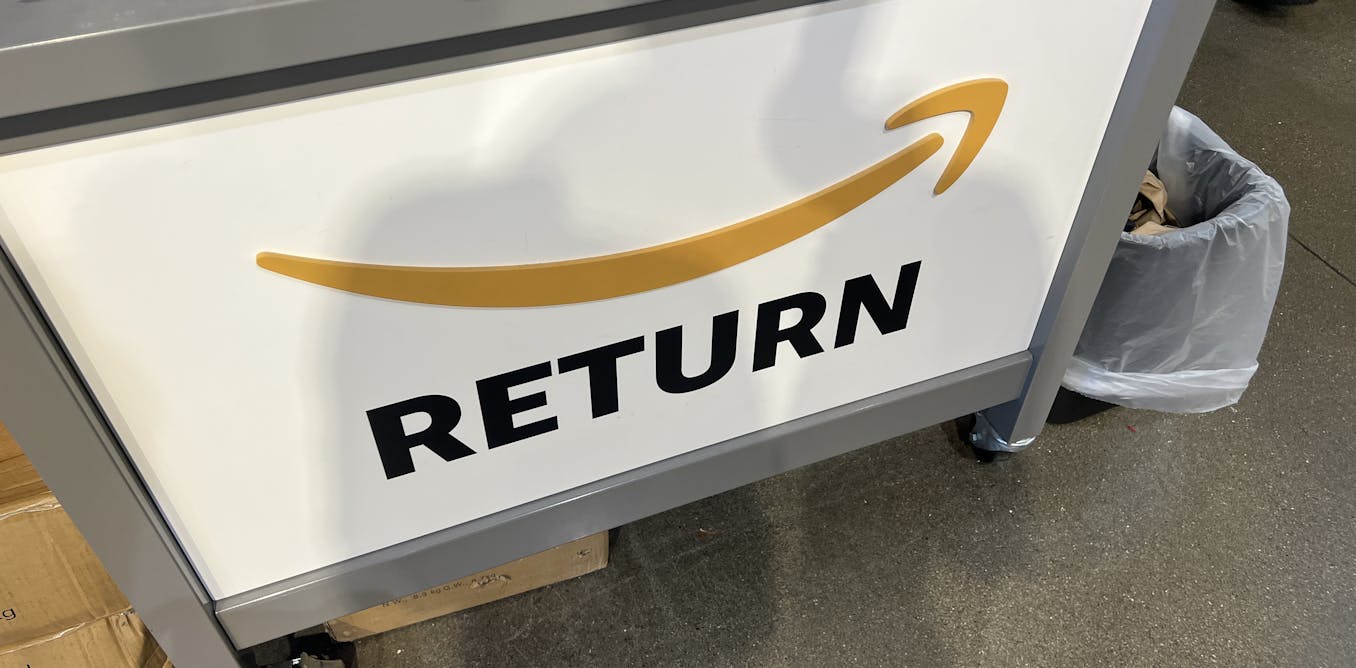
The holiday season, known for its spirit of giving, also marks a peak time for shopping. Many consumers may indulge in Black Friday or Cyber Monday deals with the reassurance, “I can always return it if needed.” However, it’s crucial to note that numerous retailers have subtly revised their return policies over recent years.
Lauren Beitelspacher, a marketing professor, examines the substantial impact of returns, especially post-major shopping events, and the hidden costs of what seems like a convenient practice. Although returns are a standard business activity, they represent a significant expense. The National Retail Federation reports that returns account for nearly $890 billion annually in losses for U.S. retailers.
Contributing to this massive figure is returns fraud, encompassing behaviors like “wardrobing” — where consumers buy, use, and then return items — and fraudulent claims of non-delivery. Additionally, returns incur costs through reverse logistics, including shipping, inspection, restocking, and repackaging. Many returned items can’t be resold at full price, and their processing increases labor and operational costs, diminishing profit margins.
The Evolution of Returns in E-commerce
Return options have long been a part of retail, but their prevalence has soared alongside changes in shopping habits. Before e-commerce, shopping involved a tangible experience where consumers could physically assess products. Returning items was straightforward, with quick in-store inspections and restocking.
However, online shopping has eliminated these sensory interactions, introducing uncertainty and a higher return rate. Research by Capital One indicates that online purchases are returned at a rate almost three times higher than in-store purchases.
The COVID-19 pandemic accelerated the shift to online shopping, pushing even reluctant consumers to adapt. To enhance sales, retailers expanded return policies, fostering a culture of excessive returns.
In 2020, returns made up 10.6% of total U.S. retail sales, nearly doubling from the previous year. By 2021, this figure rose to 16.6%. Consumers, unable to try items on in stores, started ordering multiple sizes or styles, returning what didn’t fit, a rational choice for shoppers but financially burdensome for retailers.
Balancing Customer Satisfaction and Profitability
Typically, supply chains are designed for a one-way flow from production to consumer. Returns disrupt this flow, adding complexity and cost.
In-store returns used to be straightforward: A customer returned an item, which was inspected and restocked if in good condition. Online returns, however, are more complex, with items potentially becoming outdated or unfit for resale by the time they return.
Logistics costs further escalate these challenges. The pandemic accustomed consumers to free shipping, meaning retailers often bear the cost twice: once for delivery and again for returns.
Post-pandemic, retailers are seeking a middle ground to maintain customer loyalty while protecting profits. Options include raising prices, which is tricky amid inflation, or tightening return policies.
This tightening manifests in various ways. Some retailers now charge modest fees for returns, like Curvy Sense’s $2.98 fee for unlimited returns and exchanges. Others have shortened return windows, as seen when Sephora and Ulta reduced their return periods from 60 days to 30.
Additional strategies include attaching noticeable “do not remove” tags to deter misuse and offering store credit instead of refunds, ensuring that returned sales remain within the company.
These policy changes are often subtly implemented, hidden in the detailed fine print of return policies, which have become more stringent and extensive.
As the busiest shopping season approaches, it’s wise to consider purchases carefully. Before clicking “buy,” ask yourself if it’s a genuine need or a potential return. Whenever feasible, shop in person and return items directly to the store. If shopping online, ensure you understand the return policy.