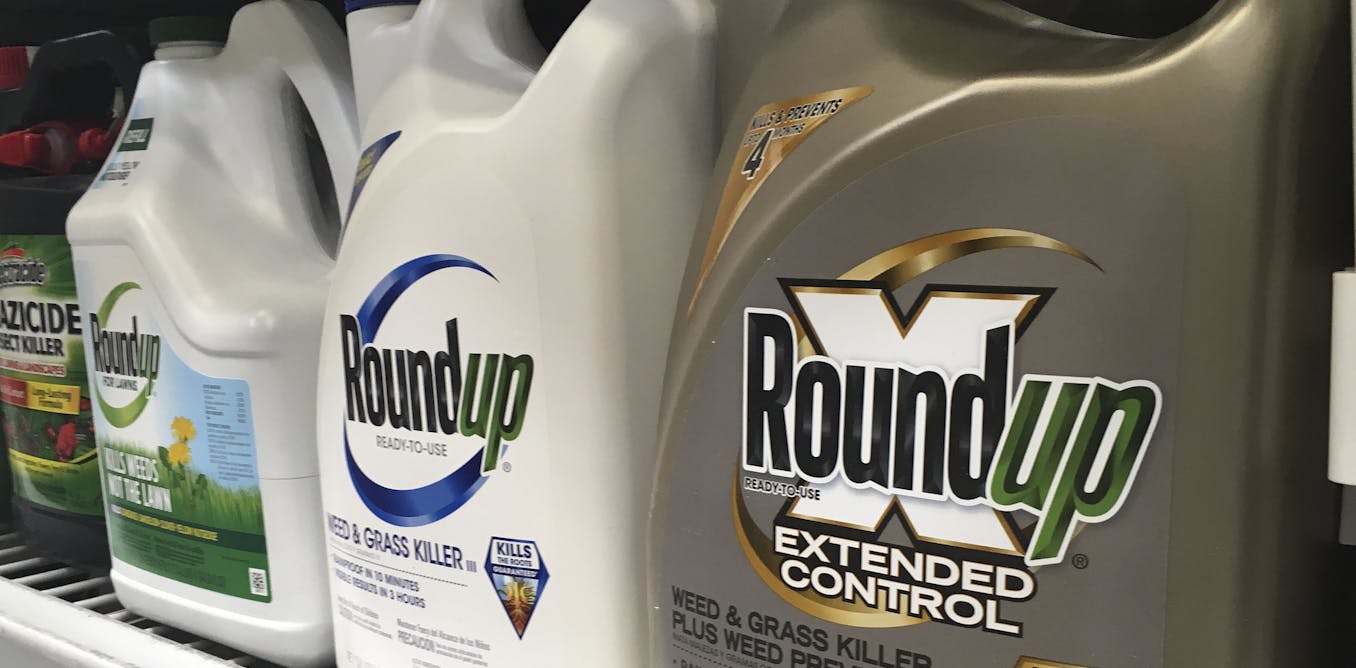
In a significant legal development, the U.S. Supreme Court is now examining whether states can hold Monsanto accountable for not warning consumers about cancer risks associated with its glyphosate-based weed killer, despite the U.S. Environmental Protection Agency’s (EPA) approval of its label without such warnings. This contentious issue came to the forefront as oral arguments were heard on April 27, 2026, marking a pivotal moment in a long-standing legal battle.
The heart of the matter lies in the EPA’s repeated conclusions from 2009 to 2019, stating that glyphosate does not cause cancer in humans. As a result, glyphosate-based products like Monsanto’s Roundup have remained on the market without cancer warnings. Contrarily, a 2015 report from the International Agency for Research on Cancer, part of the World Health Organization, labeled glyphosate as “probably carcinogenic to humans,” citing limited evidence in humans and sufficient evidence in animals, echoed by a 2025 study on lab rats.
Several lawsuits in the U.S. have leveraged the 2015 report to secure victories against Monsanto, including a landmark case, Hardeman v. Monsanto Co., which concluded in 2019 with an $80 million verdict. The jury sided with Edwin Hardeman, determining that Roundup contributed to his cancer and that Monsanto failed to adequately warn consumers. This decision was upheld on appeal.
Since then, Monsanto, under the ownership of Bayer, has resolved over $10 billion in claims related to Roundup exposure. Monsanto maintains that the Federal Insecticide, Fungicide, and Rodenticide Act, initially passed in 1947 and amended in 1972, prevents states from imposing additional labeling requirements beyond federal approval, thus shielding the company from state liability.
The U.S. EPA currently regulates pesticide registration, use, and sale, requiring companies to prove their products don’t cause “unreasonable adverse effects on the environment,” which includes all living beings and their interconnected ecosystems.
The Supreme Court’s decision will significantly impact numerous ongoing cases involving glyphosate-related harm claims.

Tasos Katopodis/Getty Images
A short history of the case
The origins of the Supreme Court case date back to 2019 when John Durnell from St. Louis filed a lawsuit against Monsanto, alleging that his prolonged use of Roundup for community projects led to his non-Hodgkin lymphoma diagnosis.
Monsanto’s defense relied on the argument that federal law precludes such state-level claims, a position they have maintained in prior cases. Nevertheless, the trial proceeded, and in 2023, a Missouri jury ruled against Monsanto, awarding Durnell $1.25 million for failing to provide adequate warning, a verdict upheld by a state appeals court in February 2025.
The appeals court found that Missouri laws mandating consumer safety warnings do not conflict with federal stipulations. The court asserted that the lack of an EPA cancer warning for Roundup didn’t exempt Monsanto from its state-level duty to inform consumers of known risks.
The Supreme Court’s examination seeks to clarify whether federal law prohibits states from holding companies liable for not including EPA-unmandated warnings.
At the Supreme Court
In the oral arguments, Monsanto’s representative, Paul Clement, contended that Missouri’s demand for a different product label conflicts with federal regulations. Monsanto argued that EPA rules prevent manufacturers from altering safety labels without prior federal approval, a process the company hasn’t pursued.
Supporting Monsanto’s view, Principal Deputy Solicitor General Sarah Harris indicated that the Trump administration aligns with this interpretation.
Conversely, Ashley Keller, representing Durnell, argued that EPA registration does not shield companies from liability regarding product safety.
Analysts note a potential division among the justices, with a possible inclination toward Monsanto’s argument.

AP Photo/Rafael Yahgobzadeh
What comes next
If the Supreme Court rules in favor of Monsanto, it would nullify Durnell’s claim and bolster ongoing efforts to protect corporations from similar litigations. In February 2026, President Donald Trump deemed glyphosate “vital for national security,” emphasizing its importance in agricultural productivity.
Congress is exploring a bill to prevent local regulations from exceeding EPA standards, potentially shielding manufacturers from liability for EPA-approved labels. Additionally, six states have proposed bills to restrict pesticide manufacturers’ liability.
This case raises fundamental questions about whether federal oversight can restrict states from enacting consumer protections when federal regulators have not mandated similar warnings. In April 2026, Sen. Ted Cruz introduced legislation to bar state lawsuits against oil and gas companies for environmental damages, with the Supreme Court set to hear a related case on existing federal law limitations in late 2026 or early 2027.
These initiatives reflect a broader trend toward shielding corporations from consumer claims of product-related harm and limiting state-level accountability when federal regulations are deemed insufficient.