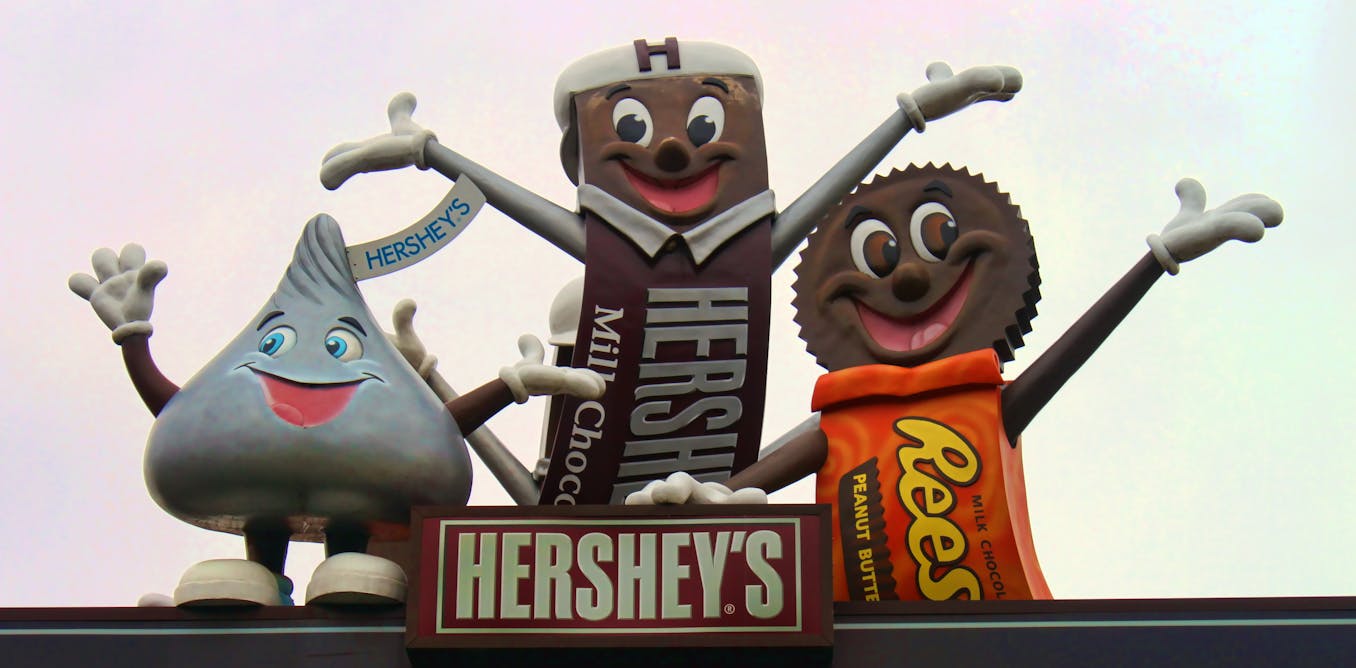
As Halloween approaches, chocolate enthusiasts face a familiar choice at the grocery store: Mars or Hershey? These two chocolate powerhouses dominate the market, each vying for consumer attention while enjoying significant sales. This longstanding duopoly, however, wasn’t always the case.
Back in the 1960s, Hershey Chocolate Corp. was the unrivaled leader in the U.S. chocolate market. Mars, however, challenged this dominance, sparking a series of changes that reshaped the chocolate industry, the Hershey community, and even Hershey Park, the company’s amusement park. As a scholar of American studies at Penn State Harrisburg, I find the ongoing impact of these changes remarkable.
The Era of Paternalism
Before the 1960s, Hershey, Pennsylvania, was synonymous with stability and productivity, a reflection of Milton Hershey’s paternalistic capitalism. Hershey’s vision extended beyond chocolate production; he built an entire community for his employees, offering homes and various services like trolley lines, schools, and even an amusement park. In return, employees were expected to remain loyal and hardworking, creating what Hershey himself termed an “industrial utopia.”
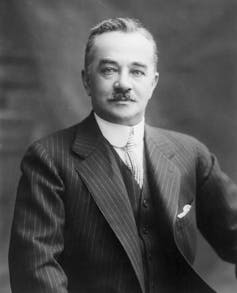
Bettman/Bettman Collection via Getty Images
Hershey’s relationship with Mars was initially harmonious, as Hershey supplied Mars with chocolate. However, the tables turned in 1964 when Forrest Mars, the founder’s son, decided to rival Hershey by terminating their partnership and modernizing his operations. His aggressive tactics included learning to produce chocolate independently and increasing advertising efforts, ultimately challenging Hershey’s market share.
Facing a New Reality
Forrest Mars’ bold moves prompted a crisis for Hershey, requiring swift action from leaders Harold Mohler and Bill Dearden. They broke traditional hiring practices by bringing in outsiders with advanced business degrees to revamp the company’s operations. This included establishing a marketing department, implementing modern computing technology, and launching the first television commercials in 1969, signaling the end of Hershey’s “sleeping giant” era.
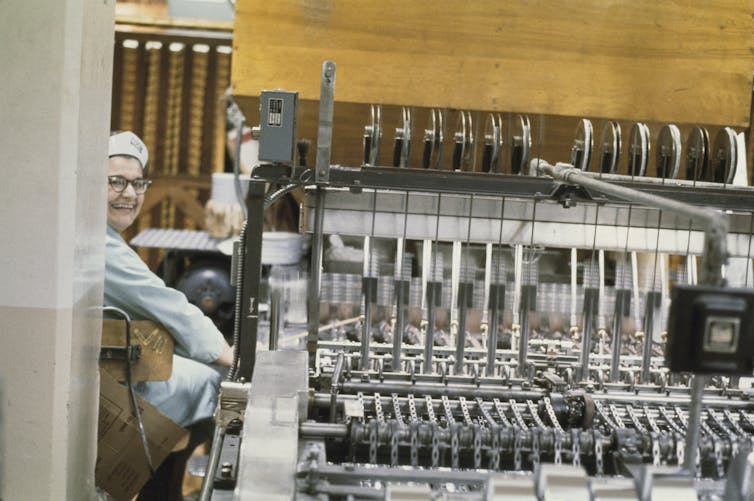
Peter Simins/Pix/Michael Ochs Archives via Getty Images
As Hershey adapted to new business practices, it also marked the end of Milton Hershey’s paternalistic approach. Cost-cutting measures led to the termination of free services in Hershey, causing community unrest. In the midst of these changes, Hershey Park faced an uncertain future.
Reinventing Hersheypark
Confronted with the challenge of keeping Hershey Park relevant in the age of theme parks like Disneyland, Hershey executives decided on a bold transformation. By redirecting funds from Milton Hershey’s paternalistic ventures, they reinvented the park into a Disney-style theme park, launching “Hersheypark” in 1973. This decision has since turned the park into a popular destination for both chocolate lovers and thrill-seekers.
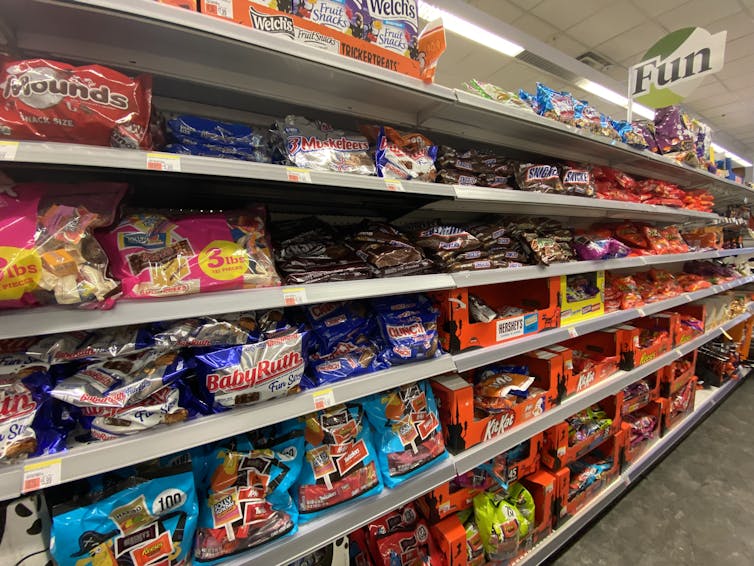
Lindsey Nicholson/UCG/Universal Images Group via Getty Images
Today, Halloween serves as a reminder of Hershey’s remarkable evolution. The brand thrives with its wide array of products, and Hersheypark embraces the spooky season with its “Dark Nights” entertainment. The transformation from a paternalistic company to an innovative market leader showcases Hershey’s adaptability and the lasting influence of Mars’ competitive spirit.
Read more of our stories about Philadelphia and Pennsylvania.