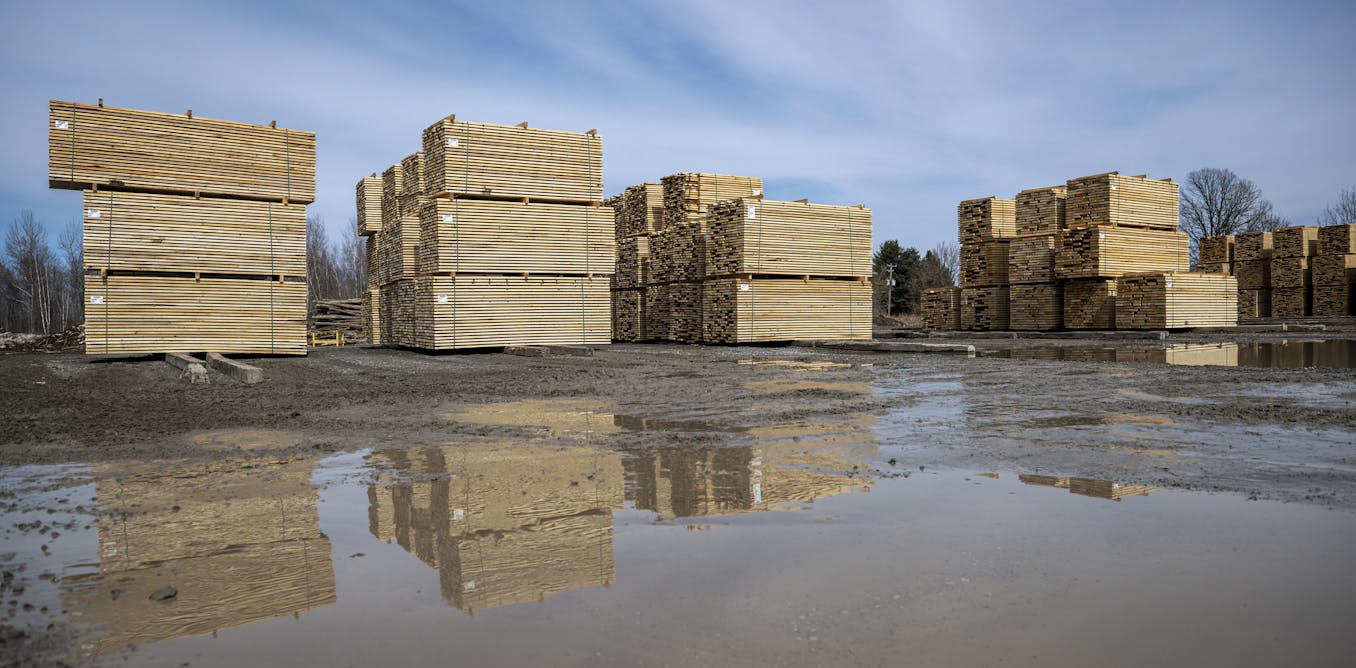
The construction of homes in the United States heavily relies on softwood lumber, including pine and spruce. These materials are fundamental to the housing market, impacting both construction costs and the overall economic landscape of the building sector. The U.S. imports a significant portion of its softwood lumber, with about 40% of its supply coming from other countries, and over 80% of these imports originate from Canada.
President Donald Trump has expressed confidence that the U.S. can fulfill 95% of its softwood lumber needs domestically, prompting him to mandate policy adjustments that would increase domestic timber production and reduce reliance on international sources.
On September 29, 2025, the administration announced new tariffs on imported timber, including an additional 10% tariff on Canadian lumber. These tariffs add to the 35% imposed in August. This ongoing trade issue traces back to the 1980s, when U.S. producers accused Canadian companies of benefiting from unfair government subsidies. Starting October 15, Canadian lumber could face tariffs exceeding 45%.
Experts in the forestry sector and international trade highlight the complexities of substituting imported lumber with domestic resources. Although the U.S. has abundant forests, factors such as species differences, cost disparities, and limited industrial capacity pose challenges. Additionally, lumber imports are closely tied to the fluctuating trends of the construction industry, which tariffs alone may not stabilize.
Trump’s Initiatives
In March, President Trump issued an executive order directing the Interior and Agriculture departments to relax regulations on timber harvesting, which he termed “heavy-handed.” While the order and a memo from Agriculture Secretary Brooke Rollins lack specific details, they aim to enhance domestic timber output by 25%.
Trump also tasked the Commerce Department with evaluating the impact of timber and lumber imports on U.S. national security. A report in July highlighted concerns about Canadian companies selling lumber at unfairly low prices, justifying the 35% tariff implemented in August.
The national security investigation concluded that dependence on imported wood could jeopardize U.S. ability to meet essential demands, leading to the September tariff increase.

Artur Widak/NurPhoto via Getty Images
The Role of Canadian Lumber
Back in 1991, the U.S. imported 11.5 billion board feet of Canadian lumber, which peaked at 22 billion board feet by 2005. However, the Great Recession drastically reduced these numbers, with imports dropping to less than 8.4 billion board feet in 2009. By 2024, levels have only slightly rebounded to 12 billion board feet.
The price of Canadian lumber has also seen significant fluctuations. Historically, prices averaged $330 per thousand board feet. Post-COVID-19, prices soared to nearly $800 but have since decreased to $436 by 2024.
In 2024, the U.S. imported more than $11 billion in forest and wood products, with nearly half attributed to softwood lumber.
Impact on Housing
Increased personal incomes and population growth drive demand for new homes, which in turn boosts the need for softwood lumber. A key indicator, known as “housing starts,” reflects this relationship, with lumber demand rising and falling in tandem with construction activity.
During the Great Recession, housing starts plummeted from a peak of 2.3 million in 2006 to less than 500,000 in 2009, resulting in a nearly 80% drop. Concurrently, Canadian lumber imports fell by over 60%, and domestic production decreased by over 40%.
While lumber costs influence homebuilding expenses, they generally account for less than 10% of total construction costs. Other factors, like rising labor expenses, may have a more significant impact on housing affordability.
Exploring Alternatives
The U.S. possesses substantial lumber resources, particularly in the South, where the inventory of harvestable lumber has steadily increased. However, domestic wood species differ from Canadian imports. Contractors often favor Canadian spruce, northern pines, and fir for framing due to their preferable characteristics over southern yellow pine, which is more suited for utility poles and outdoor projects.
Lumber from regions like Idaho, eastern Oregon, and eastern Washington shares traits with Canadian species and could serve as a partial substitute.
As efforts to boost domestic lumber production continue, buyers will consider not only the origins and costs of lumber but also its suitability for specific construction needs.