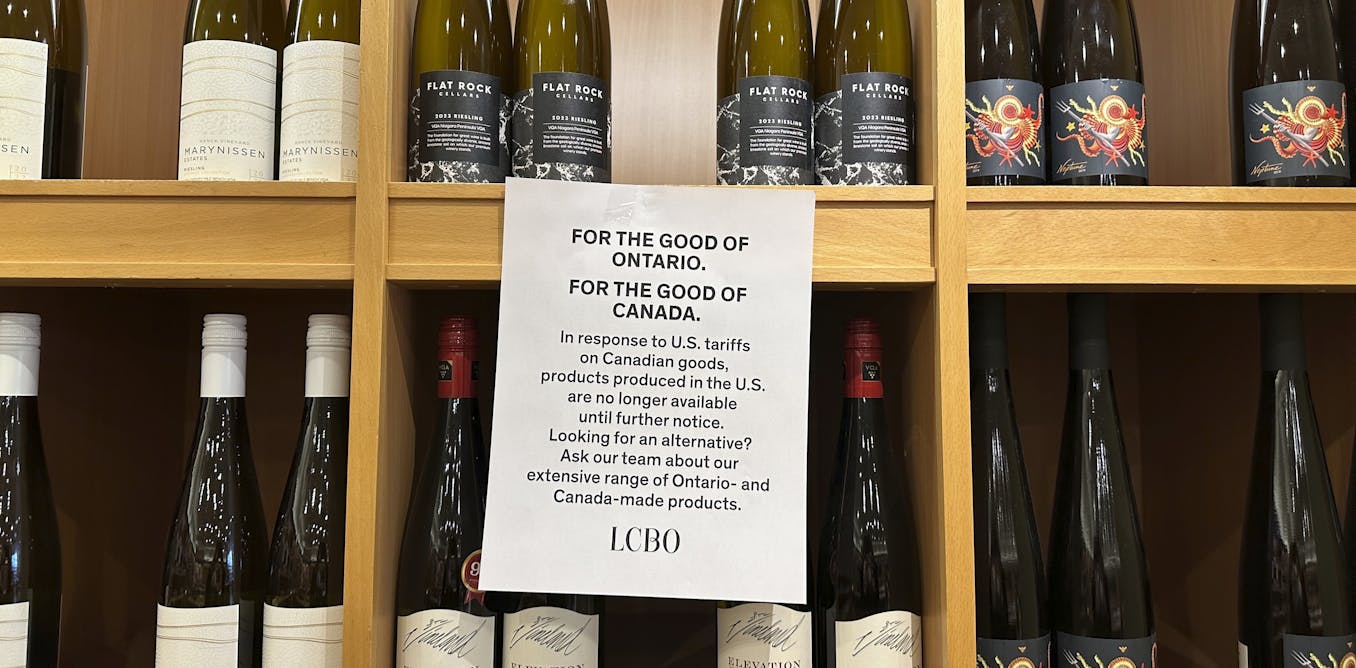
In the wake of President Donald Trump’s tariffs that targeted nearly all U.S. trading partners, Canada has reacted forcefully, reshaping its economic ties with the United States. The outcome of this fallout is visible as Canadians are reconsidering their interactions with the U.S., from travel plans to product purchases, in response to Trump’s suggestion that Canada join the United States as its 51st state.
One sector significantly affected by this economic rift is U.S. alcohol exports. Once a robust market, Canadian imports of American wine, beer, and spirits have experienced a dramatic downturn, plummeting over 70% due to a combination of retaliatory tariffs and other measures. Before these changes, Canada was a leading destination for U.S. alcohol exports, accounting for a substantial portion of American wine, beer, and spirits exports, driven by long-standing consumer preferences and tariff-free trade agreements such as NAFTA and its successor, USMCA.
The Impact on U.S. Alcohol Exports
Between 2022 and 2024, Canada was a primary market for U.S. alcohol, with significant exports of wine, beer, and spirits. However, following Trump’s re-election, Canadian imports of these products have sharply declined. This shift is largely attributed to Canada’s introduction of both tariff and nontariff barriers, which have effectively restricted market access for American producers.

AP Photo/Adrian Kraus
Trade Tensions and Their Repercussions
Prior to these tensions, U.S. alcohol exports to Canada accounted for over 20% of Canada’s total alcohol imports, amounting to $744 million. The situation changed in February 2025 when Trump imposed a 25% tariff on imports from Canada and Mexico, citing national security. Although these tariffs were later overturned by the Supreme Court, the initial implementation marked a significant disruption in trade practices.
Canada’s response included reciprocal tariffs on approximately $30 billion of U.S. goods, alongside nontariff measures that restricted American alcohol from being sold in Canadian stores. This led to a steep decline in U.S. alcohol exports to Canada, with wine exports dropping from $460 million to $103 million, spirits from $238 million to $89 million, and beer from $47 million to $17 million. Collectively, these measures reduced U.S. alcohol exports to Canada by $536 million.
The trade conflict has not dampened Canadian alcohol consumption but rather shifted it towards other international sources. U.N. trade data indicates that while American wine’s share of Canada’s wine imports fell from 21% to 5%, imports from other countries increased significantly, compensating for the decrease from the U.S.
According to Craig Peters, CEO of Barnburner Whiskey, “What’s different this time is that people aren’t just swapping one bottle, they’re rethinking the whole bar,” as quoted in VinePair. This shift suggests a broader reevaluation of alcohol preferences among Canadian consumers, favoring domestic and other international brands over traditional U.S. options.