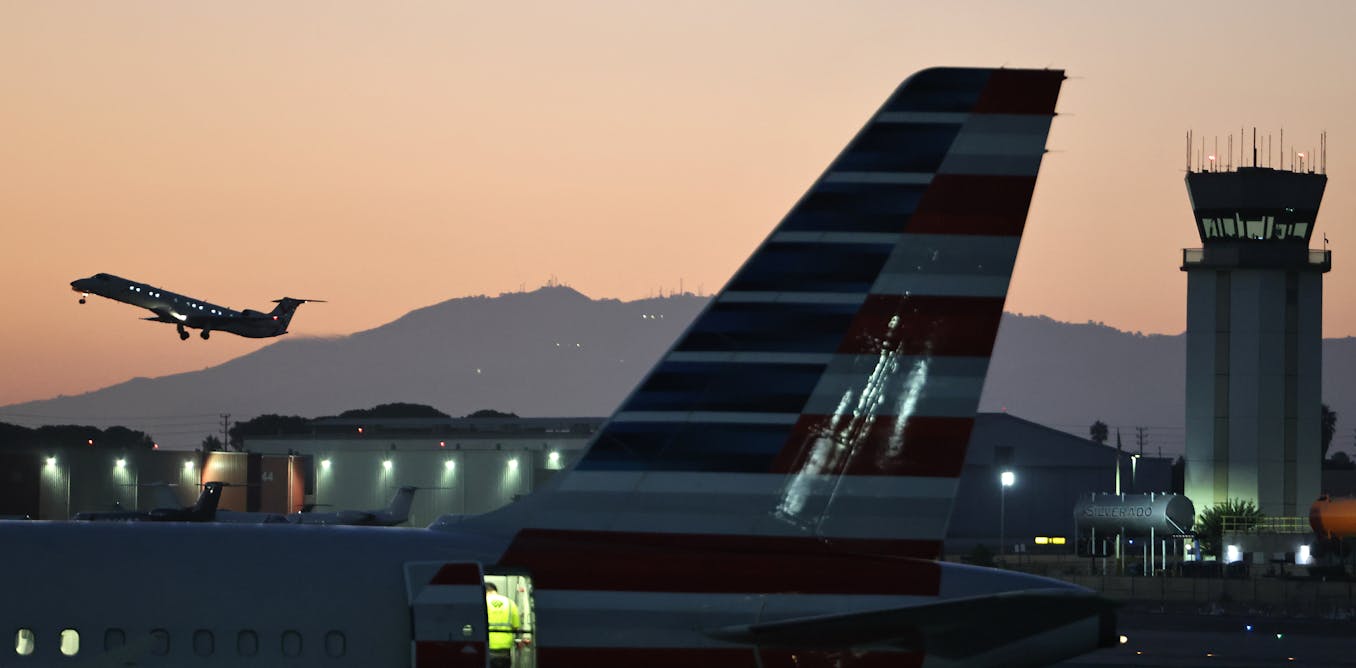
The U.S. air travel sector is currently grappling with extensive flight delays, a direct consequence of a persistent shortage of air traffic controllers who have been working without pay since the government shutdown commenced on October 1, 2025. This situation has led to a higher number of reported sick calls from employees. The problem, which already existed before the shutdown, has been exacerbated, leading to numerous flight disruptions in the form of delays and cancellations.
To further understand the implications on air travel, passengers, and safety, as well as the longstanding shortage of air traffic controllers, The Conversation U.S. consulted Brian Strzempkowski and Melanie Dickman, aviation specialists at The Ohio State University.
Impact of the Shutdown on Air Traffic Controllers
As essential workers, air traffic controllers are required to continue working without compensation during the shutdown, anticipating back pay once the government resumes. However, President Donald Trump cast doubt on the certainty of receiving back pay without Congressional endorsement, despite having previously signed legislation mandating it.
The stress of working without pay has intensified financial pressures on air traffic controllers, who already hold one of the most stressful professions. Consequently, increased sick calls have been reported, echoing trends from past shutdowns. For instance, during the 2018-2019 shutdown, sickouts began around two weeks in, coinciding with missed paychecks. Currently, such patterns have emerged more swiftly, under a week into the shutdown. Transportation Secretary Sean Duffy noted that approximately 10% of the workforce is affected and warned of potential terminations.
Implications for Air Travelers
The pre-existing shortage of air traffic controllers, compounded by recent sickouts, has resulted in significant travel disruptions at key airports like Atlanta and Denver, as well as smaller hubs such as Burbank, California, and Daytona Beach, Florida.
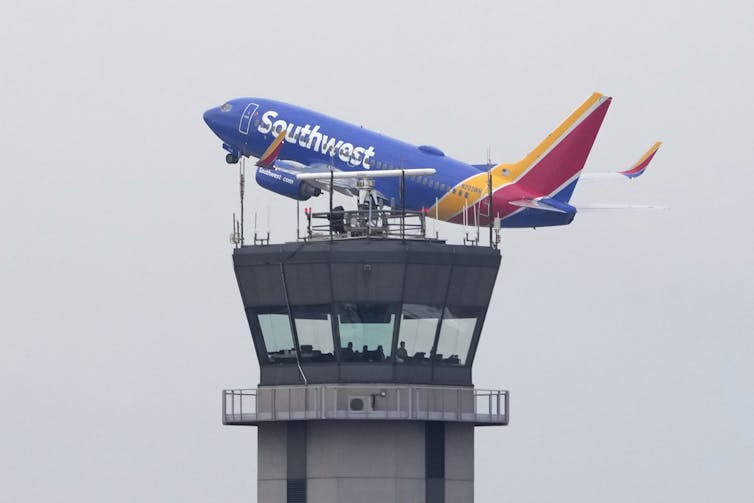
Passengers are understandably concerned about the impact on air safety. The air traffic control system is designed with multiple safety layers to maintain safety. Although staff shortages can diminish these safety nets, contingency measures, such as rerouting flights or canceling departures prior to gate release, are in place. For instance, Newark Liberty International Airport’s capacity, which typically handles around 80 aircraft per hour, was reduced to 28-34 aircraft due to staffing and technical constraints. Recent upgrades have increased this to 68-72 aircraft per hour, showcasing the importance of strategic oversight by transportation authorities to sustain safety and efficiency.
AP Photo/Charles Rex Arbogast
Ensuring Air Travel Safety
The Federal Aviation Administration (FAA) employs the Air Traffic Control System Command Center, situated near Washington, D.C., to oversee the national airspace system. This facility manages staffing, weather, equipment failures, and disruptions. In instances like Burbank Airport’s recent controller shortage, the center issues alerts to divert flights or hold departures to maintain safety.
Staffing deficits may necessitate shifting workloads between facilities. The Command Center utilizes various strategies to manage capacity, ensuring that while flight delays and cancellations may inconvenience travelers, they ultimately prevent airspace congestion.
Addressing the Controller Shortage
The air traffic controller shortage stems from systemic recruitment challenges over the past decade. The FAA has struggled to train enough controllers to replace retirees. In May 2025, a plan was announced to leverage universities for training, though this solution will take time to yield results. Meanwhile, the FAA Academy faces limited funding, and the shutdown has halted new training enrollments, potentially leading to extended impacts on staffing.
Government Efforts to Mitigate the Shortage
In July, Congress allocated over $12 billion to modernize the air traffic control system. Secretary Duffy is spearheading efforts to find a contractor for implementing necessary technology upgrades. Duffy indicated that an additional $19 billion is required to fully update the system.
The editor’s note was updated to correct the number of flights canceled during the shutdown.