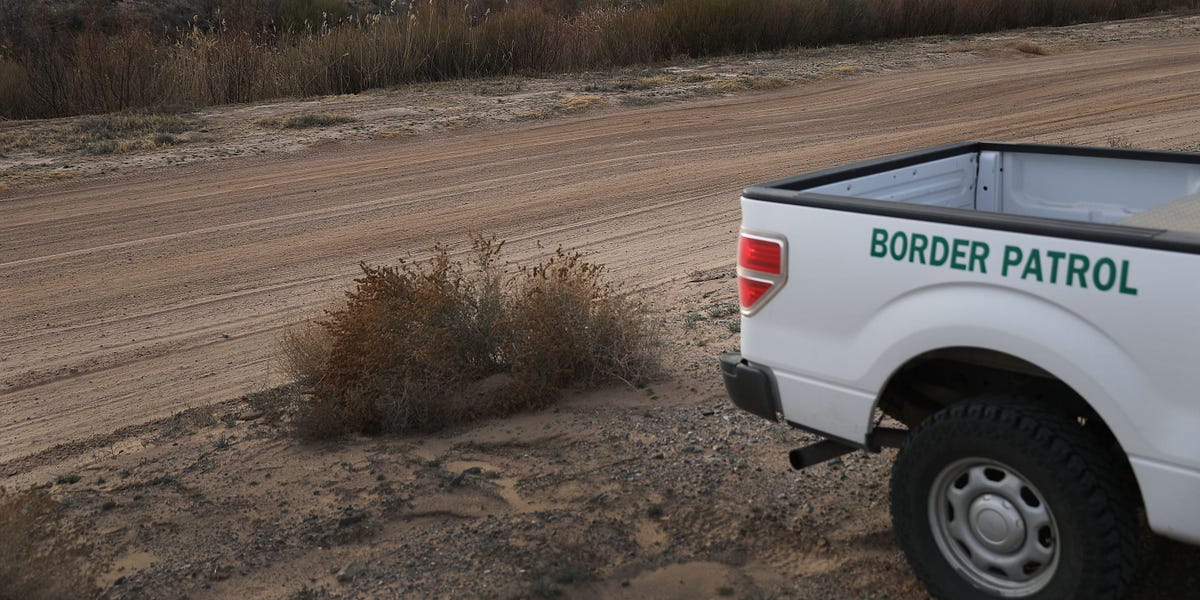
Drone Incident Triggers Temporary Airspace Closure in Texas
In a surprising turn of events, the US military has taken down a Customs and Border Protection drone over Texas, leading to the expansion of a temporary flight restriction around Fort Hancock. The incident, which involved counter-drone measures by US forces, was confirmed by three Democratic lawmakers.
The Federal Aviation Administration (FAA) responded by widening the restricted airspace for “special security reasons,” just weeks after a similar restriction was issued over El Paso. However, according to a statement given to Business Insider, this new restriction will not impact commercial flights.
The FAA stated, “A temporary flight restriction (TFR) was already in place around the Fort Hancock area. The TFR has been expanded to include a greater radius to ensure safety.”
A joint statement from the Pentagon and US Customs and Border Patrol revealed that the military engaged with what was perceived as a threatening unmanned aerial system within military airspace. The statement clarified that the engagement occurred far from populous areas, ensuring no commercial aircraft were endangered.
Cooperation Among Agencies
The incident has highlighted the need for better coordination among the FAA, Border Protection, and the Defense Department. The agencies emphasized their ongoing efforts to enhance communication and cooperation to avert similar incidents, particularly in combating drone threats from “Mexican cartels and foreign terrorist organizations” along the US-Mexico border.
Democratic Lawmakers Weigh In
Democratic Representatives Rick Larsen, Bennie Thompson, and André Carson, key figures on the House Transportation and Homeland Security committees, voiced concerns over the incident. They reported that the Defense Department used a “high-risk counter-unmanned aircraft system” to shoot down the drone, a term often associated with anti-drone lasers.
The lawmakers criticized the White House for bypassing a bipartisan bill aimed at improving training and coordination among agencies. They stated, “We said months ago that the White House’s decision to sidestep a bipartisan, tri-committee bill to appropriately train C-UAS operators and address the lack of coordination between the Pentagon, DHS, and the FAA was a short-sighted idea. Now, we’re seeing the result of its incompetence.”
The exact timing of the drone incident remains unclear, as does the direct connection to the airspace closure around Fort Hancock. The FAA has scheduled the flight restriction to last until June 24, though its duration may change.
Earlier airspace closures, such as the one over El Paso prompted by a party balloon incident, have also involved the use of an anti-drone laser, as reported by The New York Times. These measures highlight the ongoing challenges faced by authorities in managing airspace security.