US Air Force Conducts High-Risk Rescue Operations in Middle East Amid Rising Tensions
In the high-stakes landscape of combat zones, the US Air Force’s search-and-rescue teams play a crucial role, diving into perilous situations to recover downed airmen. These operations, often shadowed by significant risks, are meticulously planned and executed by highly trained crews.
Reports from multiple American media outlets, backed by anonymous US officials, have confirmed the loss of a US Air Force F-15E fighter jet over Iran, attributed to enemy fire. In the ensuing rescue mission, two search-and-rescue helicopters sustained hits but successfully returned to base, highlighting the dangers involved in such missions. Additionally, an A-10 Thunderbolt II crash-landed in Kuwait after encountering hostile fire. The pilot of the A-10 was safely retrieved.
US Central Command has remained silent on these incidents, not responding to requests for comments. However, sources, including The Washington Post, have reported the successful recovery of one of the two F-15E crew members by US forces. The fate of the other crew member remains unknown.
Business Insider interviewed an active Air Force search-and-rescue pilot who described the daytime rescue mission as exceptionally daring. “Darkest of dark nights, this is still pretty intense and pretty scary. Doing this in full moonlight would still be risky,” he explained, emphasizing the additional risk posed by broad daylight operations.
The pilot noted that the urgency to find American personnel often outweighs the risks. “It is sort of terrifying to go like, ‘let’s just go fly in broad daylight into the middle of a country that is at war with us,'” he remarked.
Rescuing fellow soldiers is a sacred duty for American troops, the pilot stressed. Successfully locating and retrieving airmen before enemy forces do is critical, as it can prevent strategic setbacks if personnel are captured.
Crews train rigorously for such eventualities, undergoing SERE training to prepare for survival and evasion behind enemy lines. Search-and-rescue tactics evolved significantly during the Vietnam War, leading to specialized units adept at penetrating enemy territory to recover airmen.
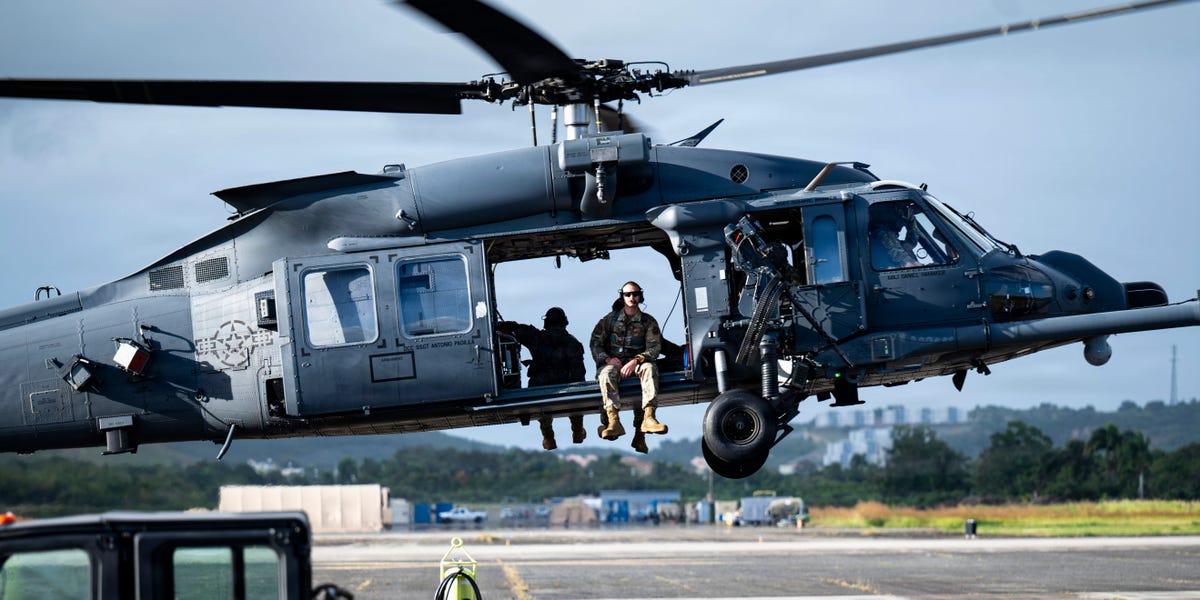
Today, the CSAR mission is a well-supported operation within the US Air Force, as noted by Greg Bagwell, a former British Royal Air Force commander. It involves Pave Hawk helicopters, HC-130 refuelers, and Pararescue Jumpers, with mission command potentially directed by nearby aircraft like the A-10 Warthog.
The rescue helicopters face numerous dangers, flying low and slow to locate downed personnel. “They’re trying to get in, avoid hostile fire, and somehow locate this individual,” the pilot explained, adding that the goal is to quickly retrieve the airman and exit the area.
These missions are fraught with risks, from enemy fire to navigating challenging environments. “You train a whole lot, and the hope is you never have to do it,” the pilot concluded, underscoring the dedication and preparedness of search-and-rescue crews.