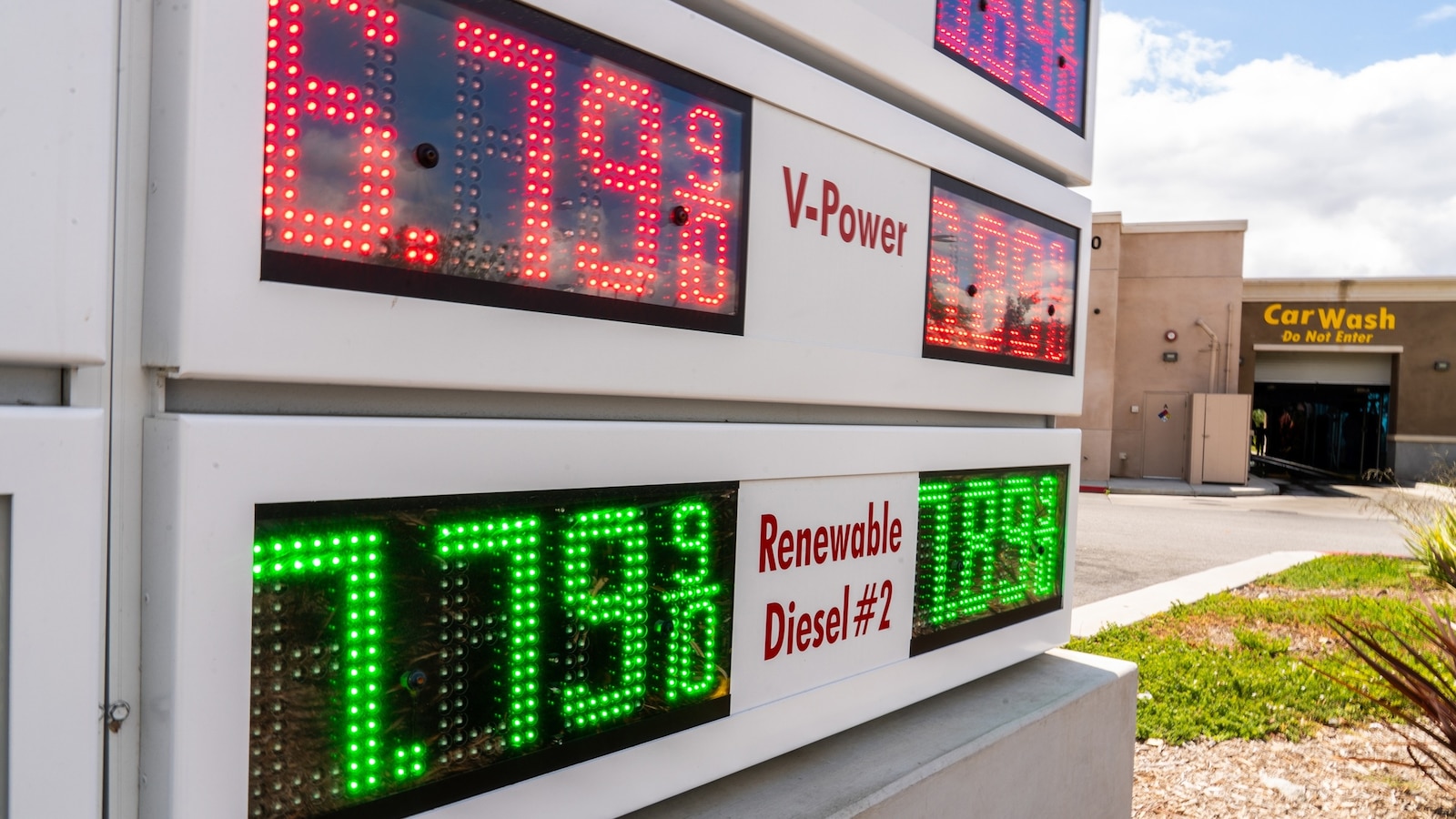
The economic consequences of Iran’s ongoing war are creating hardships nationwide, with many Americans reporting financial strain due to escalating costs. The sharp increase in gas prices is a major concern, as an ABC News/Washington Post/Ipsos poll indicates that half of the populace anticipates even higher gas prices over the next year.
The poll reveals that around 40% of Americans feel financially worse off than when President Donald Trump began his second term. Additionally, nearly 25% of respondents stated they are financially falling behind.
Personal stories highlight the economic challenges faced by many. For example, Jacob Olson, a 28-year-old Arkansas resident, expressed the difficulty of affording essential items due to rising costs. Olson transitioned from a warehouse management job to creating custom wood projects to make ends meet but struggles with significant gas expenses for his business operations. “One day at a time,” Olson said. “One foot in front of the other… That’s about the way to sum it up.”
Nearly half of Americans expect gas prices to surge further, with another 15% expecting them to remain the same, per the poll data. Olson is one of those anticipating continued price hikes for gas and other necessities. He remarked on the difficulty of supporting a young family under current economic conditions. “I don’t really do anything, you know, for leisure or luxury anymore,” Olson noted. With two young children and mounting bills, he feels the pressure increasing daily.
Brenda Howard, a 66-year-old from Lubbock, Texas, echoed these sentiments, explaining that she, too, avoids luxury spending. Without a car, she depends on services like Uber and Lyft for necessary trips, costing her about $30 per grocery run. “This is not the way I thought my retirement was gonna turn out,” Howard said. “I never dreamed that it would be a day-to-day struggle, sometimes hour to hour.”
The reality of high gas prices has driven many Americans to change their habits, with over 40% reducing driving and household expenses, and more than a third altering travel plans. Those earning less than $50,000 annually are particularly burdened, with over half cutting back on both driving and spending.
Some, like Martha Davis, a Texan caring for her disabled son, grapple with significant travel expenses for essential medical appointments. “I used to get back and forth on like $20, $25, but now it’s almost 70 bucks,” Davis lamented, highlighting the severity of the situation.
The poll also reveals that nearly 40% of Americans are worse off financially than at the start of Trump’s second term, yet some still support him. Andy Breedlove from West Virginia, currently unemployed due to a disability, believes President Trump is performing well despite high gas prices. Breedlove anticipates further increases due to the war with Iran.
The Iranian blockade of the Strait of Hormuz has severely disrupted oil trade, impacting global markets as 20% of the world’s oil usually passes through this crucial passage.
According to the survey, 61% of Americans view the Trump administration’s decision to engage in the war with Iran as a mistake. Olson, disillusioned by leadership that he finds lacking transparency, stated, “He hasn’t made a clear statement on why… we’re actually participating at all.”
For some like Jim Piper in Indiana, who sees rising prices as a consequence of political gridlock, financial strain is hitting hard. Living on a fixed income due to a disability, Piper finds inflation a significant challenge: “I got to pay more, even though I’m not making more,” he said.
The financial pinch could have a notable impact on upcoming midterm elections, affecting the political landscape and power dynamics in Congress, as economic issues remain at the forefront of voters’ minds.