Military Whistleblower Faces Retaliation Over Hawaii Water Crisis
A report has emerged detailing the retaliation against an Army major who raised alarms about a 2021 fuel leak in Hawaii that contaminated drinking water. The incident, centered around the Red Hill fuel leak, has brought to light significant concerns about the treatment of whistleblowers within the military.
According to the report, an Air Force colonel took retaliatory actions against Army Maj. Amanda Feindt after she briefed Congress and a Department of Defense watchdog on the contamination issue. This retaliation reportedly involved pressuring her to cease further communications on the matter.
During a February 2022 conversation, Maj. Feindt recounted how the colonel expressed dissatisfaction with her actions. This was during a time when some water pipes had been flushed in her housing area, yet she was still residing in a hotel because many homes remained unsafe. Following this, Feindt lodged a complaint with the Department of Defense watchdogs.
“We found that the colonel’s rank and position of authority coupled with the colonel’s display of a dismissive attitude and demeanor toward the complainant’s concerns contributed to the likelihood that the colonel’s conduct would restrict a reasonable service member from continuing to lawful communicate with a member of Congress or an inspector general,” a summary of the report read.
The report, dated June 10, was recently shared with Maj. Feindt, who expressed a sense of vindication. Her claims of retaliation were upheld by “a preponderance of the evidence,” supporting the credibility of her story. However, she voiced frustration that the colonel involved has since retired.
“It’s been a really heavy, hard, long road, and it’s been a really lonely one,” Maj. Feindt told Military.com in an interview.
Identified through correspondence reviewed by Military.com, the colonel in question is now-retired Col. Kenneth McAdams, associated with U.S. Special Operations Command Pacific. Col. McAdams has not responded to inquiries from Military.com or participated in the investigation regarding his comments.
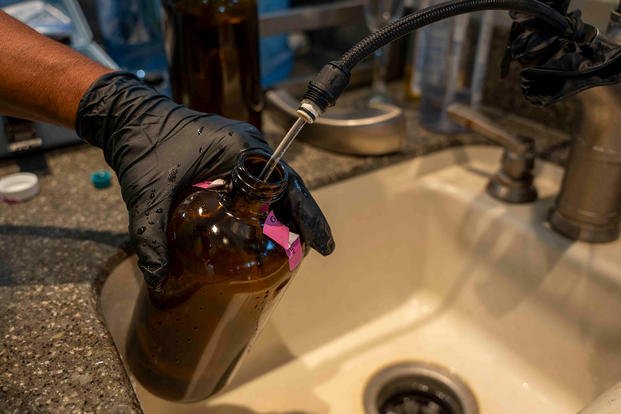
The Red Hill fuel leak incident, which occurred around Thanksgiving 2021, exposed approximately 93,000 residents at Joint Base Pearl Harbor-Hickam to jet fuel. This was due to a burst pipe that released thousands of gallons of contaminants into a nearby well supplying drinking water.
Feindt, who had evacuated her family due to health concerns, began reaching out to Congress shortly after the spill. In February, while on leave, she met with members of Congress to discuss the situation. Upon her return, she faced resistance when attempting to resume work, leading to further allegations of retaliation.
“During the meeting, the colonel told the complainant that they had ‘brought it on [themselves]’ by talking to Congress, was acting like a ‘self-professed superhero,’ and should just drop their kids off at day care and return to work,” the report summarized.
The report concluded that while no evidence showed the colonel’s comments stopped Maj. Feindt from contacting Congress, the actions likely violated Title 10 Section 1034 of the U.S. Code, which protects whistleblowers from retaliatory personnel actions.
The inspector general’s report did not recommend remedial action for Feindt but suggested that the secretary of the Air Force consider actions against the colonel.
Feindt’s family, affected by the fuel spill, participated in a successful lawsuit attributing health problems to the Red Hill Bulk Fuel Facility spill. Two other related legal cases are ongoing in Hawaiian federal court, as noted by Just Well Law, the firm representing her family.
“My will to fight wasn’t ever about me,” Feindt expressed in her interview. “It really wasn’t even about my own family; it was about 93,000 people who were poisoned by an American military asset on American soil, and then they were treated like collateral damage, betrayed and left behind.”