Correction: This story has been updated to remove an inaccurate reference to the propeller falling off.
Drone Failure: A $13 Million Loss Over the Mediterranean
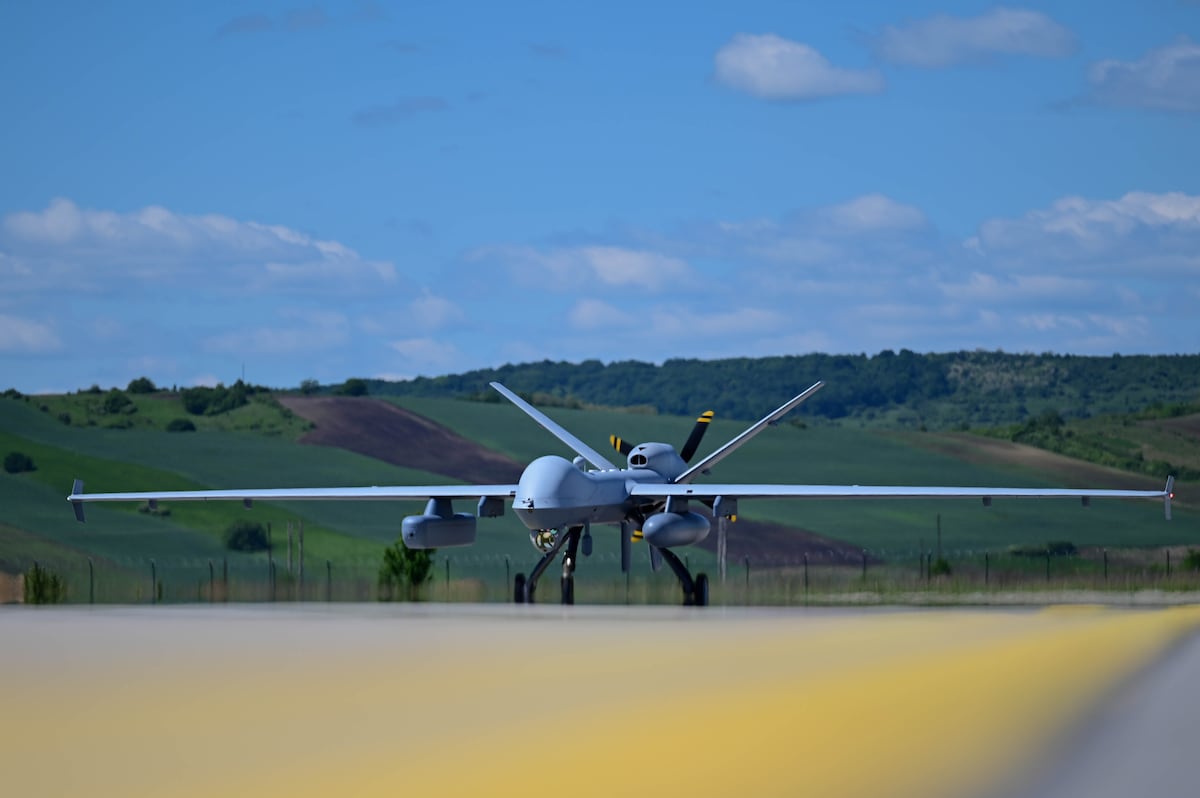
An MQ-9 Reaper drone, valued at $13 million, unexpectedly plunged into the Mediterranean Sea in December last year. According to an accident investigation, a critical propeller malfunction was the cause of this costly incident.
The ill-fated drone was part of the 432nd Wing stationed at Creech Air Force Base in Nevada. Investigators believe a crucial ring component failed mid-flight, leading to the propeller’s dysfunction. This incident occurred on December 16, underlining the vulnerabilities in the drone’s design.
Operated remotely by personnel from the 20th Attack Squadron at Whiteman Air Force Base in Missouri, the Reaper had taken off from a location within the U.S. European Command’s jurisdiction. Details from the accident investigation board report, published on July 30, provide insights into the unfortunate event.
At approximately 5 p.m. GMT, the drone was maintaining its intended speed and height when a sudden drop in engine torque occurred, resulting in a complete loss of torque within a second. The engine’s speed surged beyond its normal range, triggering alert notifications.
Despite attempts to regain control by pushing the throttle to full power, the drone’s engine torque did not recover. Initially maintaining altitude, the Reaper soon began to lose speed and started descending.
Faced with a rapidly descending aircraft, the crew declared an emergency and attempted to steer the Reaper back to its departure point, identifying a potential safe landing area in the process.
Fifteen minutes into the crisis, the Reaper’s systems detected metal debris in its engine oil, prompting the crew to avoid an engine restart. Eventually, the engine ceased operation entirely.
With no alternative, the operations superintendent instructed the crew to let the drone crash into the sea, which it did at 5:23 p.m. Unfortunately, the drone became unrecoverable, preventing further physical examination.
General Atomics, the drone’s manufacturer, conducted an analysis of the data logs. Their assessment indicated a loss of engine torque due to the propeller’s “decoupling” from the engine, evidenced by differing speed recordings from the drone’s systems.
The report suggested that the failure of a spiral lock ring in the gearbox was the likely culprit. Although General Atomics refrained from commenting, it was noted that these rings are susceptible to excessive wear. Honeywell, the producer of the MQ-9’s engine, had initiated measures to replace these rings every 3,000 flight hours to mitigate such failures.
Despite a reduction in ring failures following this measure, the December crash involved a drone whose ring had degraded prematurely, well before its scheduled replacement. Investigators could only hypothesize the reasons for this accelerated wear, given the drone’s unrecoverable state.
The investigation confirmed that the crew adhered to all procedural requirements, and no issues with mission planning or preflight checks contributed to the disaster.