The Air Force Advances with Rapid Development of New Cruise Missile
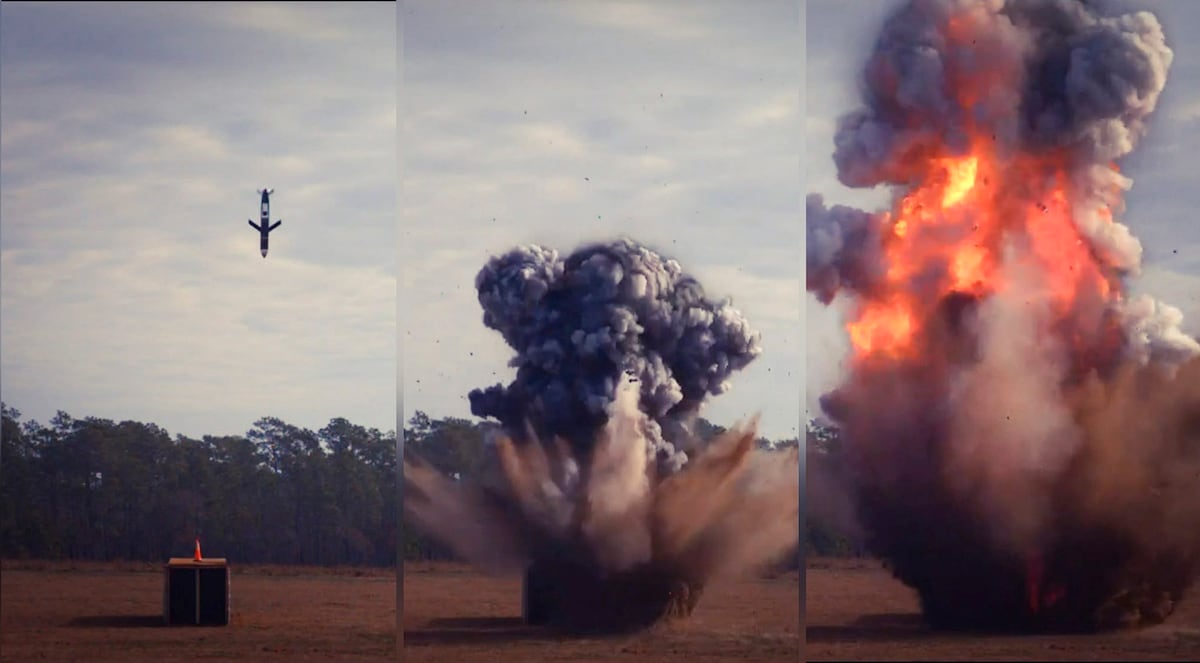
In a significant move showcasing rapid innovation, the Air Force recently executed a successful live test of a new standoff cruise missile, the Extended Range Attack Munition (ERAM). This test, conducted on January 21, highlights the swift progression from development to demonstration, achieving a major milestone in less than 18 months.
The ERAM, an air-launched precision-guided missile, is designed to target high-value fixed locations from a safe distance while maintaining cost-effectiveness. This new technology is expected to strengthen the Air Force’s strategic capabilities, allowing for quick production to enhance deterrence against adversaries.
Zone 5 Technologies and CoAspire, two small defense firms, were awarded the ERAM contract just over a year ago, marking a rapid development timeline. Brigadier General Robert Lyons III, the Air Force’s weapons portfolio acquisition executive, emphasized the significance of this achievement. “Moving from a contract to a live-fire demonstration in under two years proves we can deliver lethal, cost-effective capability at the speed of relevance,” he stated on January 30. He further added that this approach exemplifies the military’s effort to streamline processes and equip warfighters effectively.
The test was held at Eglin Air Force Base in Florida, involving collaboration between the Air Force Life Cycle Management Center’s Armament Directorate, the 96th Test Wing, and various industry partners. According to the Air Force, the demonstration achieved all primary objectives, including a complete warhead detonation. The valuable data collected by engineers at Eglin will inform further improvements and refinements to the ERAM system.
Brigadier General Mark Massaro, commander of the 96th Test Wing, highlighted the importance of developing such systems to create strategic advantages. “The future fight demands we create an asymmetric advantage by developing cost-effective, attritable systems like ERAM that give commanders the ability to generate mass,” he noted, marking the test as a crucial step forward.
In an effort to bolster Ukraine’s defense capabilities, the U.S. government has approved the sale of ERAMs to the country. As of August 2025, the State Department sanctioned the sale of up to 3,350 ERAMs, equipped with embedded GPS and navigation systems, to Ukraine for approximately $825 million.
For more insights into the evolving role of cruise missiles, visit Defense News.