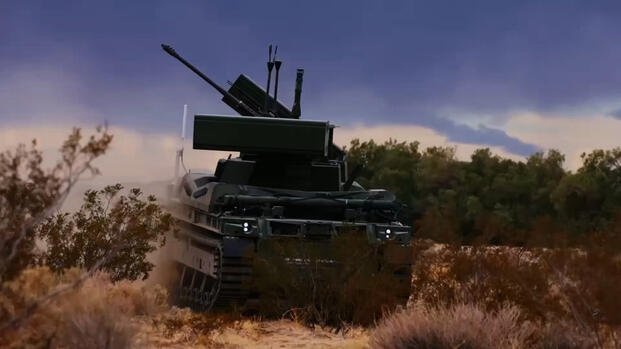
In an era of rapid technological advancements, the Army is undergoing a significant transformation to enhance its combat capabilities. This change, described by officials at the recent Global Force Symposium in Huntsville, Alabama, focuses on accelerating the deployment of AI-driven targeting and expediting the movement of weapons from production lines to the battlefield.
Under Secretary of the Army Michael Obadal remarked, “This month, our army is engaged in active combat,” highlighting the urgency of these developments. The Army aims to streamline processes, cutting through bureaucratic delays to prioritize speed and real-time feedback in weapon and technology deployment.
AI Enhances Battlefield Targeting
Artificial intelligence is no longer just a concept in testing phases; it is now actively reshaping battlefield strategies. Army leaders have introduced new AI-enabled targeting systems that reduce traditional multi-step processes to near-instantaneous decisions on the ground.
During a recent exercise at Fort Carson, Colorado, the 4th Infantry Division utilized AI tools to automate targeting processes, integrating intelligence and reconnaissance data. “It enabled the division to prosecute 15 different targets in one hour,” Obadal stated.
This technological leap forward reduces the time needed for sensor coordination, airspace management, and command approvals, allowing for more rapid engagement with multiple targets.
The Army’s broader strategy involves creating a more connected “kill chain,” which links sensors, data, and weapon systems, enabling commanders to address threats promptly. This urgency is fueled by the fast-paced evolution of battlefield technologies, especially in the realm of drone warfare. Learn more about the rapid evolution of battlefield technology.
Revamping Weapons Acquisition
The Army is also overhauling its weapons acquisition process to align more closely with wartime demands. Jesse Tolleson, principal deputy to the assistant secretary of the Army for acquisition, logistics, and technology, highlighted this shift by stating, “Acquisition is now a war-fighting function.”
Moving away from a compliance-driven system, the Army is adopting a “commercial-first” approach to streamline processes and empower program managers to make quicker decisions based on battlefield needs.
A new “concept of needs” framework replaces complex requirements, allowing companies to propose solutions swiftly and adapt to changing conditions. This approach aims to integrate emerging technologies, such as autonomous systems and electronic warfare tools, more rapidly into combat operations. Explore efforts to improve readiness.
Boosting Production for Combat Readiness
To meet rising demands, the Army is expanding its industrial base to produce more weapons, including 155mm artillery shells, and increasing domestic production of drone components.
“An unbreakable connection must exist from the factory to the frontline,” Obadal emphasized, pointing to efforts at facilities like the Scranton Army Ammunition Plant to enhance production and replenish stockpiles.
Efforts are also underway to produce drone components within the U.S., reducing reliance on foreign supply chains. This move aims to sustain large-scale combat operations without the risks associated with overseas manufacturing. Learn about drone integration efforts.
Officials describe these changes as part of a continuous transformation, where real-world operations directly influence development and acquisition strategies. “This is a step in the right direction to leverage industry-driven solutions,” Obadal concluded.