In a move that broadens the scope of recognition for soldiers, the Army has expanded the eligibility criteria for combat patches. This new policy allows a greater number of soldiers, especially those deployed in the Middle East and Africa, to wear the insignia typically associated with wartime service, reflecting a shift in how the Army acknowledges deployments in risky environments.
Expanded Eligibility for Combat Patches
As of March 2026, the Army has implemented a new policy that permits soldiers involved in operations related to the conflict with Iran, under US Central Command and US Africa Command, to receive combat patches. This decision, sanctioned by Army Chief of Staff Gen. Randy George, applies to active-duty soldiers as well as those in the National Guard and the Reserve.
The authorization extends to soldiers “assigned or attached to units supporting military operations” in these regions, effective from late February 2026, with no end date currently specified.
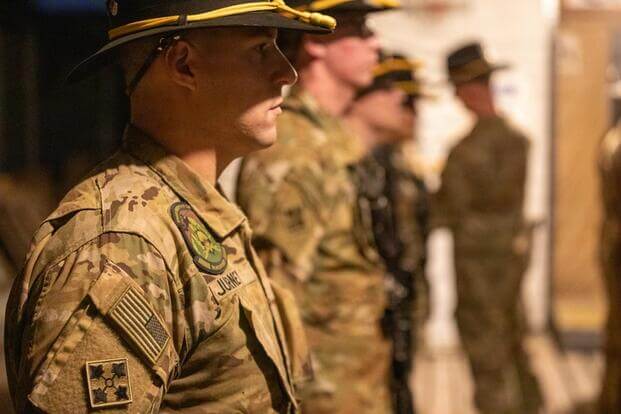
Known formally as the Shoulder Sleeve Insignia–Military Operations in Hostile Conditions (SSI-MOHC), combat patches are worn on the right sleeve and serve as a permanent reminder of service in a hostile environment.
Shifting Towards Broader Recognition
This 2026 policy continues a trend initiated by a 2025 policy change, which expanded combat patch eligibility across various Middle Eastern and African countries. The earlier policy covered deployments from October 2023 to June 2025, in regions where US forces encountered consistent threats.
The Army, moving away from traditional requirements like hostile fire pay or combat zone tax exclusion, decided eligibility based on operational risk assessments instead.
Understanding the Significance of Combat Patches
Within the Army, combat patches hold considerable cultural significance. Soldiers typically wear their current unit’s insignia on the left sleeve, but a deployed unit’s insignia may be worn on the right sleeve for the remainder of a soldier’s career, if authorized.
Unlike awards such as the Combat Infantry Badge or Combat Action Badge, which require direct engagement with enemy forces, combat patches recognize service in a designated operational environment.
The Need for Updated Criteria
This policy change acknowledges the modern reality that US forces often operate in environments that involve significant risks, even if they do not meet traditional combat definitions.
In today’s military landscape, operations may include threats from drones, missile strikes, and indirect fire, even in non-combat zones. This reality means that soldiers in support roles or dispersed units encounter risks similar to those in officially declared war zones.
Distinction from Combat Awards
The Army has maintained a clear distinction between combat patches and individual combat awards.
Badges like the Combat Infantry Badge or Combat Action Badge require direct engagement with enemy forces and serve as more selective indicators of combat experience.
Cultural and Institutional Implications
The broader use of combat patch authorizations marks a shift in how the Army recognizes service.
Previously, eligibility was closely linked to combat zones like Iraq and Afghanistan. Today’s operations cover varied regions with differing levels of intensity, prompting policy adjustments to ensure the recognition of soldiers serving in risky environments.
While some in the force view this expansion as overdue recognition of operational risks, others worry that it might dilute the combat patch’s significance.
Redefining Military Recognition
This expansion of combat patch eligibility signifies a broader shift in military policy, moving beyond the confines of declared wars and traditional battlefields.
The Army is now recognizing the risks involved in modern deployments, which often straddle the line between peace and war.
Once symbols of participation in major wars, combat patches now represent a wider range of military service shaped by ongoing conflict, dispersed operations, and evolving threats.