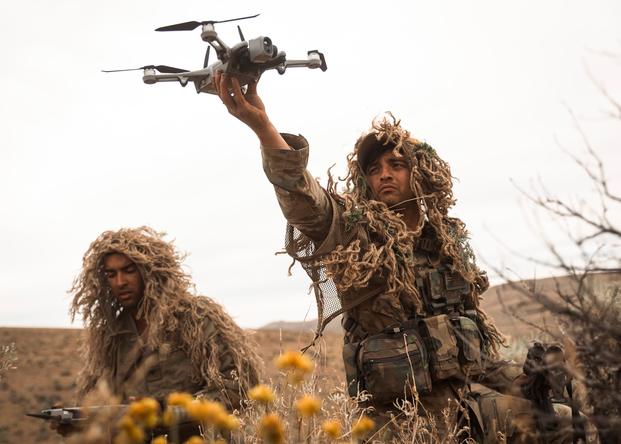
The U.S. Army is undergoing a significant transformation in its approach to combat, driven by the evolving role of drones as seen in recent conflicts such as Russia’s invasion of Ukraine. This shift involves rethinking traditional military strategies, procurement processes, and unit structures to incorporate unmanned systems more effectively into military operations.
Lessons from Ukraine’s Drone Warfare
In the ongoing conflict in Ukraine, drones have proven to be a decisive factor on the battlefield. They have rendered traditional cover and concealment strategies obsolete, as both Ukrainian and Russian forces rely heavily on these unmanned systems for reconnaissance, artillery targeting, and direct attacks. According to the Modern War Institute at West Point, approximately 70% of Russian casualties in Ukraine are attributed to drones.
Ed Arnold, a European security expert at the Royal United Services Institute, highlighted the impact of drones in modern warfare, stating in an interview with NBC News, “There’s nowhere to hide on the modern battlefield.” Drones play a crucial role in spotting targets, particularly for coordinating artillery strikes.
Economic Impact and Production of Drones
Beyond their tactical effectiveness, drones have also shifted the economic dynamics of warfare. In Ukraine, inexpensive drones, such as Russian FPV and ‘kamikaze’ variants costing around $400 each, have been used to destroy high-value targets like M1 Abrams tanks, which are worth $8 to $10 million each. This has prompted the U.S. Army to consider its own mass production capabilities, aiming to produce 10,000 small drones each month domestically starting in 2026, as reported by DefenseScoop.
Adopting Agile Procurement Systems
The U.S. Army is also examining how Ukraine efficiently supplies drones to the front lines. The Ukrainian government has implemented a digital procurement system called “Brave1,” which allows commanders to order drones directly from manufacturers with swift delivery times. This system is overseen by Ukraine’s Ministry for Digital Transformation and enables front-line units to acquire necessary equipment quickly through an online marketplace.
U.S. military officials in Wiesbaden, Germany, have studied this system, hoping to replicate its efficiency in getting equipment to soldiers swiftly. “We’re going to have to be more agile,” stated Gen. Randy George, emphasizing the need for the U.S. Army to adapt to rapidly changing drone technology.
Rethinking Tank Operations
The presence of drones is also influencing how tanks are deployed on the battlefield. Secretary of the Army Daniel Driscoll, speaking on the “War on the Rocks” podcast, noted that tanks can no longer be positioned as prominently due to the threat posed by drones. He suggested making tank battalions “a lot leaner” to reduce their vulnerability, while utilizing drones to scout ahead and clear pathways for armored units.
Establishing Drone-First Combat Units
To adapt to the growing importance of drones, the Army is creating new formations centered around these unmanned systems. The 10th Mountain Division’s 3rd Brigade has tested “strike companies” designed to operate ahead of battalions, utilizing drones for reconnaissance and attack. These changes aim to integrate drones as a standard part of military operations, similar to personal weapons or communication equipment.
As Army Chief of Staff Gen. Randy George stated, “Drones are going to constantly change,” highlighting the necessity for the Army to continuously adapt its strategies and technologies in response to rapid advancements in unmanned systems.