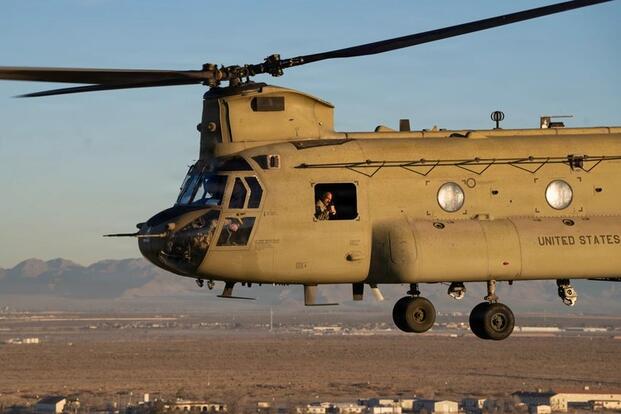
The iconic CH-47 Chinook helicopter, a symbol of U.S. military might, continues to play a pivotal role in the transportation of soldiers. Despite its renowned status, many remain unaware of its namesake—the Chinook Indian Nation, a prominent indigenous tribe of North America.
The Chinook’s legacy was highlighted when former President Donald Trump recognized the “massive Chinook” during a State of the Union address, referencing a mission involving Venezuelan leader Nicolás Maduro. Meanwhile, Sam Robinson, an Army veteran and Chinook Councilmember, is advocating for federal acknowledgment of the tribe, a recognition granted in 2001 but rescinded 18 months later.
Answering the Call to Serve
Native Americans often enlist in the military due to various motivations including financial benefits and family tradition. Robinson, influenced by his family’s military history, joined the Army shortly after high school. He explained, “Once I turned 18, I knew that college wasn’t my path, so enlisting felt like a practical option that I would take pride in.”
During his four-year tenure, Robinson progressed from infantry to an anti-tank platoon, eventually becoming a sergeant. One significant memory was his ride in a Chinook helicopter, a moment that filled him with pride. “I had always been a fan of the helicopter, and I felt especially proud to be a Chinook man who had gotten to ride in a Chinook helicopter,” he recalled.
Robinson’s military experience equipped him with valuable skills that he later applied in a 43-year career in wood products manufacturing. “You get more respect and better work out of people that way,” he noted, emphasizing leadership learned from seasoned soldiers.
A Proud Nation in the Pacific Northwest
The Chinook Indian Nation, tied historically to the Lewis and Clark Expedition, originally inhabited the Lower Columbia River and the Pacific Coast. Despite their vibrant community, the tribe still struggles for federal recognition, a status that would provide essential resources like healthcare and education.
The Army’s tradition of naming aircraft after Native American tribes includes the CH-47 Chinook, a testament to the tribe’s enduring strength. “Our people have endured generations of broken promises,” Robinson stated, underscoring the tribe’s resilience.
Still Hope for Recognition?
Federal recognition establishes a tribe’s sovereignty and relationship with the U.S. government. The Chinook briefly achieved this in 2001, but the status was revoked, leaving the tribe in a prolonged struggle for acknowledgment.
Amidst these challenges, the Chinook Justice Movement seeks to reclaim recognition through legislative efforts and community support. As Robinson pointed out, “The question we keep coming back to is: if you acknowledge us enough to put our name on your helicopter, why not formally recognize our nation?”
Efforts continue, with support from local leaders and tribes, descendants of Lewis and Clark, and thousands of Americans. Ultimately, the path to recognition lies with Congress, a body recently reminded of the “massive Chinook” by Trump.