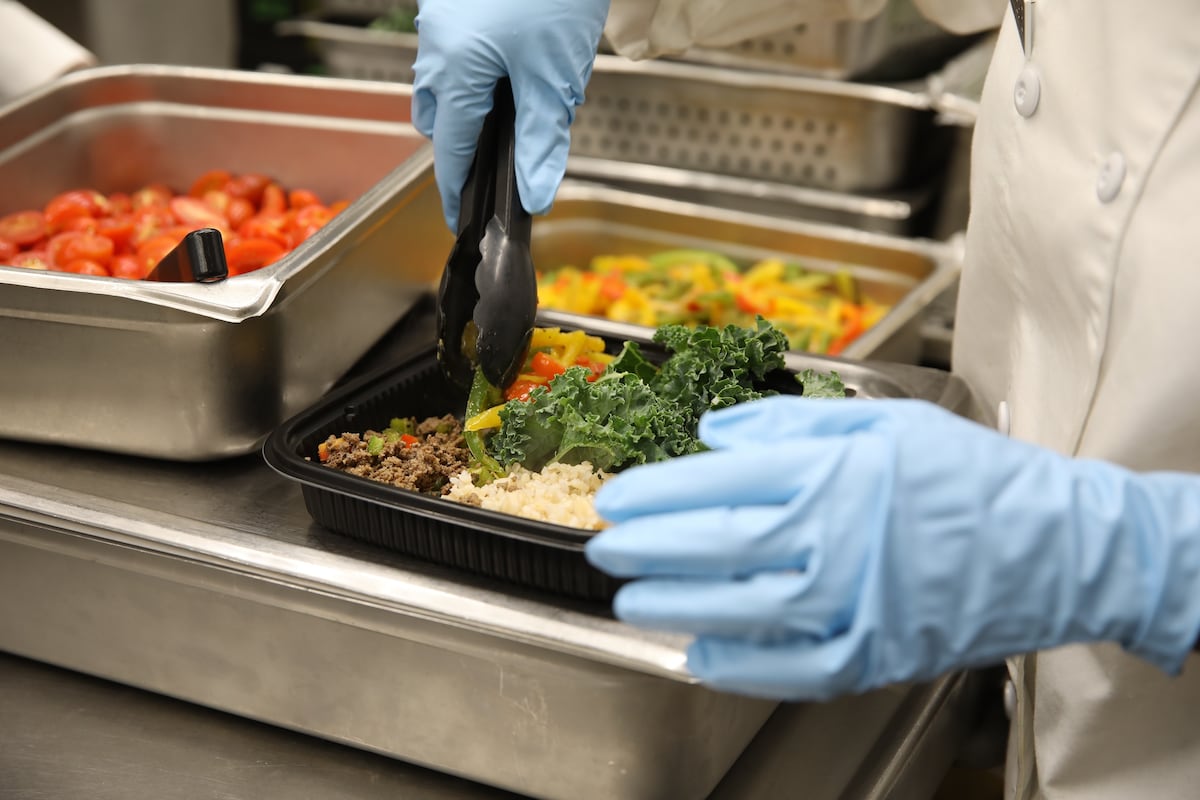
Imagine a dining experience where soldiers have convenient access to a variety of food choices just a few steps from their barracks. This vision includes a dining hall with multiple micro-restaurant concepts, a grab-and-go market for essentials, and a cozy coffee shop. This campus-style dining model is what the Army aims to emulate.
The Army is actively working to bring this concept to life through several modernization initiatives. These efforts strive to navigate complex bureaucracy, outdated policies, and institutional inertia to enhance the dining experience for soldiers and boost meal card usage. However, a critical question remains: Can the university dining model truly be adapted to fit the military context?
Reflecting on my previous role as a dietitian at Ohio University, I recall how student dining options in the early 2000s were already more advanced than what the Army currently offers. Students had the flexibility to use meal swipes across dining halls, grab-and-go options, and campus markets. Furthermore, they could use their meal swipes as a cash equivalent at campus markets if they missed meals during the week. Some universities even allowed local restaurants to accept these meal dollars.
In stark contrast, the Army’s current meal card system is a use-it-or-lose-it model, leaving many garrison dining facilities resembling food deserts. Since 2022, Army Materiel Command (AMC) has been advocating for modernization. Initiatives like Flexible Eating and Expanded Dining (FEED) aim to broaden dining options, while the Campus-Style Dining Venue (CSDV) initiative seeks to outsource base dining facilities to create more enticing dining experiences.
These initiatives mark significant progress, yet they may not suffice. The differences between academic and military environments are stark. College students enjoy flexible class schedules, whereas Army training schedules are rigid. University dining is an amenity, while in the Army, nutrition directly impacts operational readiness, recovery, injury risk, and long-term health. As highlighted in a recent report, what’s on the plate today impacts combat capability tomorrow.
When the Army fails to meet soldiers’ dining needs, they often seek alternatives or skip meals altogether. To address this, several strategies could enhance the dining experience:
- Whole-food access: Increase access points for fresh produce, lean proteins, and minimally processed foods near barracks and family housing, stocking micro-markets with nutritious staple items instead of snacks and energy drinks.
- ESM at the commissary: Allow cash equivalents for raw ingredients at commissaries, not just prepared foods, as seen in other modernization pilots. This would improve ESM utilization and offer nutrient-dense options.
- Hub-and-spoke food models: Centralize food production for better efficiency and quality, distributing meals to soldiers where they live and work.
- Market-style options: Inspired by universities like Ohio University, the Army could renovate dining venues to include markets with fresh, minimally processed foods and teaching kitchens.
- Utilize untapped labor pools: Similar to university dining, the Army could employ military spouses and family members, providing them with income and a sense of purpose while fostering community resilience.
Redesigning Army food service requires more than adopting college dining models. It’s about creating a robust nutrition infrastructure that supports soldier health, readiness, and retention. This involves bold policy shifts, operational alignment, and acknowledging that nutrition is integral to the warfighting function.