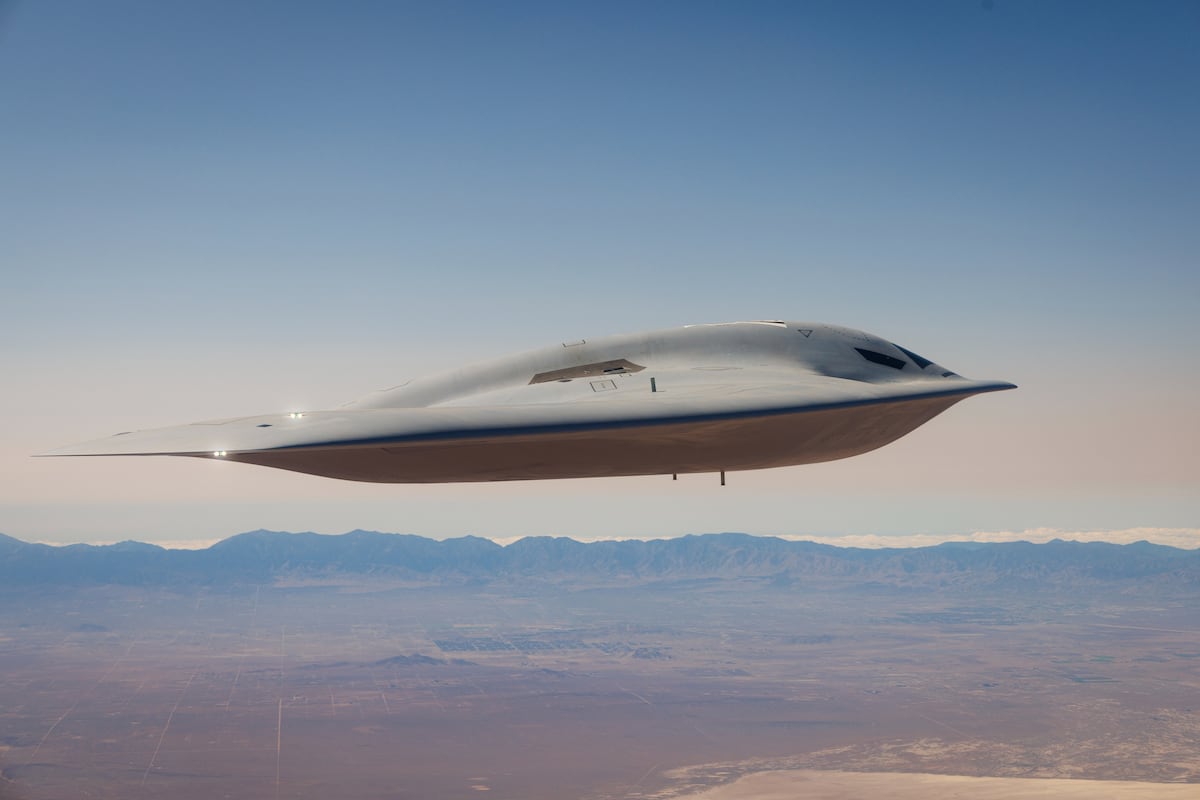
The skies over the Mojave Desert recently witnessed a significant milestone in military aviation. A B-21 Raider, part of the U.S. Air Force’s next-generation bomber fleet, completed a “close-proximity flight” alongside a KC-135 Stratotanker. This crucial test represents a step toward ensuring the bomber’s readiness for its long-range missions.
Aviation enthusiasts and photographers spotted the aircraft over Edwards Air Force Base, California, during a mission that spanned approximately 5.5 hours. This flight is a precursor in validating the B-21’s capabilities, which are vital for its role in penetrating strike missions across vast distances.
While the Air Force did not disclose specifics about aerial refueling, images captured show the B-21 positioned behind the KC-135, suggesting possible refueling maneuvers. However, without confirmation of a physical connection or fuel transfer, the exact nature of the interaction remains unclear.
“We can confirm that a B-21 Raider completed a test event involving a close-proximity flight with a KC-135 Stratotanker,” stated an Air Force spokesperson. “This flight is part of the ongoing, rigorous test campaign to validate the B-21’s capabilities and operational readiness. To maintain enhanced security measures, we will not provide further details on specific test points. The B-21 program remains on track to deliver a survivable, long-range, penetrating strike capability to the U.S. Air Force.”
Northrop Grumman’s B-21 Raider is designed to perform aerial refueling, a critical capability that allows the aircraft to operate in challenging environments without depending on nearby bases. The ongoing tests at Edwards are part of a broader effort that began with the arrival of a second B-21 at the base in September 2025, which marked the beginning of mission systems and weapon integration testing.
The Air Force plans to deploy the first operational B-21 Raiders to Ellsworth Air Force Base in South Dakota by 2027. This timeline supports the goal of achieving initial operational capability by the late 2020s, ensuring the U.S. maintains a cutting-edge strategic bomber fleet.