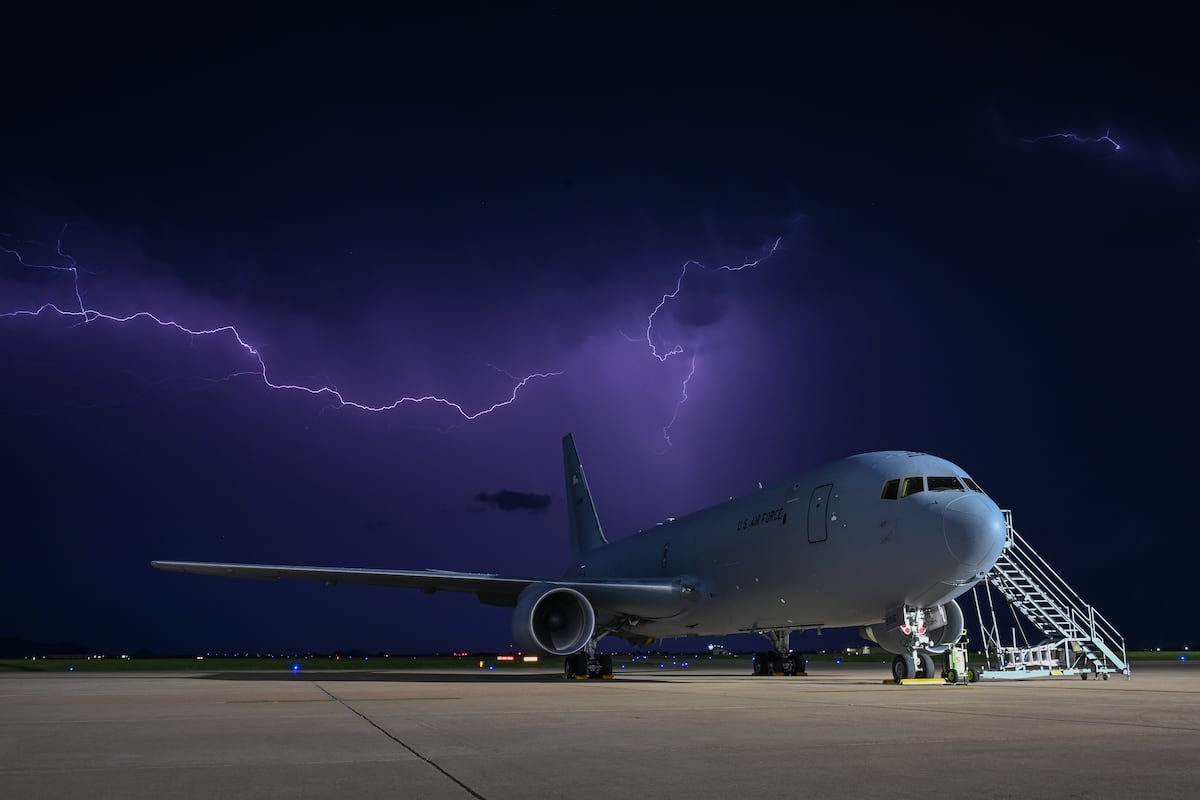
Boeing’s KC-46 Pegasus refueling tanker program continues to face financial challenges, as the company announced a $565 million loss in the fourth quarter of 2025. This setback adds to the tanker program’s history of financial difficulties, which has already resulted in billions of dollars in losses.
During a recent earnings call, Boeing’s chief executive, Kelly Ortberg, described the loss as “disappointing.” However, he expressed optimism about improvements in the aircraft’s operational performance, suggesting a brighter future for the program. “If sustained, [that strong performance] should enable us to meet our customer delivery commitment and set us well for the next tanker order beyond the current program of record,” Ortberg commented.
Despite the financial hit, Chief Financial Officer Jay Malave highlighted the Air Force’s decision to purchase an additional 15 KC-46s as a positive sign. This order contributed to Boeing Defense Space and Security securing $15 billion in orders during the quarter.
The financial losses for the KC-46 program were attributed to increased supply chain costs and production support expenses at Boeing’s Everett, Washington facility. Ortberg pointed out that most of the financial strain was linked to the 767 airframe, which serves as the base for the tanker, and assured that this issue does not affect other defense programs.
Malave noted that some of the increased production support costs are expected to benefit the company in the long term. Boeing has been focusing on improving quality and engineering support at its Everett factory, achieving a 20% reduction in rework by the latter half of 2025. “While these investments are starting to evidence progress, we need to sustain them for longer than previously planned, to promote stability,” Malave stated.
Ortberg emphasized the importance of maintaining high standards and productivity in response to the Pentagon’s scrutiny of defense contractors’ delivery timelines. “We took that decision — albeit, a big gulp — to have to take a charge here on the tanker program,” Ortberg said. “I think it will pay off in dividends with us, in terms of allowing us to make sure we meet the 19 [expected KC-46] deliveries next year.”
This focus on delivery standards is crucial as the Air Force intends to continue purchasing KC-46s on a sole-source basis until a next-generation tanker emerges. Later this fall, Boeing expects to have a clearer understanding of the costs associated with future KC-46 orders. With over $8 billion in losses accumulated on the program, Ortberg stressed the need for careful cost management, stating the company’s intent to be “laser-focused on making sure we understand the cost base of that airplane.”
Ortberg concluded, “This has been a bad contract for the last decade. As we enter into a new opportunity where we get to reprice, we want to make sure that we… ensure it’s a fair contract and we can make money.”