The escalation of tensions in Colombia has taken a new turn as the National Liberation Army (ELN) enforces an “armed strike,” confining civilians to their homes and disrupting commercial activities. This move comes in response to the U.S. military’s naval presence in the Caribbean. The Colombian government’s peace delegation has condemned this action, highlighting its adverse impact on rural communities.
According to a statement by Colombia’s delegation, the ELN’s strike is a protest against U.S. actions that the rebel group perceives as imperialist. “A protest against the actions of the U.S. government that is geared towards communities lacks any sense whatsoever” the delegation stated. The ELN, active since the 1960s, often implements these strikes by closing schools, shops, and public transport in areas they control, using threats of violence against civilians who defy their orders.
The duration of this armed strike is set until 6 a.m. local time (1100 GMT) Wednesday. The ELN justified the strike in a recent statement, accusing the Trump administration of pursuing “neocolonial plans” aimed at exploiting Latin America’s natural resources. This announcement came shortly after the U.S. seized an oil tanker off the Venezuelan coast, escalating tensions with President Nicolás Maduro’s government, which is accused of drug trafficking by the U.S.
The oil tanker, sanctioned in 2022 for allegedly smuggling oil for Iran’s Revolutionary Guard, was reportedly carrying over a million barrels of crude destined for Cuba. In the wake of the ELN strike, Colombia’s human rights ombudswoman reported attacks on an army base in Arauca and a police station in Norte de Santander, resulting in the death of an ambulance driver during crossfire.
Efforts to resume peace talks with the ELN remain stalled since their suspension in January, following a series of deadly attacks by the rebel group causing mass displacement in northeast Colombia. Despite maintaining peace delegations, negotiations have yet to progress. The ELN, Colombia’s second-largest rebel group with around 6,000 fighters, is also involved in illegal gold mining and drug trafficking, and supports Maduro’s regime.
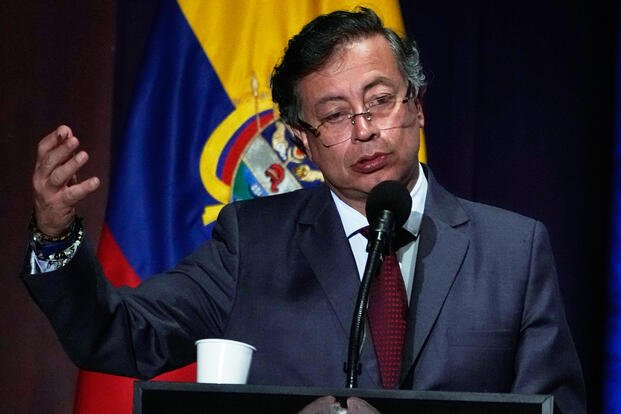
The Colombian government, led by President Gustavo Petro, has been attempting to negotiate with ELN and other rebel factions, offering ceasefires to foster dialogue. However, critics argue these ceasefires have allowed the rebels to regroup and exert control over rural areas. The 2016 peace agreement with the Revolutionary Armed Forces of Colombia (FARC) left a power vacuum that groups like the ELN are now contesting.