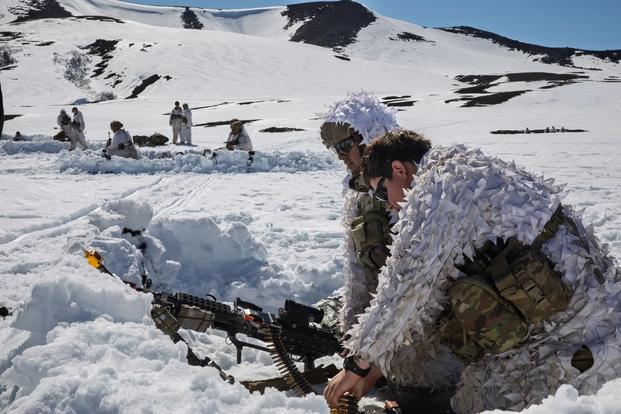
High up in the Colorado Rockies, at an altitude of 9,200 feet, the U.S. Army made a bold move during World War II. In 1942, Camp Hale was established to train soldiers for an unprecedented type of warfare. This effort was spearheaded by Charles Minot “Minnie” Dole, who envisioned a unit capable of thriving in the cold, snowy, and mountainous conditions that had challenged armies for centuries.
Origins and Vision
As the founder of the National Ski Patrol, Dole was not a military man but a seasoned skier from Connecticut. His unique perspective led him to advocate for a specialized division trained for high-altitude and cold-weather combat. Despite initial resistance, Dole’s persistence paid off when he persuaded Army Chief of Staff Gen. George C. Marshall to see the potential of such a force. Drawing lessons from Finland’s ski troops and Germany’s mountain forces, Dole suggested using his Ski Patrol as a recruitment tool to find individuals with the necessary physical skills.
By the end of 1941, the Army embraced Dole’s proposal. The National Ski Patrol was given the authority to directly recruit for the U.S. Army, marking a historic collaboration. This initiative led to the formation of the 87th Mountain Infantry Battalion, which evolved into the 10th Mountain Division. Dole’s vision had manifested into a unit crafted specifically for mountainous warfare.
Camp Hale’s Formation
The construction of Camp Hale in Colorado’s Pando Valley began in 1942, chosen for its challenging conditions. The area transformed into a bustling training ground with over 1,000 buildings, extensive trails, and facilities for rigorous exercises. The harsh environment served as both a training ground and a test of endurance for over 15,000 soldiers. They learned to ski, climb, and survive while carrying heavy packs, often facing extreme cold and altitude sickness.
One of the most grueling exercises, the “D-Series,” took place in March 1944. This month-long maneuver exposed the soldiers to subzero temperatures and treacherous conditions, revealing critical shortcomings in gear and logistics and leading to significant improvements in Army equipment.
Combat in Italy
When the division was deployed to Italy in late 1944, it faced the daunting task of breaking through the German Gothic Line. The 10th Mountain Division’s first major operation in February 1945 showcased their specialized training. Under the cover of darkness, troops climbed Riva Ridge and secured a strategic victory, paving the way for the capture of Mount Belvedere.
The subsequent operations were costly, with over 900 casualties, but they resulted in a breakthrough for Allied forces. The division’s success was hailed as “an inspiration to the entire Fifth Army,” according to Lt. Gen. Lucian Truscott. The campaign culminated with the division advancing into the Po Valley and contributing to the eventual surrender of German forces in Italy.
Legacy and Influence
The achievements of the 10th Mountain Division did not end with the war. Their experiences were incorporated into Army training manuals, influencing cold-weather warfare tactics. The division’s veterans also had a profound impact on postwar outdoor sports and conservation efforts, shaping America’s relationship with skiing and wilderness activities.
In 2022, Camp Hale was designated a National Monument, recognizing its historical significance and the enduring impact of Dole’s vision. Today, the 10th Mountain Division continues to train in extreme conditions, combining modern technology with the foundational lessons learned at Camp Hale, ensuring readiness for challenging terrains worldwide.