The recent arrest of Andrew Dykes, a former U.S. Army technician, has reignited interest in a decades-old case tied to the Gilgo Beach investigation. Nassau County prosecutors allege that Dykes, who served in the military alongside Tanya Denise Jackson, murdered, dismembered, and disposed of her body on Long Island in 1997. This case became a focal point of the broader Gilgo Beach investigation when additional remains were found during a 2011 search.
Unraveling a Cold Case
Jackson’s remains, initially discovered in Hempstead Lake State Park, went unidentified for years. The recent breakthroughs were made possible by preserving evidence and advances in DNA and forensic genealogy, which linked Dykes to the crime. In 2023, authorities identified Jackson and her young daughter, Tatiana, using these modern techniques.
Similar advances in forensic genealogy and DNA analysis have been pivotal in solving numerous cold cases involving both military personnel and civilians.
Military Ties and Legal Proceedings
Dykes and Jackson’s connection traces back to their time in the U.S. Army, where Dykes was an operating room technician. Prosecutors argue that Dykes’ medical background is relevant to the case, suggesting it facilitated the dismemberment of Jackson’s body. Despite initial challenges, including the lack of a missing person’s report for Jackson, authorities were eventually able to piece together her final movements.
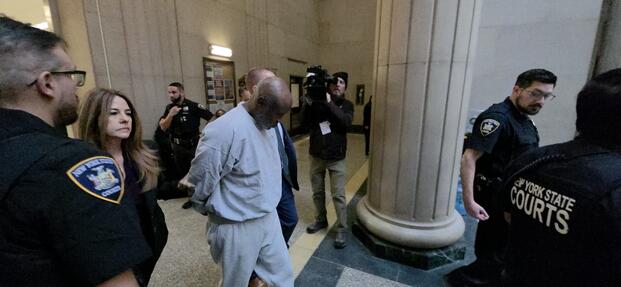
Dykes, who was arrested in Florida, waived extradition and now faces a second-degree murder charge. During his arraignment, prosecutors presented evidence from the original 1997 investigation, which had been reexamined using new forensic techniques. Dykes has pled not guilty, and his defense plans to contest the DNA evidence.
Connecting the Dots
The case gained attention during the Gilgo Beach investigation, a complex probe that began in 2010 after the discovery of multiple victims’ remains along Ocean Parkway. The Gilgo Beach Task Force, formed in 2022, has been instrumental in revisiting old evidence with modern forensic tools, leading to the 2023 arrest of Rex Heuermann for unrelated murders.
Rodney Harrison, former Suffolk County Police Commissioner, emphasized the task force’s commitment to evidence-based conclusions. “Parkway was attached to Rex Heuermann,” Harrison explained. “This shows there was an appropriate investigation that was done.”
Challenges and New Techniques
One of the crucial breakthroughs in the Jackson case was the identification of a distinctive peach tattoo, which initially left her known only as “Peaches.” Investigators eventually found Tatiana’s birth certificate, linking her to Dykes. Surveillance in Florida allowed them to collect DNA from a discarded cup, matching evidence from 1997.
While the defense questions the reliability of the newer forensic methods, the prosecution maintains that these techniques have provided long-awaited answers for families like Jackson’s, who have waited decades for resolution.
Impact on National Investigations
The Gilgo Beach Task Force’s approach has influenced cold case investigations nationwide, encouraging the use of modern forensic tools alongside traditional methods. Harrison believes this strategy has opened new possibilities for solving long-stalled cases, demonstrating that time need not impede justice.
Authorities hope that the progress seen in the Jackson case will offer hope to other families seeking closure in unsolved cases.