Weather Challenges Modern Warfare During French Artillery Demonstration
In the heart of Canjuers, France, a recent artillery demonstration by the French Army highlighted the impact of adverse weather on modern military operations. Despite the advancements in technology, the demonstration revealed that while artillery can fire under inclement conditions, drones remain grounded.
This reality echoes experiences in Ukraine, where Russian forces have been strategically utilizing rain and fog to their advantage, disrupting mechanized movements. The French Army’s event, hosted by Camp de Canjuers, was unexpectedly affected by heavy rainfall, grounding aviation assets and complicating artillery operations.
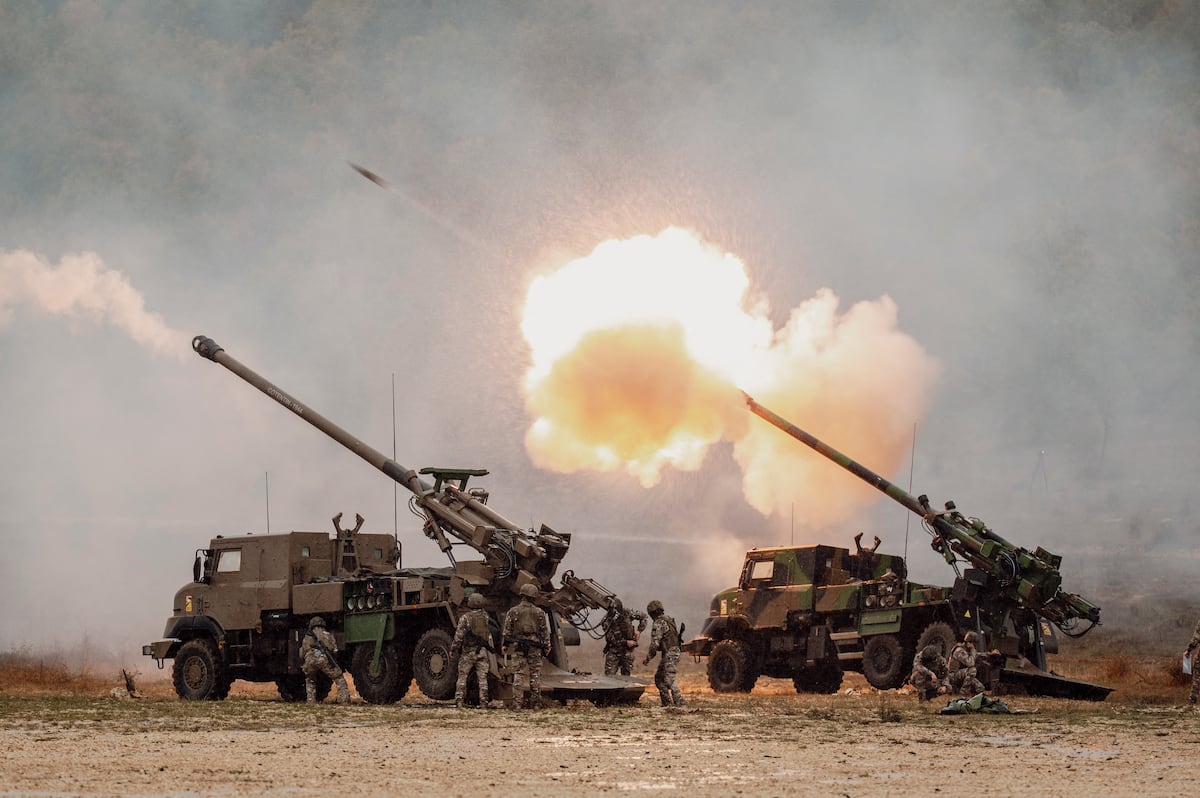
Despite the weather, the demonstration showcased the 35th Parachute Artillery Regiment’s adaptation to the evolving drone-dominated battlefield. With arms manufacturer KNDS present, the regiment demonstrated its use of truck-mounted 20mm cannons, decoys, and jammers to protect artillery teams.
Lt. Col. Renaud Durbecq emphasized the continuing importance of artillery in warfare, noting the regiment’s use of the Caesar 155mm howitzer. “Artillery is becoming increasingly important on the battlefield, since our guns are precisely the weapon that allows us to fire at the furthest range – there where, most often, drones cannot go,” he stated.
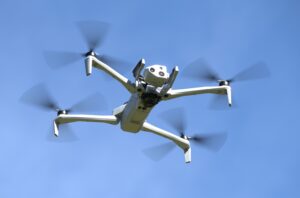
The regiment has rapidly increased its drone capabilities, now fielding five times more drones than the previous year. These include the Delair DT46 for intelligence and FPV drones for reconnaissance and strikes. Durbecq announced plans to double the DT46 capacity, enhancing the intelligence loop by integrating drones directly into fire-control systems.
Furthermore, the introduction of six experimental Proteus anti-drone cannons marks a significant step in counter-UAS capabilities. These systems, developed in part with MC2 Technologies’ Nerod handheld jammer, have already proven effective in trials.
Olivier Fort of KNDS outlined emerging tactics in response to the drone and artillery dynamics observed in Ukraine. These include prepositioning ordnance to minimize risks of secondary explosions during drone attacks and utilizing artillery to clear anti-drone defenses.
Despite the high destruction rates of tracked armored howitzers in Ukraine, the Caesar system, with its external loading, has maintained a lower attrition rate. Fort highlighted the importance of mobility, resupply efficiency, and counter-drone measures in modern artillery tactics.
The 35th Parachute Artillery Regiment is enhancing its operational readiness with extensive training, integrating mortar support into infantry regiments, and preparing for prolonged engagements. Lt. Col. Durbecq expressed confidence in the Caesar artillery system, emphasizing its reliability amid battlefield challenges.
“Each system has its advantages and disadvantages,” Durbecq noted, underscoring the need for dependable equipment as he observed the regiment’s performance in less-than-ideal weather conditions.