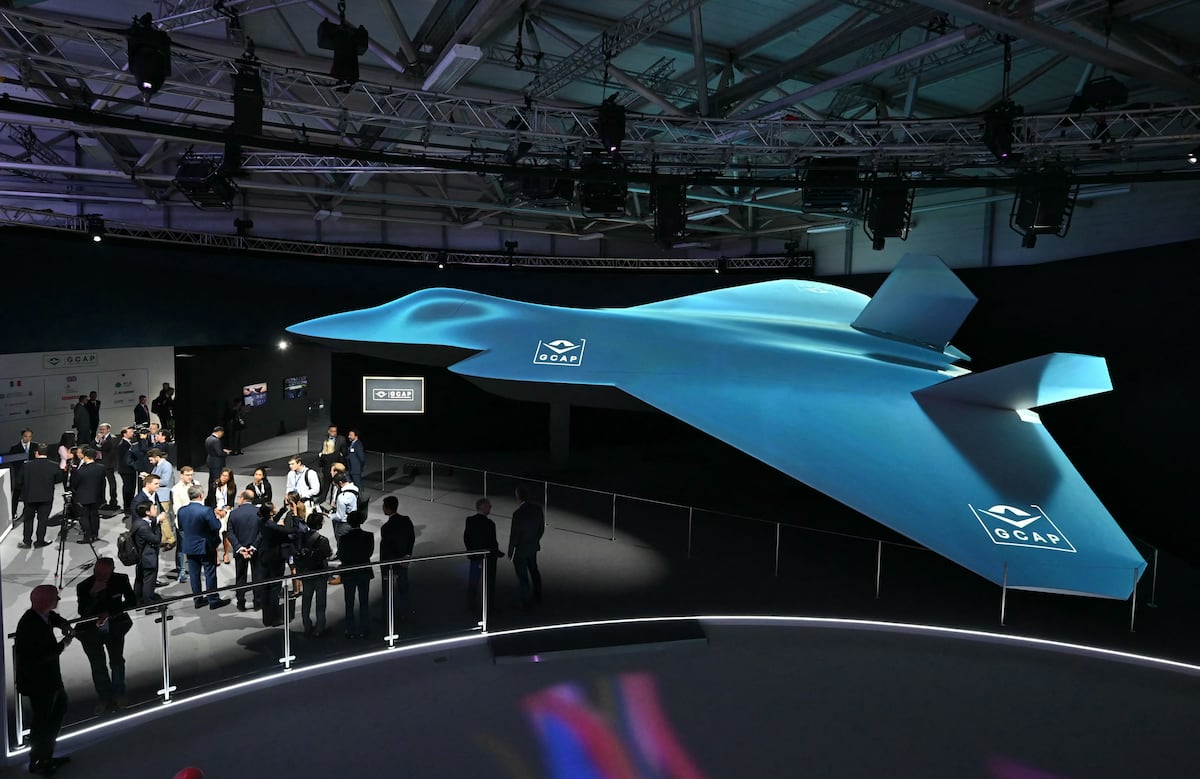
Multi-national collaboration is driving innovation in the defense sector as the UK, Japan, and Italy join forces to develop the sixth-generation GCAP fighter. This advanced combat aircraft is set to revolutionize military capabilities with its ability to integrate a wide array of armaments and collaborate seamlessly with a diverse range of drones.
Group Captain Bill Sanders, a British defense ministry official, emphasized the importance of a versatile weapons bay for the GCAP fighter. Speaking at the International Fighter Conference in Rome, Sanders noted that the aircraft must accommodate weaponry from NATO partners, the United States, and the three participating nations. “Think about the lessons learned in Ukraine,” he remarked, highlighting the need for flexibility in accessing different stockpiles during conflicts.
The GCAP’s adaptability extends beyond weaponry, as it will also be compatible with various “Loyal Wingman” drones, known as Collaborative Combat Aircraft (CCA). Sanders stressed the importance of this capability, saying, “You have to be in a situation where, just like the weapons, the GCAP can work with what it finds. It’s no mean feat.”
Analyst Douglas Barrie from the IISS think tank supports the approach of working with diverse CCAs. He stated, “I would expect the UK, Japan, and Italy all have CCAs they ‘own’ which are sovereign capabilities they will use with GCAP. Whether they eventually coalesce around a shared platform is an interesting question but at the moment they seem to be going independently because it gives you more choice, more flexibility.”
The integration of CCAs was a central theme at the conference, with Turkish officials exploring how to pair these drones with the Eurofighters they recently acquired. However, Jorge Tamarit-Degenhardt, CEO of Eurofighter, expressed concerns over the cost implications of adapting fighters to work with multiple CCAs across different countries. He questioned, “Can we develop CCA integration in different configurations in different countries? We cannot do everything at the same time. We don’t have infinite resources.”
This collaborative venture marks a new chapter in military aviation, promoting flexibility and efficiency in defense strategies. As the GCAP fighter and its capabilities continue to evolve, the potential for enhanced interoperability within international military coalitions grows, offering strategic advantages in a rapidly changing global landscape.