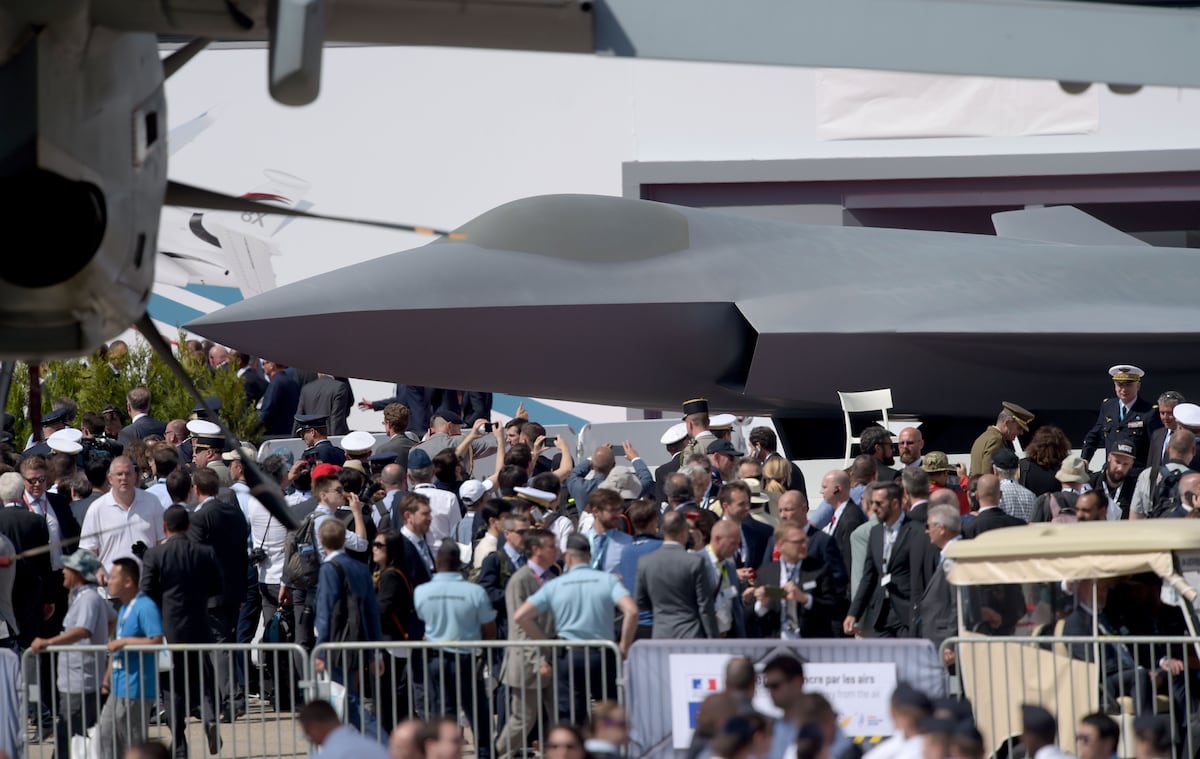
In a surprising turn of events, the Future Combat Air System (FCAS) program, once a promising endeavor for developing a new generation of fighter jets, has been shelved. This decision has prompted German and Spanish companies to urge their governments to sustain the expertise developed during the project. Their appeal signals a desire to maintain momentum in next-generation fighter technology despite the program’s cancellation.
Airbus and Indra, the lead companies from Germany and Spain, released separate statements after it was announced that German Chancellor Friedrich Merz and French President Emmanuel Macron had decided to discontinue the FCAS’s sixth-generation fighter jet component. This aircraft was intended to be a central element of an integrated system, featuring drones, sensors, and communications for an unprecedented aerial combat strategy.
Disagreements over leadership and intellectual property rights between key industry players, including Germany’s Airbus and France’s Dassault Aviation, are cited as factors leading to the initiative’s collapse. This setback comes despite the political support from the governments involved.
Germany’s “Team Gen 6,” comprising companies like Airbus Defence and Space, Diehl Defence, and MTU Aero Engines, emphasized the importance of continuing to work towards a sixth-generation fighter jet. At the ILA Berlin Airshow, they collectively stated, “An effective new setup is now indispensable for achieving our common objective: a superior European air combat system for our collective security.”
Their statement underscores the urgency, warning that discontinuing funding could result in an “irreversible” loss of technical expertise. With current FCAS contracts expiring soon, these companies are advocating for continued investment to preserve the industry’s capabilities.
In Spain, a similar coalition, including the Spanish division of Airbus Defence and Space and Indra, is expressing a willingness to participate in multinational collaborations. They are considering joining existing projects like the British-Italian-Japanese Global Combat Air Programme or potentially inviting other aerospace firms, such as Sweden’s Saab, into their fold.
German Defense Minister Boris Pistorius has outlined alternative paths for acquiring next-generation fighters. One option is purchasing F-35 jets from the United States. Another possibility is joining the GCAP initiative. A third scenario could involve a new Airbus-led project, closely aligning with the aspirations voiced by German companies in their recent statement.