As the sun rose on November 8, 2004, in Fallujah, Iraq, the air was thick with tension and the promise of danger. Among the U.S. Marines preparing for battle was Jan Bender, a young combat correspondent, who found himself in the midst of an explosive confrontation that would leave an indelible mark on his memory.
Bender, then embedded with India Company, 3rd Battalion, 1st Marine Division, was caught off guard by the deafening blast of a 120mm cannon from an M1A2 Abrams tank, just as an Iraqi vehicle erupted into flames around 40 yards away. The chaos of that moment was captured in Bender’s recollection: “I had never been on the business end of an Abrams before that close,” he told Military Times.
This scene is part of the vivid storytelling in Michael Pack’s documentary, “The Last 600 Meters: The Battles of Najaf and Fallujah,” which airs on PBS ahead of Veterans Day and marks the 250th anniversary of the U.S. Marine Corps. The film delves into the realities faced by U.S. troops through the words of those who lived through these battles.
The documentary’s title is inspired by a comment from Master Sgt. Karl R. Erickson, a U.S. Army sniper, who equated his mission to the final 600 meters of foreign policy. The film strives to portray the courage and camaraderie of troops without political bias, capturing the essence of their experiences during some of the heaviest urban combat since the Vietnam War’s Battle of Hue.
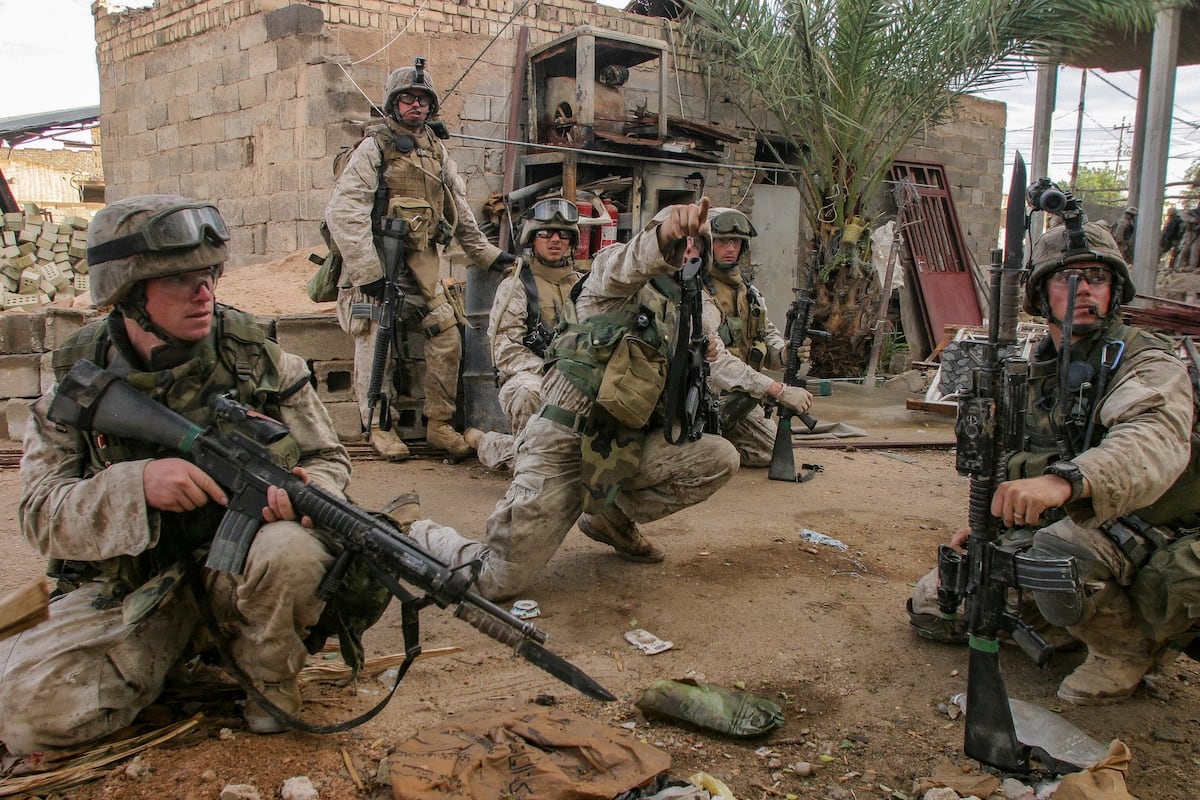
Throughout the documentary, viewers witness the gritty reality of the battles for Najaf and Fallujah. In 2004, after insurgents took control of these cities, American forces were tasked with their recapture. The intense urban warfare required Marines and soldiers to engage in close-quarters combat, often moving from house to house to prevent insurgents from gaining the upper hand.
In Najaf, fierce fighting occurred at the Wadi al-Salam cemetery, known for its maze of tunnels and monuments. Lt. Seth Moulton, a Marine at the time, recounts a harrowing encounter where a Marine had to use a bayonet in a life-or-death struggle with an insurgent. The battle eventually ended through a negotiated settlement, but the violence resumed later in Fallujah.
In Fallujah, Bender found himself amidst relentless street battles. He described the experience as humbling, noting, “You have absolutely no cover and you are running wide open, trying to return fire.” One of the documentary’s most gripping moments features the “Hell House” incident, where Marines, including 1st Lt. Jesse Grapes and Pfc. Justin Boswood, braved gunfire to rescue their wounded comrades.
The fighting in Fallujah continued until December 23, marking it as the bloodiest battle for U.S. forces since Vietnam. Despite the trauma, the bonds formed during these battles remain strong. Bender reflects on the enduring connections with his fellow Marines, saying, “That fireteam, that squad, that battalion — they are my family from the Corps.”
“The Last 600 Meters: The Battles of Najaf and Fallujah” will be available on PBS starting November 10, with subsequent availability on the PBS app and Prime Video.