A Fierce Battle in the Korean War: The Defense of Outpost Harry
Under the cover of darkness on June 10, 1953, Capt. Martin Markley prepared his men for an imminent assault. Intelligence had detected Chinese forces preparing for an attack, with the 74th Division’s 22nd and 221st Regiments positioning themselves strategically. Markley and his 150 soldiers from K Company, 15th Infantry Regiment, braced to defend a hilltop outpost barely 400 yards wide against a formidable enemy.
As night fell, Chinese artillery unleashed over 20,000 shells onto Outpost Harry, transforming the Korean landscape into a fiery battleground. Amid the chaos, American soldiers could hear the enemy’s whistles and bugles signaling the advance. “All total, there was a reinforced PVA regiment of approximately 3,600 enemy trying to kill us,” Markley later recounted.
Strategic Significance of Outpost Harry
Outpost Harry, positioned on a 1,280-foot hill in Korea’s Iron Triangle, was a critical military asset due to its proximity to Seoul and ability to monitor Chinese movements. However, its location 425 yards in front of the Main Line of Resistance made it dangerously exposed.
The outpost comprised a network of trenches and fortified bunkers, accommodating approximately 150 soldiers. With Chinese forces stationed just 320 yards away on Star Hill, American commanders instructed their troops to “Hold Harry at all costs.”
The Initial Assault
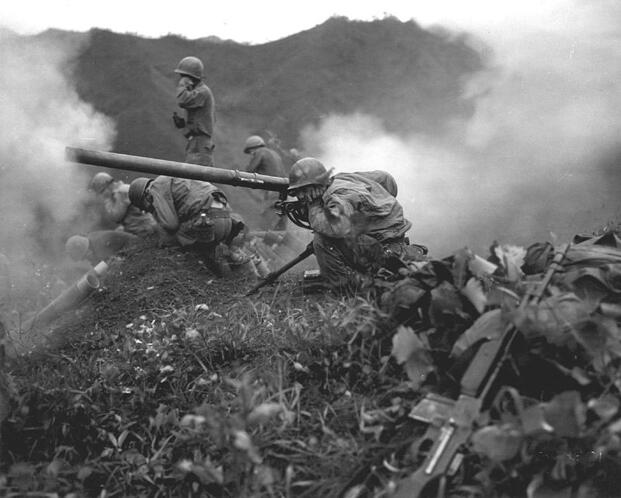
The first night of battle saw Chinese troops breaching defenses and engaging in brutal hand-to-hand combat with American forces. Despite the intense pressure, defenders managed to repel the attack, thanks in part to American artillery that exploded mid-air.
Among the American heroes was Sgt. Ola Mize, who displayed extraordinary bravery by rescuing a comrade and single-handedly taking on enemy troops. Mize’s courage earned him the Medal of Honor, although he initially refused the award, believing his entire platoon deserved recognition.
Continued Assaults and Heroic Defense
The battle persisted for eight nights, with U.S. forces rotating fresh companies to defend the outpost. Each day, soldiers evacuated casualties and repaired trenches under sniper fire, only to face new assaults by night.
Heroic acts were not limited to the first night. Pfc. Charles Johnson, despite being injured, defended his position valiantly, ultimately sacrificing his life to save his comrades. His bravery was posthumously recognized with a Medal of Honor.
The Greek Battalion’s Role
As American forces required reinforcements, the Greek Expeditionary Force was called upon. The Greek soldiers, known as the Sparta Battalion, brought with them a storied history of valor. Their defense of Outpost Harry was likened to the ancient Battle of Thermopylae.
On June 16, the Greeks took their positions, ready to face the advancing Chinese forces. The subsequent night saw fierce combat, with Greek troops engaging in hand-to-hand battles and successfully repelling the enemy.
The Battle’s Toll
Over 88,000 Chinese artillery and mortar rounds were fired at Outpost Harry, while U.S. and Greek forces responded with 368,000 rounds. The intense fighting rendered the Chinese 74th Division combat ineffective, with an estimated 4,200 casualties.
Allied losses were significant as well, including 102 killed and 553 wounded. Despite the heavy toll, the defense of Outpost Harry earned five U.N. companies the prestigious Presidential Unit Citation.
Impact on the Korean War
The battle for Outpost Harry took place just weeks before the Korean War armistice was signed on July 27, 1953. The successful defense ensured that the final front lines were favorable to United Nations forces.
Cpl. Donald L. Menken, who went missing during the battle, was finally laid to rest in 2022 after his remains were identified. Today, the site of Outpost Harry lies within the Korean Demilitarized Zone, a lasting testament to the fierce determination of those who fought there.