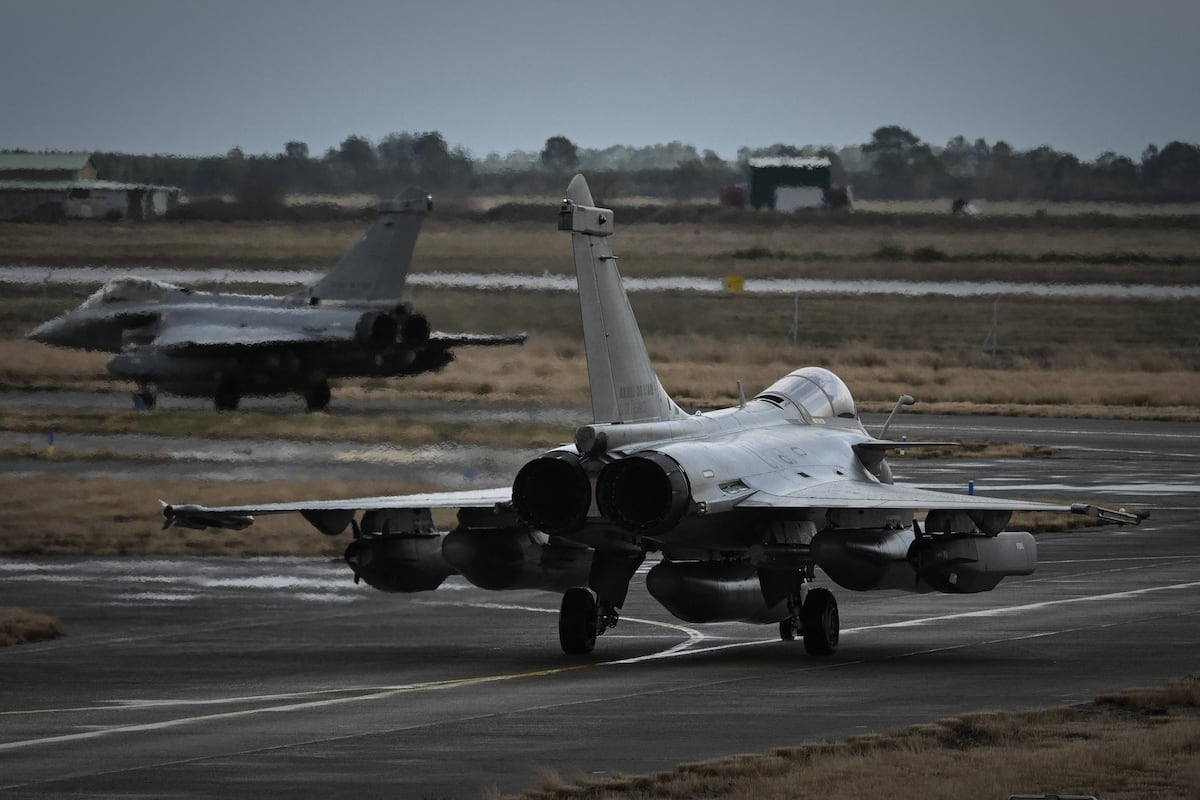
As India gears up to significantly expand its military capabilities, a major decision has been made to acquire 114 Rafale multirole fighter jets from France. This purchase marks India’s largest military hardware procurement to date, reflecting its strategic priorities amidst ongoing regional tensions.
The Indian Air Force, currently facing a critical shortfall in combat readiness, is set to receive a boost from this acquisition. With tensions simmering along the borders with both Pakistan and China, the need for enhanced air defense capabilities has never been more pressing.
This decision is part of a broader plan to modernize India’s military, with nearly $40 billion earmarked for various acquisitions. The approval was granted by the Defence Acquisition Council led by Defense Minister Rajnath Singh on January 12, just ahead of French President Emmanuel Macron’s visit to New Delhi. This sets the stage for finalizing commercial and technical specifics.
India’s choice in favor of the Rafale jets, as opposed to offers from the U.S. for its F-35 fighters and Russia’s Su-57E, highlights a shift in New Delhi’s defense strategy. Harsh Pant, vice president of studies at the Observer Research Foundation, notes, “I think that in some ways the choice of the Rafales is a reflection of India’s foreign policy and strategic priorities as well. It underscores India’s decision to strengthen its strategic autonomy and move away from the Russia-U.S.-Israel binary.”
India, which has historically relied on Russia for its military supplies, has in recent years sought to diversify its sources, including procuring from countries like France, the U.S., and Israel. Currently operating 36 Rafales, India has deployed these jets strategically near its borders with Pakistan and China since their induction in 2020.
According to the Indian Defence Ministry, the acquisition of these jets will significantly enhance the Indian Air Force’s ability to dominate the airspace across various conflict scenarios, providing crucial deterrence capabilities with long-range offensive potential.
The Indian Air Force has been dealing with a decline in its fighter jet fleet, operating only about 30 squadrons out of a sanctioned 42. Analysts believe that the introduction of more Rafales will help address this gap, especially in light of increasing Chinese military advancements and its growing alliance with Pakistan.
Retired Air Marshal Anil Khosla emphasized the urgency of bolstering India’s air capabilities, stating, “Definitely the squadron strength needs to be upwards of 42 to 45 because your capacity to fight depends on how many threats you face, and in our case, China is marching way ahead both in capacity, capability as well as a new generation of fighter aircrafts.”
In addition to the Rafale jets, India has also approved the purchase of six P8I maritime surveillance and anti-submarine warfare aircraft from the U.S. for its Navy. However, the Rafale deal signifies a deepening defense partnership with France, a country that shares India’s vision for strategic autonomy.
In a statement, the Indian Defense Ministry mentioned, “The majority of MRFA (Multi Role Fighter Aircraft) to be procured will be manufactured in India,” highlighting the ‘Make in India’ initiative aimed at promoting domestic manufacturing and technology transfer.
The ongoing negotiations occur as older aircraft like the Russian MiG-21 are phased out, and others like the MiG-29 and Mirage 2000 approach retirement. Notably, 18 of the new aircraft will be delivered ready-to-fly, with the remainder produced locally, integrating Indian systems and weaponry.
The Rafale jets’ strong performance in previous operations, such as the four-day conflict with Pakistan known as Operation Sindoor, has reinforced India’s decision. During this engagement, the jets launched SCALP cruise missiles, targeting over 500 kilometers away, demonstrating their strategic and operational value.
Air Marshal Nagesh Kapoor, Vice Chief of the Air Staff, praised the Rafales’ role, stating, “Rafale was definitely the hero during Operation Sindoor,” underscoring their effectiveness in recent conflicts.