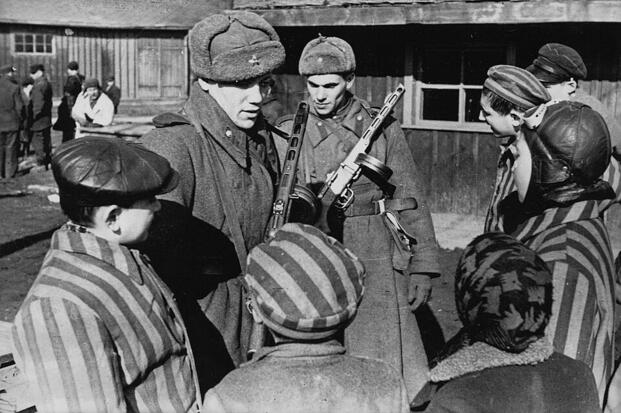
On a chilling winter day in 1945, Soviet troops made their way into Auschwitz, a site that would become synonymous with the horrors of the Holocaust. The liberation of this camp on January 27th marked a significant turning point in the history of World War II, revealing the extent of Nazi atrocities to the world.
Today, the world observes International Holocaust Remembrance Day, commemorating the 81st anniversary of this event. Ceremonies are being held at the Auschwitz-Birkenau Memorial in Poland, the United Nations in New York, and various other locations worldwide. This year’s theme, “Holocaust Remembrance for Dignity and Human Rights,” highlights the ongoing importance of remembering these events.
The Holocaust claimed the lives of six million Jews, a devastating loss that accounted for one-third of the global Jewish population at the time. The Nazi regime also targeted other groups, resulting in the deaths of millions more, including over three million Soviet POWs, nearly two million Polish civilians, and hundreds of thousands of Roma, among others.
Auschwitz, the largest of Nazi Germany’s killing centers, witnessed the deaths of around 1.1 million people, most of whom were Jews. Soviet forces, led by Lt. Gen. Vasily Petrenko of the 107th Infantry Division, discovered shocking evidence of the camp’s operation, including 7,000 survivors, many too weak to move.
“I who saw people dying every day was shocked by the Nazis’ indescribable hatred toward the inmates who had turned into living skeletons,” Petrenko later reflected. This discovery unveiled the full extent of Nazi brutality, including the infamous medical experiments conducted by Dr. Josef Mengele.
The liberation of Auschwitz was just the beginning. As Allied forces advanced, they uncovered additional camps, each holding its own horror stories. American troops liberated Buchenwald and Dachau, while British forces entered Bergen-Belsen, revealing the grim conditions and the dire need for immediate humanitarian assistance.
Photographs and footage from these camps were instrumental in documenting the Holocaust’s atrocities, ensuring that future generations would not forget. Gen. Dwight D. Eisenhower ordered extensive documentation, anticipating that some might one day deny these events.
It wasn’t until 2005 that the United Nations formally recognized January 27th as International Holocaust Remembrance Day, urging nations to educate the public about the Holocaust and to reject any form of denial. The resolution also honors the liberators who helped put an end to the Nazi regime’s reign of terror.
Today, with the number of Holocaust survivors dwindling, their testimonies become even more precious. As Mala Tribich, a 95-year-old survivor, recently stated, “Soon, there will be no eyewitnesses left. That is why I ask you today not just to listen, but to become my witness.”
Ivan Martynushkin, one of the last surviving liberators of Auschwitz, recalled the moment of liberation: “We saw emaciated people, very thin, tired, with blackened skin. You could see happiness in their eyes. They understood that their liberation had come, that they were free.”
The legacy of the Holocaust serves as a stark reminder of the consequences of unchecked hatred and prejudice. As the world pauses to reflect, the words of the United Nations resolution resonate: the Holocaust “will forever be a warning to all people of the dangers of hatred, bigotry, racism, and prejudice.”