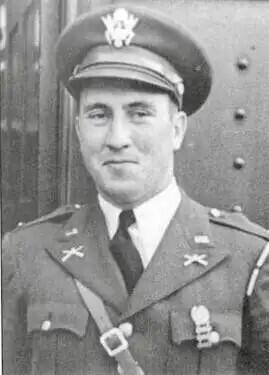
After eight decades of uncertainty, Capt. Willibald C. Bianchi, a Medal of Honor recipient who faced numerous challenges during World War II, will finally receive a proper burial. His remains, identified in August, are set to be interred in New Ulm, Minnesota, his hometown, in May 2026, coinciding with Memorial Day events.
The Defense POW/MIA Accounting Agency confirmed the identification of Bianchi’s remains. Minnesota Public Radio reports that this moment marks a poignant return for a soldier whose bravery in the war was both extraordinary and tragic.
During World War II, Bianchi endured severe injuries, survived the infamous Bataan Death March, and suffered as a prisoner of war before his untimely death at 29. His transport ship, carrying POWs, was mistakenly bombed by American forces.
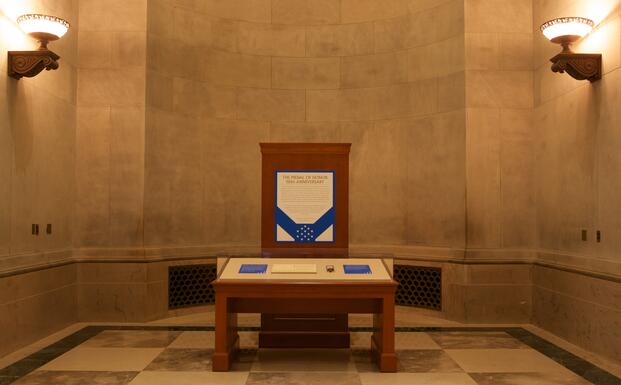
For his valor, Bianchi was posthumously awarded the Medal of Honor, joining the ranks of only 473 soldiers who received this honor for their World War II actions.
Poor Farm Boy Turned Soldier
Bianchi’s story was highlighted at the Minnesota Veterans Day program in Mankato, where he was remembered as a farm boy from New Ulm who faced early hardships. He lost his father in an accident and took on the responsibility of the family farm, leaving high school to do so.
Despite financial constraints, Bianchi attended the University of Minnesota Farm School, where he was nicknamed “Medals” by classmates for his pride in wearing his ROTC uniform. U.S. Sen. Amy Klobuchar recounted, “That’s because he wore his ROTC uniform, partly because he could not afford clothing,” adding that his story is a testament to sacrifice and remembrance.
“His story reminds us of a solemn promise that we bring every missing hero home,” Klobuchar said. “No matter how long it takes. The story reminds us that we can never fully repay what our veterans have given our nation, but we can honor their service now.”
Wounded Multiple Times in Battle
Bianchi’s military career took a pivotal turn in 1942 when he was deployed to the Bataan Peninsula in the Philippines. As commander of the Philippine Scouts of Company D, 1st Battalion, 45th Infantry Regiment, he exhibited remarkable bravery by leading a charge against Japanese machine gun nests despite being wounded multiple times.
POW Time Leads to Unfortunate Death
Bianchi was captured by Japanese forces on April 9, 1942, and endured harsh conditions as a POW until 1944. He was aboard the ship Oryoku Maru, bound for Japan, when it was mistakenly bombed by American planes. Surviving the initial attack, his journey ended tragically in January 1945 when another transport, the Enoura Maru, was struck by U.S. bombers, resulting in his death.
Post-war efforts by the American Graves Registration Command in 1946 led to the recovery of 311 bodies from a mass grave, but identification proved challenging until recent advancements allowed the DPAA to confirm Bianchi’s remains through DNA and anthropological analysis.
Bianchi’s name is inscribed on the Walls of the Missing at the American Cemetery and Memorial in Manila, and the DPAA plans to mark his entry with a rosette, signifying his return after more than 80 years.