Chinese Nationals’ Activities Highlight Ongoing Security Concerns at U.S. Military Bases
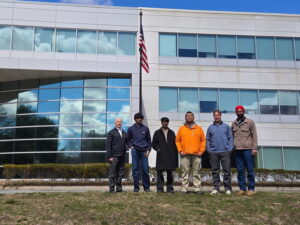
The arrest of five Chinese nationals at Camp Grayling in Northern Michigan for allegedly taking unauthorized photos near classified military equipment isn’t an isolated event, according to Major General Paul D. Rogers of the Michigan National Guard. This incident underscores a pattern of “constant probing” of military installations by foreign entities, particularly from China.
Major General Rogers addressed the Michigan House Committee on Homeland Security and Foreign Influence on November 5, emphasizing the persistent efforts by the People’s Republic of China to gather intelligence. “The People’s Republic of China are very active in their information gathering, intelligence collection,” Rogers stated. “It’s not uncommon. I’d almost say it’s pretty routine for Chinese nationals … to be tasked to go somewhere and actively try to get onto a base, a military base, try to gain entry into a restricted area.”
Rogers referenced a previous incident at Selfridge Air National Guard Base in Macomb County, where two Chinese nationals attempted to visit a military air museum but were denied entry. Their return three days later with the same request raised suspicions. Rogers commented, “It’s a little cat and mouse and they’re not breaking any laws, right? So there’s nothing that can be done about it. But, you know, it’s not with good intent.”
The episode at Camp Grayling, involving five University of Michigan students, occurred during a significant training exercise with about 7,000 participants, including Taiwanese military officials. The FBI later charged the students with conspiracy, making false statements, and destroying records, though not with espionage.
Rogers credited the identification of the students to a collaborative effort among federal, state, and local agencies, which established a process for “tracking activities.” This cooperation led to an FBI investigation that identified the individuals and prompted legal actions.
Such incidents are not confined to Michigan. Similar cases have emerged, including the 2021 arrest of Chinese students for photographing military infrastructure at Naval Air Station Key West in Florida. “This is not unusual. It’s happening everywhere,” Rogers noted.
Beyond Camp Grayling, several federal cases involving University of Michigan students from China have surfaced since October 2024. Examples include Haoxiang Gao, who illegally voted in the U.S. before fleeing to China, and Yunqing Jian, accused of smuggling a fungal pathogen into the country. These cases are part of what experts describe as an emerging “pattern.”
Another case involves Chengxuan Han, a doctoral student from Wuhan University, arrested for allegedly smuggling goods into the U.S. He is accused of sending packages containing nematode growth medium, a material used in scientific research, to associates at the University of Michigan.
For more information, visit mlive.com. Distributed by Tribune Content Agency, LLC.