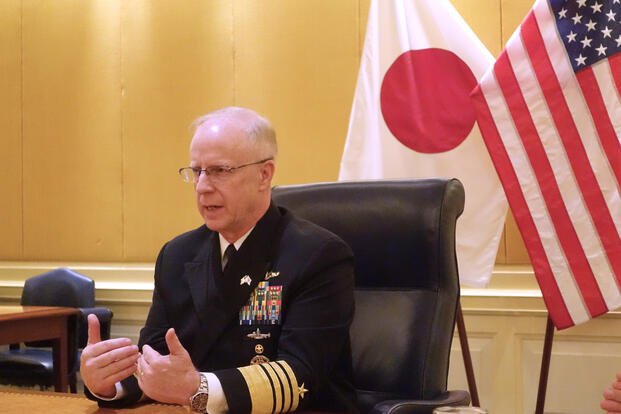
The U.S. Navy’s strategic shift towards smaller and more adaptable naval forces is gaining momentum, spearheaded by Adm. Daryl Caudle. In an effort to reduce dependency on large aircraft carriers, Caudle’s “Fighting Instructions” seeks to enhance the Navy’s responsiveness with a diverse array of vessels tailored to specific missions. This approach is intended to offer flexibility and efficiency, particularly in regions like the Caribbean and the Middle East.
Caudle’s new strategy emerges amid the backdrop of recent U.S. military operations that have heavily relied on aircraft carriers, such as the deployments in response to situations in Venezuela and Iran. The USS Gerald R. Ford, the largest aircraft carrier in the world, was recently redirected from the Mediterranean to the Caribbean to support operations against former Venezuelan President Nicolás Maduro. Similarly, the USS Abraham Lincoln was moved from the South China Sea to the Middle East amidst rising tensions with Iran.
Admiral Advocates for Leaner Naval Operations
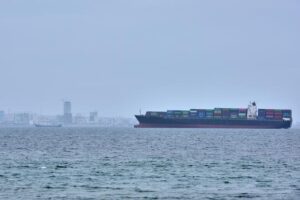
According to Caudle, a more streamlined naval presence in the Caribbean could focus on interdiction and monitoring merchant shipping, activities that do not necessarily require a full carrier strike group. This approach has already resulted in the seizure of several suspicious tankers operating under false flags, linked to Venezuela’s attempts to bypass sanctions.
Caudle suggests utilizing smaller littoral combat ships, Navy helicopters, and collaboration with the Coast Guard to accomplish these missions. This strategy marks a significant departure from the larger naval deployments typically seen in South America, which often include multiple ships and thousands of Marines.
Embracing Technology and Innovation
As part of his vision, Caudle is also advocating for the increased use of drones and robotic systems to supplement traditional naval capabilities. This shift aims to provide commanders with the necessary tools to execute missions without the heavy reliance on large vessels. However, Caudle acknowledges the challenges in integrating these new technologies, stressing the need for an educational push to familiarize commanders with these capabilities.
President Donald Trump’s preference for robust naval displays, including the proposal of a “Trump-class battleship,” contrasts with Caudle’s focus on agility and adaptability. Despite the ambitious plans for these advanced ships, the Navy continues to face hurdles in realizing such technological advancements.
In light of recent redeployments, such as the USS Abraham Lincoln’s move to the Middle East, Caudle suggests that under his plan, compensatory measures could involve deploying smaller ship groups to maintain regional stability. His tailored force packages have already been operational in Europe and North America, and he sees potential for similar applications in strategic areas like the Bering Strait.
With the increasing significance of the Arctic region, where interests from China, Russia, and the U.S. converge, Caudle emphasizes the need for versatile solutions. His strategy aims to provide commanders with a range of options to address evolving threats and challenges in these critical areas.
© Copyright 2026 Associated Press. All rights reserved. This material may not be published, broadcast, rewritten or redistributed.