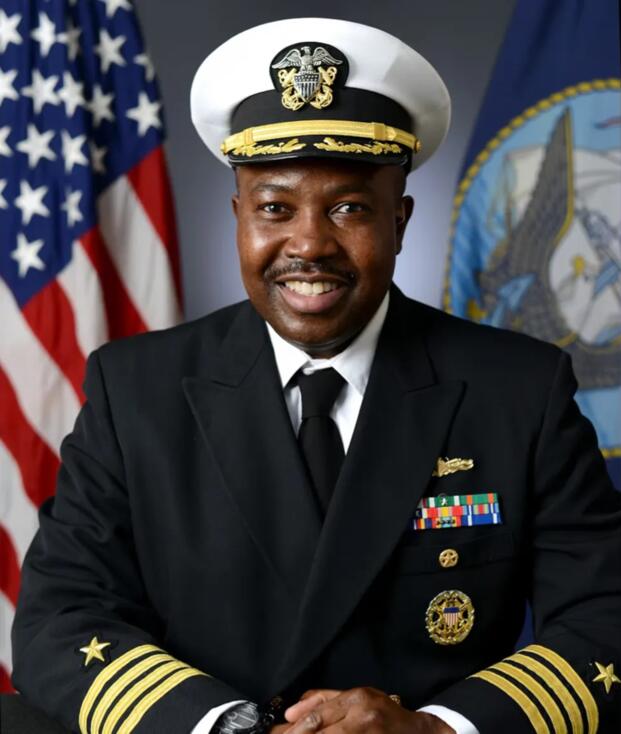
The Navy has recently made a significant change in leadership aboard the USS Mason, a guided-missile destroyer, by relieving its commanding officer. This decision, announced on Friday, Feb. 13, stems from a “loss of confidence” in his command capabilities, as stated in an official Navy release.
Capt. Chavius G. Lewis was removed from his position by Rear Adm. Alexis T. Walker, who leads Carrier Strike Group 10. The Navy has temporarily reassigned Lewis to Commander, Naval Surface Group Southeast, while Capt. Kevin Hoffman steps in as the new commanding officer of the USS Mason.
Although specific reasons for the decision were not detailed, the Navy clarified that the change in leadership would not disrupt the destroyer’s operational timetable. At the time of the announcement, the USS Mason was part of the U.S. 2nd Fleet and actively participating in the Composite Training Unit Exercise, or COMPTUEX, which is a critical preparation phase for deployment.
Lewis had assumed command of the ship in November 2024. His career, which began after being commissioned through Officer Candidate School in 2000, includes leadership roles on two littoral combat ships and various sea and shore assignments.
Implications Beyond Leadership
Commanding officers on Navy destroyers play a pivotal role in maintaining training standards, morale, and the overall command climate. The Navy often states that such leadership changes do not impact operations, but transitions during significant exercises like COMPTUEX can present challenges in maintaining cohesion.
COMPTUEX is particularly demanding, testing a ship’s preparedness and requiring clear communication and trust within the crew. A new commander must swiftly adapt to existing dynamics and establish authority amid these rigorous scenarios.
Leadership changes can create uncertainty among department heads and junior officers, as different styles and priorities may shift. Rapid adjustments are essential to sustain performance levels.
The decision to relieve a commanding officer for “loss of confidence” sends a strong message regarding accountability and the importance of maintaining high standards. While specifics of these cases are often not disclosed publicly, they can lead to speculation and unease among the crew.
The removal of a commanding officer can have long-lasting effects on their career, as a command tour is seen as a pinnacle assignment. Relief can significantly impact future career prospects.
Institutional Significance
Relief due to a loss of confidence is one of the Navy’s most serious administrative actions, underscoring its commitment to accountability, especially during periods of heightened operational demands and geopolitical tensions.
Destroyer captains are responsible for hundreds of sailors and advanced systems, tasked with mission execution and shaping crew culture. Consequently, each relief carries significant weight, reinforcing the Navy’s standards while prompting reflection on leadership preparation and oversight.
Despite the leadership change, officials confirm that USS Mason remains fully capable of executing its missions and continues its training and operational activities under new leadership.
The crew aboard the USS Mason will continue their duties, adapting to the new command. Leadership transitions are immediately noticeable within the ship, and restoring rhythm and maintaining focus are critical in the aftermath of such changes.
While the headline may focus on accountability, the broader narrative is about resilience and how effectively the ship and its crew adapt to new leadership to maintain the high standards of a U.S. Navy warship.
This story will be updated if further information regarding the circumstances of Lewis’ removal becomes available.