Military’s Oversight Leaves Osprey Aircraft Safety Concerns Unaddressed
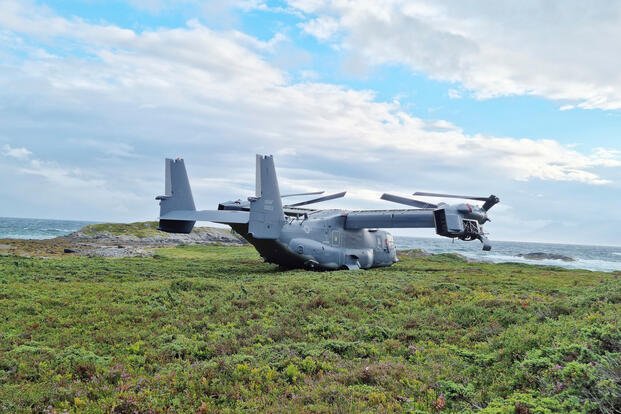
Amid a troubling series of deadly accidents involving the V-22 Osprey aircraft, a recently released Navy report highlights long-standing safety issues that have been neglected for nearly two decades. The report, from the Naval Air Systems Command, reveals significant risks tied to the aircraft, which have not been adequately addressed, leading to an increase in fatal incidents.
The report states, “The cumulative risk posture of the V-22 platform has been growing since initial fielding,” and criticizes the office responsible for the aircraft for failing to implement necessary safety fixes. These issues have led to a spate of accidents from 2019 to 2023, with the Osprey not following the typical trend of risk reduction seen in other aircraft over time.
Complex Challenges of the V-22 Osprey
As the pioneering military tiltrotor aircraft that operates both as a plane and a helicopter, the Osprey is described as “the most aero-mechanically complex aircraft in service.” Its complexity has contributed to unresolved safety and technical challenges, positioning it with the second highest number of catastrophic risks among Naval Aviation platforms. On average, these risks have remained unresolved for over ten years, compared to a six-year average for other Navy aircraft.
Vice Adm. John Dougherty, leading NAVAIR, asserted the Navy’s dedication to improving the V-22’s performance and ensuring the safety of service members, although details on specific actions or accountability measures were not disclosed.
Identified Risks and Systemic Oversights
The report places significant responsibility on the Osprey’s Joint Program Office, charged with ensuring the aircraft’s safety for the Marine Corps, Navy, and Air Force. It highlights challenges in risk management and implementation of safety fixes across the different military branches utilizing the aircraft.
Two principal issues involve the Osprey’s transmission system, which is crucial for its unique propeller function. A power imbalance issue within the transmission led to a fatal crash in California in 2022, killing five Marines. Additionally, a manufacturing defect has made transmission gears more brittle, leading to a deadly crash off Japan’s coast in November 2023, claiming eight lives.
This manufacturing defect has been known since 2006, yet was only formally assessed by the Joint Program Office in March 2024, pointing to significant oversight.
Beyond mechanical failures, the report indicates that 81% of Osprey ground accidents were attributed to human error, further stressing the need for uniform maintenance standards across all services.
Recommendations and Future Fixes
The report suggests a range of solutions, from consolidating maintenance practices to comprehensive upgrades for the Osprey. However, complete resolutions for the mechanical issues are projected to extend until 2034 and 2033, respectively.
The Naval Air Systems Command has not provided a statement regarding the interim safety of service members operating the Osprey.