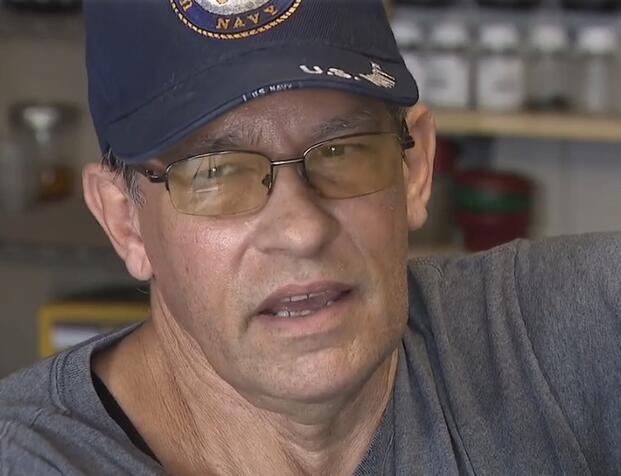
Transitioning from military life to civilian life is often a challenging journey, as experienced by Charles “Chuck” Reeves, a former Navy serviceman. Like many veterans, Reeves faced difficulties in finding stable employment, eventually leading to homelessness.
After returning to Phoenix, Reeves struggled to find his footing despite attempts in aviation and construction jobs. He recounted to ABC 15 News in Arizona, “But I came back to Phoenix and tried working in aviation and construction. It was hard finding a niche, and as jobs changed, so did my stability.”
With a strong sense of pride from his military service, Reeves was hesitant to seek help but eventually reached out to a local Veterans Affairs office. Within a day, organizations like U.S. VETS and MANA House stepped in to assist, providing him with transitional housing. It was during his stay at MANA House that Reeves noticed the transportation needs of fellow veterans and decided to use his skills to help by repairing donated bicycles.
“You still need something around here,” Reeves remarked. “A bike means independence. If you miss the bus, you can still get where you need to go.”
How the Bicycle Repair Initiative Began
Reeves’ journey into bike restoration began modestly, fixing a few bikes for veterans at MANA House. His mechanical skills, honed from a young age, allowed him to quickly turn this into his primary passion. The initiative gained momentum when Bikers Edge Cycle & Fitness in Peoria, Arizona, began donating bicycles for him to refurbish. Once repaired, these bikes are sent back to MANA House for use by veterans.
Reeves shared his motivation, saying, “I’m not out to get rich. As long as I can keep going and just help others, that’s what matters.”
Rachel Perez, the community engagement coordinator at MANA House, highlighted the significance of Reeves’ work, noting that nearly 30% of veterans in their transitional housing lack reliable transportation. Bicycles provide a vital means for these veterans to attend job interviews and medical appointments independently.
“A lot of them struggle with how am I able to pick up my own prescription, attend to my own medical appointments, if I don’t have my own means of transportation,” Perez explained.
Reeves, having completed the MANA House program himself, embodies the military ethos of leaving no soldier behind. Perez emphasized, “Many of our veterans who have been in our program and have graduated really try their best to come back in any way. Some, like Chuck, are giving back by providing essential transportation.”
MANA House’s Support for Veterans
MANA House in Phoenix, which can accommodate 76 veterans, had 62 residents as of December 5. The organization helps veterans transition to permanent housing and assigns case managers to each veteran. In addition to Reeves’s bicycle repairs, they offer resume support, job training, and provide donated computers and clothing.
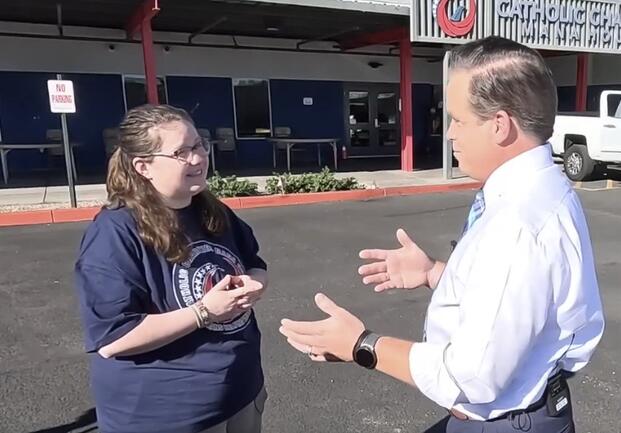
“If they need help accessing VA benefits or finding a job, we help with that,” Perez said. “We want to make sure they have all the tools to succeed, not just temporarily, but once they leave here.”
MANA House collaborates with local organizations and volunteers to gather donations, build resumes, and offer peer support. Recently, a veteran crafted his first resume and is now training in HVAC.
For Reeves, the reward lies in knowing that each bicycle he repairs can restore a veteran’s confidence and independence. “If everybody felt that same way,” he stated, “we wouldn’t have the problems we have nowadays.”
To reach out to Reeves or to donate a bike, email outreachbikerepair@gmail.com.