Poland’s Defense Funding Strategy: EU Loans and U.S. Relations
In a dynamic shift within Poland’s defense procurement landscape, the government is contemplating a significant financial move. Warsaw is looking to leverage European Union loans for upgrading its military arsenal, a decision sparking debate over its impact on the country’s ties with U.S. defense suppliers.
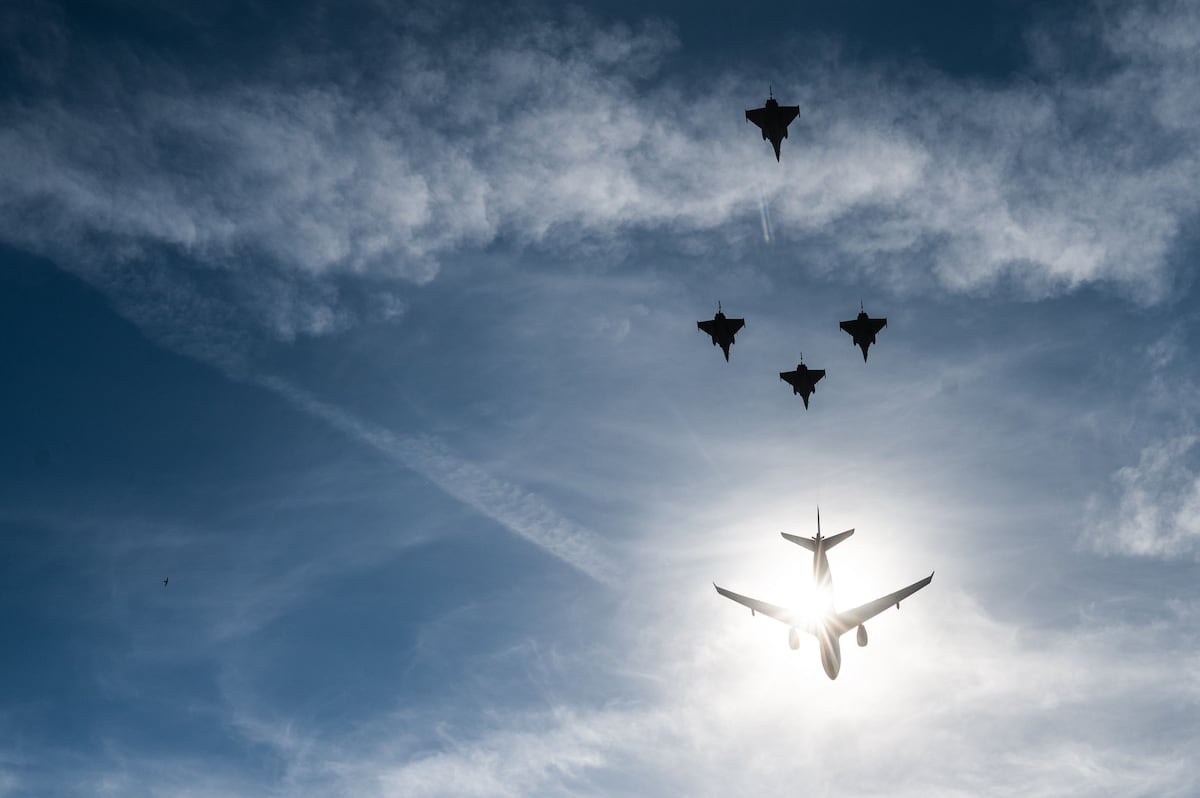
The initiative involves Poland potentially opting for the Airbus A330 MRTT over Boeing’s KC-46 for its Air Force, under the EU’s Security Action For Europe (SAFE) scheme. This program could provide Poland with approximately €43.7 billion ($50.7 billion) in low-interest loans, marking the country as the primary beneficiary. This funding aims to enhance EU member states’ defense capacities, amidst ongoing tensions due to Russia’s invasion of Ukraine.
Recently, Poland’s parliament passed draft legislation to secure these SAFE loans. The decision now rests with President Karol Nawrocki, who must decide whether to approve the bill, veto it, or refer it to a higher court. Prime Minister Donald Tusk, a fervent supporter of the program, believes the funds will substantially benefit Poland’s defense sector by investing in cutting-edge military technology.
“Significantly more than 80 percent, and these are the opinions of experts, generals, and state institutions, will serve Poland and our companies,” Tusk declared during a press briefing on Feb. 27. “It will be one of the breakthrough impulses for the development of the Polish economy. The development of the most modern technologies, so satellites, space, cyber, drones and anti-drone systems, will capture 36 percent” of the loans’ value, he said.
Amidst these discussions, Tusk reassures that Poland will maintain its defense partnership with the U.S., emphasizing ongoing procurements. “We will be an even better ally thanks to the SAFE program. And those more than 100 billion [dollars] that we intended to spend on equipment and technological capabilities that come from the United States, they will be spent anyway,” the prime minister affirmed.
This year sees Poland assigning approximately PLN 200.1 billion ($54.2 billion) for defense, a noticeable increase from the PLN 186.6 billion planned for 2025. This budget expansion could push military spending to exceed 4.8% of the nation’s GDP by 2026.
However, the SAFE program has not gone unchallenged. Opposition from the Law and Justice (PiS) party, particularly from Mariusz Błaszczak, a former Minister of National Defence, raises concerns about potential compromises on Poland’s defense autonomy and financial stability.
“Firstly, we are talking about a loan mechanism, meaning an increase in state debt in a formula that may be subject to additional political and procedural conditions imposed by EU institutions,” Błaszczak highlighted.
He further argued, “Law and Justice has always held the view that Poland’s security should be built on a strong nation-state, real military capabilities, and a strategic alliance with the United States within NATO, rather than through mechanisms that could restrict our freedom of acquisitions and equipment preferences.”
The Ministry of National Defence has yet to disclose a full list of acquisitions funded by SAFE loans, but senior officials point to tanker aircraft purchases as a priority. Maj. Gen. Ireneusz Nowak confirmed plans to acquire at least two Airbus A330 MRTTs, positioning them against Boeing’s KC-46.
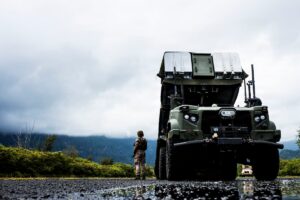
Błaszczak cautions against selecting European-made equipment purely due to loan availability, stressing the importance of interoperability with NATO forces and long-term strategic alliances. “The Polish military today relies heavily on American equipment: from Patriot systems, through HIMARS, to the F-35. Therefore, the natural direction is maximum compatibility and logistical cohesion,” he remarked.