Saab Eyes Canadian Partnership for Gripen Production and Export
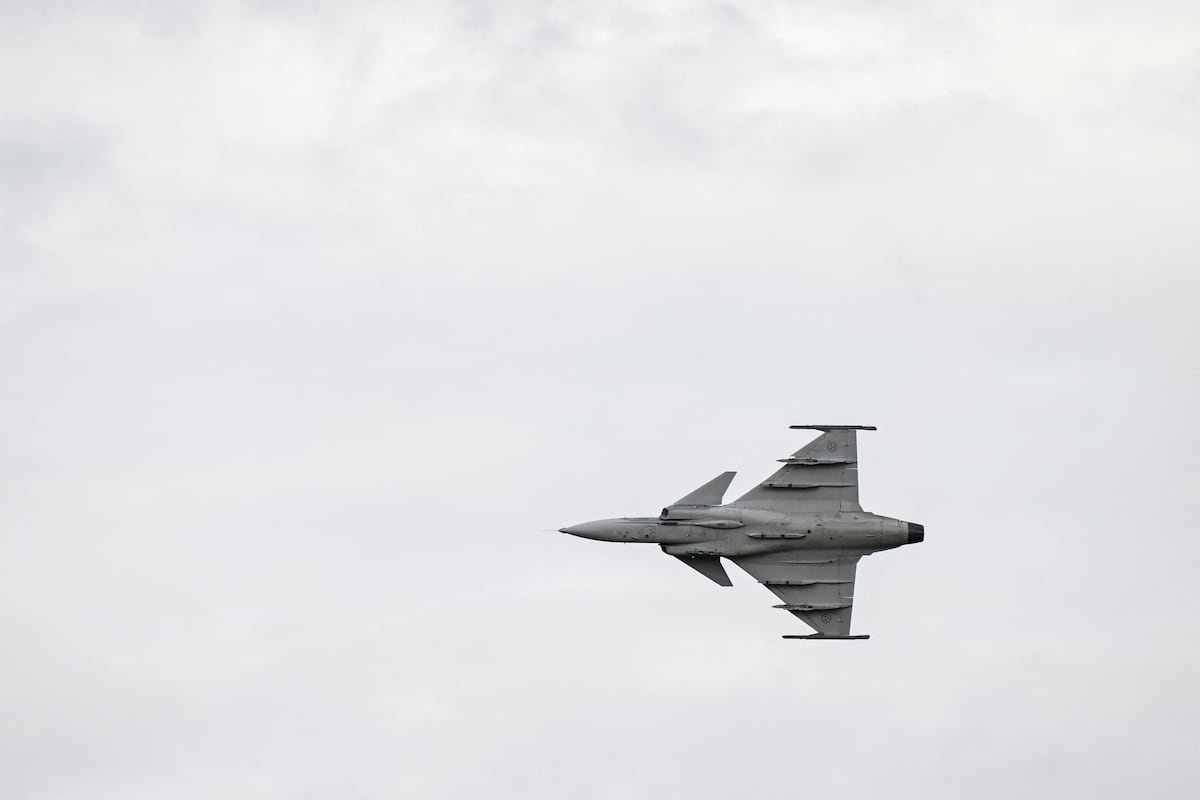
SINGAPORE — In a strategic move to expand its production capabilities, Swedish aerospace firm Saab has unveiled plans for a potential Gripen aircraft production line in Canada. This facility would cater not only to Canadian needs but also serve international customers.
Saab’s proposal showcases its ambition to secure a portion of Canada’s fighter jet market, with the company actively promoting the Gripen model as an attractive option for the Canadian Air Force. Mikael Franzén, Saab’s chief marketing officer for the Gripen, articulated this vision during a recent media briefing at the Singapore Airshow.
“We need to ramp up our [fighter jet] production capabilities, to a level where it’s not only for Canada – we do see that [the potential line] will produce for export as well,” Franzén stated, highlighting the broader scope of the production plan.
At the briefing, Saab executives presented a map indicating current and potential Gripen E clients, with Canada and Ukraine prominently featured. This initiative aligns with Ottawa’s ongoing review of its fighter fleet, as it considers a mixed fleet approach that might integrate both F-35 and Gripen jets.
In 2023, the Canadian government committed $19 billion for acquiring 88 Lockheed Martin F-35 jets but has initially ordered only 16. Canadian Chief of Air and Space Force Development Maj. Gen. Jeff Smyth suggested the possibility of increasing this number to replace the aging CF-18 Hornet fighters. “Eighty-eight jets are not a lot for a country the size of Canada – if the government decides to buy more in the future, that would be welcome for us and our allies,” he mentioned in an interview with aviation magazine Skies.
Saab has long pitched the Gripen as “The Made-in-Canada Fighter,” emphasizing potential economic benefits. The company has promised significant job creation, estimating around 10,000 positions, should Canada opt for the Gripen. These jobs would span building, maintaining, and upgrading the aircraft in collaboration with Canadian industry partners.
Franzén elaborated that initial aircraft could be manufactured in Sweden to expedite the process, but subsequent production would transition to Canada, leveraging the country’s robust capabilities in software, hardware, and airframe industries. He noted the company’s goal to manufacture 36 aircraft annually, considering both present and future production lines.
The discussion around a mixed fleet has sparked speculation about the potential replacement of F-35s with Gripens. However, Franzén clarified, “Many are speculating, will they replace the F-35 with the Gripen? I don’t think that is what they’re looking for. I think they’re looking for how their air force could be stronger in having a mixed fleet, and could it be that you have a certain number of F-35s and you add on Gripens on top of that.”
Saab’s CEO, Micael Johansson, has previously suggested that a Canadian production facility could also fulfill orders from Ukraine, possibly exceeding 100 Gripen aircraft.