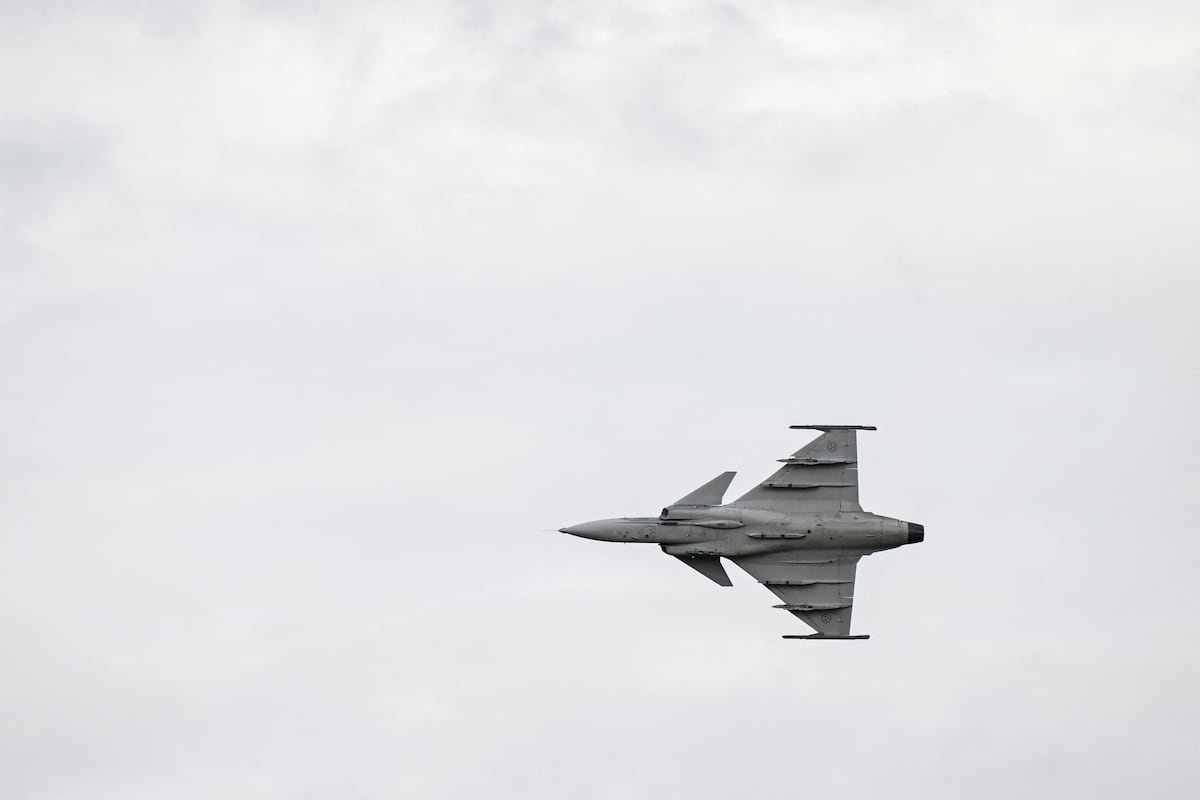
Sweden is on the brink of a significant leap in military capability as it accelerates plans to integrate the German-made Taurus cruise missile with the Gripen fighter jet. This advancement will enable Sweden to conduct deep strikes far behind enemy lines, a capability previously unavailable to its air force.
According to Maj. Gen. Jonas Wikman, the commander of the Swedish Air Force, efforts have been made to ensure cooperation between Sweden’s defense industry, FMV (the defense materiel agency), and the air force. This collaboration has allowed the integration timeline of the Taurus missile to move forward, resulting in operational capability well ahead of the initial schedule.
A document published earlier this year by FMV officials had initially set the target for the Taurus KEPD-350 cruise missile’s operational capability on the JAS39 Gripen C/D for 2028. However, the exact date of the missile’s integration remains undisclosed due to project sensitivities. The Taurus missile, a product of a German-Swedish joint venture between MBDA Deutschland and Saab, is designed to strike targets at over 500 kilometers with its 481-kilogram warhead.
Maj. Gen. Wikman described the integration of the Taurus as “a huge step” for the Swedish Air Force, indicating a shift in their doctrine and operational concepts. He highlighted that this marks a significant transition from a purely defensive stance to including offensive capabilities.
Support from Germany has been instrumental in advancing Sweden’s long-range offensive capabilities. Images from Saab have previously shown the Gripen equipped with the Taurus missile, and a static display was featured at the 2016 FIDAE defense fair in Chile. However, live-fire tests with the missile on the Gripen have not yet been conducted.
Sweden’s approach to upgrading the Gripen is unique, opting to introduce new capabilities incrementally rather than through a conventional mid-life update. Larger updates are scheduled approximately every three years, facilitated by Saab’s role as the national manufacturer, which allows for swift adaptation to changing operational needs.
Recent changes in the Gripen E’s avionics architecture have further streamlined upgrades. By separating flight-safety critical software from combat mission software, Saab has made it easier to implement quick enhancements in combat effectiveness, according to company engineers.
For more detailed information on the development of the Taurus missile and its integration with the Gripen, you can refer to the official document from February.